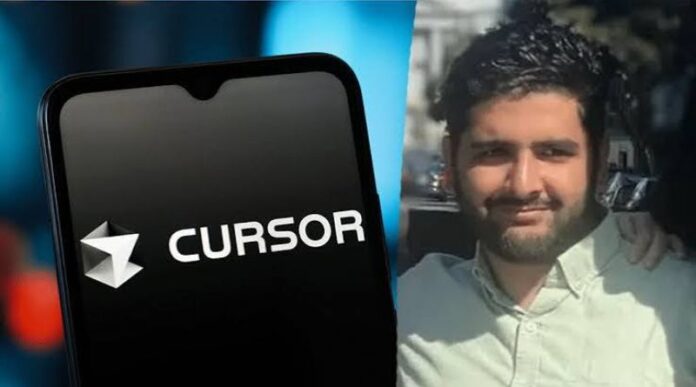

A 26-year-old Pakistani entrepreneur from Karachi has reached billionaire status after the rapid growth of Cursor, an artificial intelligence-powered coding startup. Sualeh Asif, who co-founded the company while studying at the Massachusetts Institute of Technology (MIT), has become one of the youngest Pakistani technology entrepreneurs to reach this level of wealth.
The story has attracted attention in Pakistan and around the world because it shows how quickly a small technology idea can grow when it solves a real problem. Cursor, developed by Anysphere, has become a popular tool among software developers and companies that want to use AI to make coding faster and easier.
According to reports, Cursor reached a valuation of around $29.3 billion after a major funding round in November 2025. Forbes later estimated Asif’s net worth at about $1.3 billion, mainly because of his stake in the company.
Who Is Sualeh Asif?
Sualeh Asif is a Pakistani technology entrepreneur who was born in Karachi. From a young age, he showed a strong interest in mathematics and technology. He represented Pakistan at the International Mathematical Olympiad between 2016 and 2018 and won a silver medal, an achievement that highlighted his strong mathematical skills.
After completing his early education in Pakistan, Asif moved to the United States and studied at MIT. The university is known for producing some of the world’s leading scientists, engineers and technology entrepreneurs.
While studying at MIT, Asif did not limit himself to classroom learning. He worked on technology projects and explored artificial intelligence. He also started an AI-powered search engine company before becoming involved in the project that would eventually become Cursor.
His time at MIT also introduced him to the people who would later become his business partners.
How Cursor Started
Cursor was created by four MIT students: Michael Truell, Sualeh Asif, Aman Sanger and Arvid Lunnemark. They founded Anysphere in 2022 with the goal of making software development easier with the help of artificial intelligence.
At the time, AI was already becoming an important part of the technology industry, but AI coding tools were still developing. The founders saw an opportunity to create something that could work directly with the way developers already wrote software.
Instead of building a simple chatbot that could answer programming questions, the team focused on creating an AI-powered coding environment. This became Cursor.
The basic idea was simple: developers could use natural language to ask AI to write, change, explain or improve code. The tool could also understand information from a larger code project, helping it provide more useful suggestions.
This made Cursor different from traditional code editors. Rather than simply typing every line manually, developers could work together with an AI assistant inside their coding environment.
What Makes Cursor Popular?
The growth of Cursor is closely connected to the rapid rise of AI in software development.
Software developers often spend hours writing repetitive code, finding errors, checking files and making small changes across large projects. AI tools can reduce the amount of time needed for many of these tasks.
Cursor allows developers to describe what they want in normal language. The AI can then generate code or make changes based on the instructions.
For example, a developer can ask the tool to create a new feature, explain part of an existing project or make changes across several files. The aim is to reduce repetitive work and allow developers to spend more time on the bigger parts of a project.
This approach has helped Cursor attract individual developers as well as large businesses.
By 2026, reports said Cursor was being used by developers at more than 50,000 companies. Some major names linked to its customer base include Nvidia, Adobe, Uber and Shopify. The company also reported annualised revenue above $1 billion.
From a Small Startup to a Billion-Dollar Business
Cursor’s growth has been extremely fast.
Anysphere initially raised an $8 million seed investment led by the OpenAI Startup Fund in 2023. The company then attracted larger investments as more people started using its product.
In 2024, Anysphere raised $60 million in a funding round that valued the company at about $400 million. The company continued growing at a rapid pace, and its valuation increased significantly over the following months.
By June 2025, Anysphere had raised another $900 million, taking its valuation to approximately $9.9 billion. At that time, Cursor had already passed $500 million in annual recurring revenue.
The company then reached another major milestone in November 2025.
Anysphere raised around $2.3 billion in a Series D funding round. The investment valued the company at approximately $29.3 billion. This huge jump showed how strongly investors believed in the future of AI-powered software development.
How Sualeh Asif Became a Billionaire
A company’s valuation and a founder’s personal wealth are not exactly the same thing. However, when a private startup becomes extremely valuable, founders and early employees who own shares can see the value of their holdings rise sharply.
That is what happened with Asif.
Following Cursor’s rise to a valuation of around $29.3 billion, Forbes estimated Asif’s net worth at approximately $1.3 billion in April 2026. This placed him among the world’s youngest billionaires.
His success is especially notable because he is only 26 years old.
For many young people in Pakistan, becoming financially successful through technology can seem like a distant goal. Asif’s journey provides a different example. It shows that a person from Pakistan can build a technology company aimed at the global market and compete at the highest level.
The Importance of AI in Cursor’s Success
One of the biggest reasons behind Cursor’s growth is the growing demand for AI.
Artificial intelligence has moved from being mainly a research topic to becoming a daily business tool. Companies are now using AI for customer support, marketing, data analysis, software development and many other tasks.
Software development is one of the areas where AI can make a major difference.
Writing software can take a lot of time. Developers have to understand large amounts of code, find bugs, test new features and keep projects updated. AI can help with many of these tasks.
Cursor focuses directly on this problem.
Its success suggests that businesses are willing to pay for AI tools when those tools can save time and help employees become more productive.
A Different Kind of Startup Story
The Cursor story is also interesting because its founders did not begin with a huge company or a massive team.
The company started with a small group of students who were working on an idea while studying at MIT. Their early focus was not simply on creating a company with a high valuation. They were trying to solve a problem faced by software developers.
That focus helped them build a product that users wanted.
This is an important lesson for young entrepreneurs. A startup does not always need to begin with a huge idea that tries to change everything. Sometimes, solving one clear problem well can be enough to create a successful business.
What This Means for Pakistani Technology Talent
Sualeh Asif’s achievement has also created excitement in Pakistan’s technology community.
Pakistan has a large number of young people interested in software development, artificial intelligence, freelancing and online businesses. However, many talented people still face challenges such as limited funding, fewer local opportunities and difficulty accessing international markets.
Asif’s journey shows that Pakistani talent can have a global impact.
His story is not simply about becoming rich. It is also about the possibilities available to Pakistani students and developers who want to build products for international users.
A startup does not necessarily have to serve only the Pakistani market. A product can be developed in one country and used by customers around the world.
The Role of MIT
MIT played an important role in the Cursor story.
The four founders met through their studies at MIT, and their university environment gave them access to talented students, technology knowledge and a strong startup culture.
For Asif, MIT was also a place where his interests in mathematics, computer science and entrepreneurship came together.
His background in mathematics may have helped him develop the type of logical thinking needed for technology work. His experience in competitive mathematics, combined with computer science education, provided a strong foundation for his later work in AI.
Cursor and the Future of Software Development
Cursor’s rapid growth raises an important question: What will software development look like in the future?
AI is unlikely to remove the need for skilled developers completely. Instead, the role of developers may change.
Developers may increasingly focus on deciding what should be built, checking AI-generated work, solving difficult problems and managing larger projects. AI tools can handle more repetitive coding tasks while humans remain responsible for important decisions.
Cursor is one of the companies pushing this change forward.
As AI models become better, coding assistants may become capable of handling increasingly complex development tasks. This could make software development faster and allow smaller teams to build products that once required much larger groups.
A Message for Young Entrepreneurs in Pakistan
Sualeh Asif’s journey offers several lessons for young people in Pakistan.
First, technical skills can create opportunities far beyond the local market. A developer sitting in Pakistan can potentially build software used by customers in many countries.
Second, solving a real problem is more important than simply following a trend. AI is popular, but Cursor succeeded because it applied AI to a clear and useful problem.
Third, starting early can make a difference. Asif was already working on technology and AI projects before Cursor became a major company.
Finally, international success requires patience, teamwork and continuous improvement. Cursor did not become a multibillion-dollar company overnight. Its growth came through several stages of product development, customer adoption and investment.
Pakistan’s Young Billionaire in the Global AI Race
Sualeh Asif’s rise is a remarkable example of how quickly the technology industry can change.
At only 26, the Karachi-born entrepreneur has gone from competing in international mathematics competitions and studying at MIT to becoming a billionaire through one of the world’s fastest-growing AI startups.
Cursor’s success reflects the wider growth of artificial intelligence, but it also highlights the value of strong technical talent and a clear business idea.
For Pakistan, the achievement carries an even bigger message. It shows that young Pakistanis can take part in major global technology trends and create products that attract customers, investors and attention around the world.
The next few years are likely to bring even more changes in AI and software development. Tools like Cursor may become a normal part of how software is built.
For Sualeh Asif, however, the journey is still at an early stage. At 26, his rise from Karachi to the global technology industry could be only the beginning of a much bigger story.
His success is a reminder that age, location and background do not have to decide how far a talented entrepreneur can go. With the right skills, a useful idea and the determination to build it, a young person from Pakistan can create something that reaches the entire world.
Read Also: check