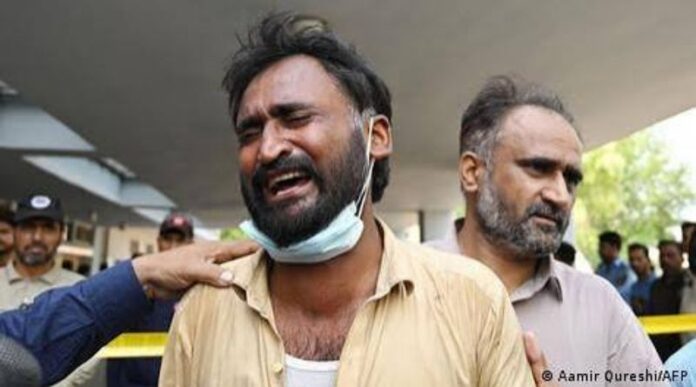

A heartbreaking fire at the Pakistan Institute of Medical Sciences (PIMS) in Islamabad has resulted in the deaths of at least 15 newborn babies. The tragic incident took place in the nursery of the hospital’s Mother and Child Health Ward, leaving families, hospital staff and people across Pakistan in deep shock.
The fire broke out early Wednesday morning at the government-run hospital in the federal capital. Reports said the blaze started in the nursery area on the third floor, where newborn babies were receiving care. Authorities and rescue teams rushed to the scene after the emergency was reported.
The incident has become one of the most painful hospital tragedies in Pakistan in recent years. Parents who had brought their newborn children to the hospital expecting medical care were instead faced with an unimaginable loss.
Initial reports suggested that a fault involving the air-conditioning system may have caused the fire. However, officials have ordered an investigation to find out exactly what happened and whether there were any failures in safety arrangements or emergency response.
Fire Breaks Out in Nursery
The fire reportedly started during the morning hours in the nursery of the PIMS hospital’s Mother and Child Health Ward. At least 16 newborn babies were believed to be present in the affected area when the fire broke out.
The nursery was a highly sensitive place because the babies were very young and needed special medical care. Newborn children are unable to move or protect themselves during an emergency, making a fire inside such a ward even more dangerous.
According to reports, emergency teams immediately started rescue and firefighting operations. Firefighters worked to control the flames and prevent the fire from spreading to other parts of the hospital. Ambulances and other rescue vehicles were also present at the scene.
However, despite the efforts of rescue workers and hospital staff, the lives of at least 15 babies could not be saved. Only one newborn was reported to have been rescued from the affected nursery.
The incident created scenes of extreme grief outside the hospital. Families anxiously waited for information about their children as rescue operations continued. For parents and relatives, the situation was one of the worst moments of their lives.
Possible Fault in Air-Conditioning System
Early reports pointed towards a fault in the air-conditioning system as a possible cause of the fire. Some reports said that the incident may have started after a problem involving an AC compressor.
At the moment, the exact cause has not been fully confirmed. This is why a proper investigation is important. Authorities need to examine the electrical system, air-conditioning equipment and other parts of the building to understand how the fire started and why it spread so quickly.
Hospital fires can become extremely dangerous because hospitals contain electrical equipment, medical machines and many other systems that may create additional risks during an emergency.
A nursery is an even more sensitive area because newborn babies may depend on medical equipment and may need immediate help to be moved safely. Any delay in rescue can have serious consequences.
The investigation is expected to determine whether the hospital had proper fire safety systems and whether emergency arrangements were working properly at the time of the incident.
Officials will also need to examine whether all required safety rules were being followed in the affected part of the hospital.
Rescue Teams Rush to the Scene
Emergency services reached PIMS after the fire was reported. Firefighters worked to bring the situation under control, while rescue teams focused on saving people from the affected area.
The operation was difficult because the fire had broken out inside a hospital nursery. The first priority was to control the flames and take babies and other people away from danger.
Firefighters and rescue workers entered the affected area while emergency teams arranged medical help for those who were rescued.
The fire was eventually brought under control, but by that time the tragedy had already caused a huge loss.
Reports from the scene showed emergency vehicles and rescue personnel outside the hospital. The affected ward was later sealed as authorities started looking into the incident.
The rescue operation also raised questions about how quickly the emergency situation was handled and whether the hospital had enough safety equipment to deal with such a fire.
Families Face Unimaginable Grief
The most painful part of the tragedy is the suffering of the parents who lost their newborn children.
For any family, the birth of a baby is supposed to bring happiness and hope. Families usually look forward to taking their newborn home and beginning a new chapter in their lives. For many parents at PIMS, however, that happiness suddenly turned into deep sorrow.
Parents and relatives gathered outside the hospital, waiting for updates during the rescue operation. Many families struggled to understand what had happened to their children.
The deaths of newborn babies have deeply saddened people across Pakistan. Messages of grief and sympathy began spreading soon after news of the incident became public.
The tragedy has also created anger and serious concern. Many people are asking how a fire could cause such a huge loss inside one of the country’s major government hospitals.
Families deserve clear answers about what happened, how the fire started and whether the deaths could have been prevented.
Government Orders Investigation
Following the deadly incident, the government ordered an investigation into the fire.
Prime Minister Shehbaz Sharif expressed grief over the deaths and called for an immediate inquiry. Authorities have also been asked to identify those responsible if negligence or failure to follow safety rules is found.
An investigation can help determine whether the fire was caused only by an unexpected technical problem or whether poor maintenance, weak safety systems or human negligence also played a role.
Investigators are expected to examine the condition of the air-conditioning system and electrical equipment in the affected ward. They may also look into the availability of fire alarms, extinguishers, emergency exits and other safety arrangements.
The response of hospital staff and emergency services may also be reviewed.
People across the country will be waiting for the findings of the investigation because the incident has raised major questions about safety in public hospitals.
Concerns About Hospital Safety
The PIMS fire has once again highlighted the importance of strong safety systems in hospitals.
Hospitals are places where people go for treatment and protection. A hospital should be prepared for different kinds of emergencies, including fires, electrical faults and equipment failures.
Fire alarms should be checked regularly, and fire extinguishers must be available and in working condition. Staff members should also know what to do when an emergency happens.
Special arrangements are needed in areas such as nurseries, intensive care units and operation theatres because patients in these places may not be able to move without help.
Newborn babies, elderly patients and seriously ill people are among the most vulnerable during a fire. Hospitals must have clear plans for moving them safely and quickly.
Regular safety checks can help identify problems before they become disasters. Electrical wiring, air-conditioning units and other machines should also be properly maintained.
The PIMS tragedy is likely to increase pressure on authorities to review fire safety arrangements not only at PIMS but also at other hospitals across Pakistan.
A Major Hospital Serving Islamabad
PIMS is one of the most important public hospitals in Islamabad and serves a large number of patients.
As a major government medical institution, the hospital receives people from Islamabad and nearby areas. Many families depend on it for treatment and emergency medical care.
Because of its importance, the deadly fire has shocked the entire country.
The incident has shown that even major hospitals can face serious problems if safety systems are not strong enough.
Government hospitals often deal with a large number of patients every day. In some cases, overcrowding and limited resources can put additional pressure on medical facilities and staff.
However, safety should always remain a top priority, especially in places where the lives of patients depend on quick and effective emergency action.
Questions That Need Clear Answers
Several important questions are now being raised after the tragic fire.
The first is how the fire started. Early reports have pointed towards a possible problem in the air-conditioning system, but the final cause will only become clear after a detailed investigation.
Another important question is why so many newborn babies were unable to be rescued.
Officials will also need to determine whether there were enough fire safety arrangements in the nursery and whether the emergency response was quick enough.
People are also likely to ask whether staff members had proper training to deal with a fire inside such a sensitive hospital ward.
If any weaknesses are found, authorities will need to take steps to ensure that similar problems are not repeated in the future.
The loss of newborn lives is a matter of great national concern. Any failure that contributed to the tragedy must be properly identified.
A Day of Mourning for Pakistan
The fire at PIMS has left the country mourning the deaths of innocent newborn babies.
The incident has brought together people from different parts of Pakistan in grief. Social media users, public figures and ordinary citizens have expressed sadness and sympathy for the families affected by the tragedy.
For the parents who lost their children, no investigation or official statement can remove their pain. However, a fair investigation and real accountability can help ensure that the incident is properly understood.
The families deserve the truth.
If safety failures or negligence are found, those responsible should face action according to the law.
More importantly, lessons from the tragedy should be used to improve hospital safety across Pakistan.
Need for Stronger Safety Measures
The PIMS hospital fire is a reminder that safety cannot be ignored, especially in medical institutions.
Hospitals should carry out regular fire drills so that doctors, nurses and other staff know how to react during an emergency.
Fire alarms and extinguishers should be checked regularly. Electrical systems and cooling equipment should also be properly inspected and maintained.
Sensitive areas, including nurseries and intensive care units, should have special emergency plans because patients there may require immediate assistance.
Hospitals should also make sure that emergency exits remain clear and accessible.
A quick and organised response can make a major difference during a fire. Every second is important, especially when patients are unable to move on their own.
The deaths of at least 15 newborn babies have shown the terrible consequences that can result when a fire breaks out in a sensitive medical area.
Final Thoughts
The deadly fire at PIMS Hospital Islamabad is a tragedy that has shaken Pakistan.
At least 15 newborn babies lost their lives in a place where they were supposed to receive medical care and protection. The fire has left grieving parents with an unimaginable loss and raised serious questions about hospital safety.
Early reports have linked the fire to a possible fault in the air-conditioning system, while the exact cause is still under investigation. Authorities have ordered an inquiry, and the findings will be important in determining what went wrong and whether the tragedy could have been prevented.
The country now hopes that the investigation will provide clear answers and lead to meaningful action.
The greatest way to honour the innocent lives lost is to make sure that hospitals across Pakistan become safer. Strong safety rules, regular equipment checks, trained staff and proper emergency plans are essential.
This tragedy must serve as a serious warning. Hospitals cannot afford to ignore safety concerns because, when an emergency happens, even a small failure can lead to a devastating loss of life.
Read Also: check