
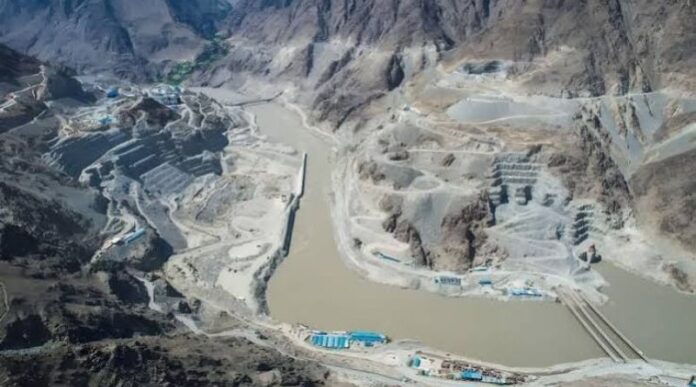

The federal government has strongly rejected reports claiming that the power generation part of the Diamer Bhasha Dam project has been cancelled or removed from the country’s future energy plans.
The clarification came after reports suggested that the government had decided to continue the construction of the dam mainly for water storage while delaying or dropping its 4,500-megawatt electricity generation component. However, government departments have described these claims as false and misleading.
Officials have made it clear that the Diamer Bhasha Dam remains an important national project and that its power generation component has not been cancelled. The government says the project will continue to serve both major purposes: storing water and producing electricity.
The issue gained attention after a report claimed that Pakistan had decided not to proceed with the hydropower component of the mega project for the time being. The report also suggested that the decision was linked to Pakistan’s existing electricity situation, including surplus generation capacity, lower power demand and the rapid increase in solar energy.
However, the Power Division and other government authorities have rejected these claims and said that no official decision has been taken to remove the electricity generation part of the project.
Power Division Calls Report False
The Power Division responded to the claims by saying that the report about the cancellation of the power generation component was incorrect.
According to the government, the 4,500-megawatt power generation component of the Diamer Bhasha Dam is still a committed project under Pakistan’s current and future electricity planning.
The Power Division said that the project is included in the Indicative Generation Capacity Expansion Plan, commonly known as the IGCEP. This is the national plan used to estimate Pakistan’s future electricity needs and plan new power projects accordingly.
Officials stressed that the power generation section of the dam has not been removed from these plans. They also rejected attempts to create the impression that the government had secretly abandoned a major part of the project.
The government urged people to verify information before sharing reports about important national projects.
According to the official position, the Diamer Bhasha Dam will continue to be developed as a multi-purpose project. This means it is not only being built to store water but also to produce clean and renewable electricity.
Ministry Rejects Claims of Cancellation
The Ministry of Economic Affairs also strongly rejected reports that the government had cancelled the 4,500-megawatt power component.
In its clarification, the ministry described the reports as false and misleading. It said that Diamer Bhasha Dam remains one of Pakistan’s important national projects.
The ministry stated that the government has not changed its basic position on the project. Planning and implementation are continuing in coordination with WAPDA and other relevant government departments.
The government also said that the public and media should rely on official announcements and verified information when reporting on such important matters.
The clarification was important because reports about the alleged cancellation created concerns about the future of one of Pakistan’s biggest water and energy projects.
Diamer Bhasha Dam has been considered important for Pakistan because of the country’s growing need for water storage and affordable electricity.
Report Had Claimed Power Component Was Being Delayed
The controversy began after a report claimed that the government had decided to focus only on the water storage part of the Diamer Bhasha Dam.
According to that report, the government would complete the dam as a water reservoir first, while the 4,500-megawatt hydropower project could be developed later.
The report claimed that Pakistan already had more electricity generation capacity than needed and that the power component of the dam could therefore be postponed.
It also pointed to changes in Pakistan’s energy sector, including the fast growth of rooftop solar systems and uncertainty about future electricity demand.
Another issue mentioned in the report was the large cost of infrastructure required to transmit electricity from the Diamer Bhasha Dam to the national grid.
The report suggested that billions of dollars could be needed for the power evacuation system and related infrastructure.
However, the government has clearly denied that these issues have resulted in any decision to cancel the electricity generation component of the project.
Officials say the project remains part of Pakistan’s long-term plans for both water and energy security.
No Basis for Linking Project With IPPs
The Power Division also rejected claims that independent power producers, commonly known as IPPs, had influenced the government’s approach towards the Diamer Bhasha Dam power project.
The original report had suggested that lobbying by IPPs may have played a role in the alleged decision.
However, the government rejected this claim and said there was no basis for connecting IPPs with the project.
The Power Division said that the business of establishing new IPPs under the old system had effectively come to an end following the government’s move towards a competitive electricity market.
According to officials, attempts to link IPPs with the Diamer Bhasha Dam project were based on assumptions rather than verified facts.
The government also said that such claims should not be used to create unnecessary confusion or controversy around an important national project.
The power sector has remained a major issue in Pakistan because the country has faced high electricity prices, capacity payments, circular debt and changes in power demand.
Because of these problems, any report about a major power project naturally attracts public attention.
However, the government says the claims about the cancellation of the Diamer Bhasha Dam power component are not correct.
WAPDA Confirms Project Is Still on Track
WAPDA, which is responsible for executing the Diamer Bhasha Dam project, has also made it clear that the power generation part has not been dropped.
The chairman of WAPDA said that no decision had been taken by the federal government to remove the electricity generation component from the project.
According to WAPDA, the Diamer Bhasha Dam is a multi-purpose development project with major benefits for Pakistan.
The dam will have a gross water storage capacity of around 8.1 million acre-feet and an installed electricity generation capacity of 4,500 megawatts.
Once fully operational, the hydropower component is expected to produce a large amount of clean electricity every year.
Hydropower is considered an important source of energy because it does not depend on imported oil, gas or coal in the same way as thermal power plants.
This can help Pakistan reduce its dependence on expensive imported fuels over the long term.
WAPDA has also indicated that work related to the project is continuing and that the power generation component remains part of the approved development plan.
Importance of Water Storage for Pakistan
While the electricity generation component has received much attention, the water storage capacity of the Diamer Bhasha Dam is equally important.
Pakistan is facing increasing pressure on its water resources because of population growth, climate change, changing weather patterns and rising agricultural needs.
The country depends heavily on the Indus River system for agriculture and water supply.
Dams and reservoirs help store water during periods when river flows are high. This stored water can then be used when water availability becomes lower.
The Diamer Bhasha Dam is expected to increase Pakistan’s ability to store water and support agriculture.
Water storage is particularly important because Pakistan often faces large differences in water availability during different parts of the year.
During some periods, large quantities of water flow through rivers, while water shortages can occur during dry seasons.
Additional storage capacity can help manage these changes and provide water for agriculture and other needs.
The project is therefore considered important for Pakistan’s water, food and energy security.
Project Has Faced Delays and Rising Costs
Although the government has confirmed that the power component remains part of the project, Diamer Bhasha Dam has faced several challenges over the years.
The project has experienced delays, financial difficulties and significant increases in estimated costs.
Government officials have previously raised concerns about weak planning, management problems and delays in preparing important project documents.
Changes in construction costs, inflation and delays can make large infrastructure projects more expensive.
The financing of such a massive project also remains a major challenge.
The government has therefore continued to work with WAPDA and other departments on the financial and technical planning required for the project.
Despite these difficulties, the government has maintained that Diamer Bhasha Dam is a national priority.
Officials believe that the long-term benefits of the project make it important for Pakistan’s future.
The dam is expected to support water storage, agriculture, electricity production and economic development.
Clean Energy Remains a Major Benefit
One of the biggest benefits of the power component is the production of renewable electricity.
Pakistan needs to increase the share of cheaper local energy sources to reduce pressure from expensive fuel imports.
Hydropower can play an important role in this effort.
Unlike electricity generated from imported oil or liquefied natural gas, hydropower uses the flow of water to produce electricity.
This can help lower fuel costs over the long term.
The Diamer Bhasha Dam’s planned 4,500-megawatt capacity would make it one of Pakistan’s major hydropower projects.
The electricity produced from the project could help meet future energy needs and support the national grid.
However, the actual value of the project will depend on proper planning, timely construction and effective management.
Large infrastructure projects require strong financial planning and coordination between different government departments.
The government will also need to ensure that electricity transmission systems are ready to deliver power from the project to consumers across Pakistan.
Government Says Project Remains a National Priority
The latest clarification from the government is meant to end speculation about the future of the Diamer Bhasha Dam power project.
The government’s position is that the project has not been changed into a water-storage-only project.
Instead, officials say the dam remains a multi-purpose national project with both water storage and electricity generation as key objectives.
The 4,500-megawatt power generation component remains part of Pakistan’s existing and future electricity planning.
The government has also rejected claims that IPPs influenced any decision regarding the project.
According to official statements, no decision has been made to cancel the power component.
Work on the overall project continues in coordination with WAPDA and relevant government departments.
The government has advised the public to rely on official and verified information instead of unconfirmed reports.
Conclusion
The federal government has firmly rejected reports claiming that the 4,500-megawatt power generation component of the Diamer Bhasha Dam has been cancelled.
Officials have described such reports as false and misleading and have confirmed that the project remains part of Pakistan’s long-term plans.
Diamer Bhasha Dam is expected to play an important role in improving Pakistan’s water storage capacity while also producing clean and renewable electricity.
The government says the project remains a national priority because of its importance for water security, agriculture, food production and the country’s future energy needs.
Although the project has faced delays, rising costs and financing challenges, the official position remains clear: the electricity generation component has not been cancelled.
For now, the government, WAPDA and other relevant departments remain committed to continuing work on the project.
The latest clarification has therefore put an end to reports suggesting that Pakistan had decided to permanently remove the power generation part of the Diamer Bhasha Dam.
As the project moves forward, its progress will continue to be closely watched because of its major importance for Pakistan’s future water and energy security.
Read Also: check


