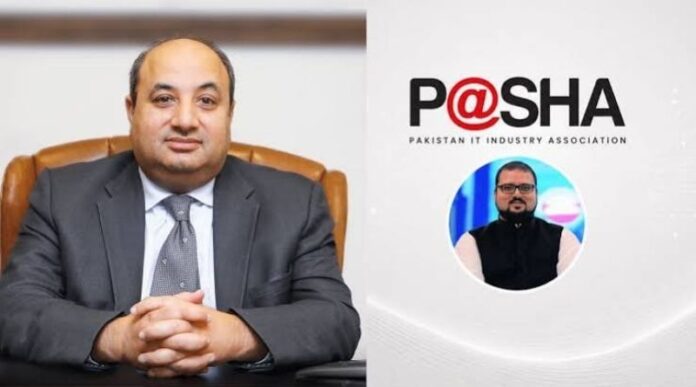

The government has stepped in to end the latest leadership crisis at the Pakistan Software Houses Association for IT and IT-enabled Services (P@SHA), restoring Sajjad Mustafa Syed as the lawful chairman of the organisation.
The decision was made by the Directorate General of Trade Organisations (DGTO), which cancelled the recent no-confidence vote against Syed and also reversed the decision that had handed temporary charge of the association to Senior Vice Chairman Muhammad Umair Nizam.
With the latest order, Sajjad Mustafa Syed has immediately returned to his position as chairman and will continue serving for the remaining period of his statutory term from 2024 to 2026.
The development brings an important change to the ongoing leadership dispute within one of Pakistan’s leading organisations representing the IT and software industry. The issue had created uncertainty within P@SHA after its Central Executive Committee (CEC) voted to remove Syed through a no-confidence motion.
However, after reviewing the matter, the DGTO found that the process used to remove the chairman did not meet the required legal and procedural conditions.
DGTO Cancels No-Confidence Vote
The Directorate General of Trade Organisations issued its decision on August 28 and declared the no-confidence resolution against Sajjad Mustafa Syed invalid from the beginning.
The order effectively cancelled the decision made during the P@SHA Central Executive Committee meeting held on August 22. It also reversed the notification issued on August 24, which had removed Syed from the chairmanship and given acting chairman powers to Muhammad Umair Nizam.
As a result of the government regulator’s decision, Syed has now been restored as chairman with immediate effect.
P@SHA’s Central Executive Committee has also accepted the DGTO’s decision and said that it respects the ruling. The association has stated that the committee will support and cooperate with Sajjad Mustafa Syed as he resumes his responsibilities.
The acting charge previously given to Senior Vice Chairman Muhammad Umair Nizam has also been withdrawn. Nizam will continue to serve in his elected role as Senior Vice Chairman.
How the Leadership Dispute Started
The latest dispute began after members of P@SHA’s Central Executive Committee moved a no-confidence motion against Chairman Sajjad Mustafa Syed.
During the meeting, eight members reportedly voted in favour of the motion. Based on this vote, the CEC declared that the no-confidence resolution had been passed and that Syed had been removed from his position.
After the decision, Senior Vice Chairman Muhammad Umair Nizam was given acting charge of the chairman’s position.
However, Sajjad Syed strongly rejected the decision. He maintained that the process used to remove him was not according to the rules and challenged the legality of the vote.
The matter was then taken to the Directorate General of Trade Organisations, which reviewed the circumstances surrounding the no-confidence motion and the decisions made by the P@SHA leadership.
After examining the case, the DGTO concluded that the required legal conditions for removing the chairman had not been fulfilled.
Eight Votes Were Not Enough
One of the main issues identified by the DGTO was the number of votes received by the no-confidence motion.
P@SHA’s Central Executive Committee has a total of 12 members. According to the rules, a three-fourths majority is required to remove the chairman. This means that at least nine members must vote in favour of such a decision.
The motion against Sajjad Syed received only eight votes.
The DGTO ruled that eight votes were not enough to meet the required three-fourths majority.
The regulator also examined the validity of one of the votes and concluded that it could not be counted because the person voting had a direct interest in the result of Syed’s removal.
According to the DGTO’s decision, that member would have directly benefited from the chairman being removed because he would take charge as acting chairman.
After excluding that vote, the number of valid votes in favour of the no-confidence motion was reduced to seven.
This made the case against the motion even weaker because the required nine votes were not available.
Questions Raised Over Meeting Procedure
The DGTO also found serious problems with the procedure used for the no-confidence vote.
According to the regulator, the meeting in which the motion was introduced had been called to discuss another matter related to the National Cyber Crime Investigation Agency (NCCIA).
The no-confidence motion against Sajjad Syed was not included in the original agenda circulated for the meeting.
Instead, the proposal to remove the chairman was reportedly introduced during the meeting as a floor motion.
The DGTO found that this raised concerns because such an important decision required proper notice and a clear agenda.
The meeting had also reportedly been called with only two hours’ emergency notice.
The regulator concluded that the process did not meet the requirements for advance notice and proper handling of special business.
Because the no-confidence motion had not been included in the circulated agenda, the DGTO ruled that the required procedure had not been followed.
The decision highlighted the importance of following the rules when making major changes in the leadership of an organisation.
Sajjad Syed Returns as Lawful Chairman
Following the DGTO’s order, Sajjad Mustafa Syed has been restored as the lawful chairman of P@SHA for the remaining period of his 2024-26 term.
This means that the leadership change announced on August 24 has effectively been reversed.
Syed has regained the powers and responsibilities connected with the office of chairman.
The decision also ends the acting chairmanship of Muhammad Umair Nizam. He will continue working as Senior Vice Chairman, which is his elected position within the association.
P@SHA’s leadership has said that its senior office bearers and Central Executive Committee members will continue working together for the betterment of the association and its members.
The organisation has also stressed the need for cooperation and collective leadership during the remaining period of the current term.
CEC Accepts Government Decision
P@SHA has said that its Central Executive Committee accepts and respects the decision made by the Directorate General of Trade Organisations.
The association has stated that the CEC will provide full support and cooperation to Sajjad Mustafa Syed as he returns to his responsibilities as chairman.
The decision is important because it formally brings the association back under its previous leadership structure.
The CEC has also said that its members will continue to work together for the benefit of P@SHA, its member companies and Pakistan’s growing IT and IT-enabled services industry.
P@SHA represents an important part of Pakistan’s technology sector, and its leadership plays a major role in engaging with the government, industry, local businesses and international organisations.
Because of this, stability within the association is considered important for the wider technology industry.
P@SHA Focuses on Collective Leadership
Following the DGTO’s decision, P@SHA has emphasised the need for unity and teamwork.
The association has said that its leadership and CEC members remain committed to working collectively and constructively.
The focus will remain on serving member companies and supporting the growth of Pakistan’s IT sector.
P@SHA has also highlighted the importance of institutional continuity. Leadership disputes can create uncertainty and affect the smooth working of an organisation, especially when it represents a major industry.
By restoring the previous leadership arrangement, the DGTO’s decision is expected to provide some stability.
The association has said that it remains committed to strengthening its role and supporting Pakistan’s technology sector.
Pakistan’s IT and software industry has continued to grow in recent years, with software companies, freelancers, technology startups and digital service providers playing an increasingly important role in the national economy.
P@SHA has an important responsibility in representing these businesses and raising industry concerns with the government and other institutions.
Pakistan’s IT Industry Needs Stability
The leadership dispute comes at an important time for Pakistan’s technology sector.
The country’s IT industry is working to increase exports, attract foreign clients and improve Pakistan’s position in the global digital economy.
Local technology companies are also facing several challenges, including high costs, taxation issues, access to international payment systems and the need for better government support.
Industry organisations such as P@SHA play an important role in discussing these matters with policymakers.
For this reason, internal disputes can create concern among IT companies and other stakeholders.
A stable and united leadership can help the organisation focus on bigger issues affecting the technology sector.
P@SHA has said that it remains committed to promoting Pakistan as a strong and competitive destination for technology and digital services.
The association wants to support the development of software companies, IT businesses and technology professionals.
Fresh No-Confidence Attempt Still Possible
Although the DGTO has cancelled the recent no-confidence vote, it has not permanently stopped the Central Executive Committee from attempting to remove Sajjad Syed in the future.
The regulator has clarified that a fresh no-confidence motion can still be brought if the required rules and procedures are properly followed.
However, any future attempt will have to meet strict conditions.
First, the members seeking a no-confidence motion must submit a proper written request.
The meeting must then be called with at least seven clear days’ notice.
The specific agenda and proposed resolution must also be clearly mentioned in advance.
Most importantly, at least nine out of the 12 members of the Central Executive Committee must support the motion.
Without meeting these conditions, a future attempt to remove the chairman may again face legal and procedural challenges.
This means that while the latest dispute has been settled in favour of Sajjad Syed, the internal differences within P@SHA may not have completely ended.
30-Day Dispute Resolution Process
The DGTO has also directed P@SHA’s leadership to follow an earlier order regarding the resolution of the internal dispute.
According to the regulator, the association must comply with a 30-day process aimed at finding an amicable solution.
The purpose of this process is to encourage the concerned members to resolve their differences through discussion and proper institutional procedures.
The DGTO’s direction shows that the government wants the matter to be handled in a way that protects the stability and credibility of the organisation.
Rather than allowing internal differences to damage the functioning of P@SHA, the regulator has encouraged the leadership to work towards a peaceful solution.
Whether the internal differences will completely end remains to be seen.
However, the latest order has clearly established that Sajjad Mustafa Syed remains the lawful chairman for the time being.
Leadership Crisis Comes to an End
The DGTO’s latest decision has brought a major change to the leadership situation at P@SHA.
The no-confidence motion against Sajjad Mustafa Syed has been declared invalid, and the notification removing him from office has been cancelled.
His replacement as acting chairman has also been withdrawn.
Sajjad Syed has now returned to his position and will continue as chairman for the remaining part of his 2024-26 term.
The Central Executive Committee has accepted the government’s decision and promised cooperation with the restored chairman.
The latest development has ended the immediate power struggle at P@SHA, but the wider internal dispute may still require further effort to resolve.
The DGTO has left the door open for a new no-confidence motion, but only if the CEC follows the required legal process and secures the necessary number of votes.
For now, the government’s decision has reversed the recent leadership change and restored Sajjad Mustafa Syed to the top position at P@SHA.
The focus will now be on whether the association’s leadership can move beyond the dispute and work together for its members and Pakistan’s growing IT and IT-enabled services industry.
With collective cooperation, stable leadership and a focus on industry issues, P@SHA will be expected to continue playing its role in helping Pakistan strengthen its position in the global technology market. The latest decision has given the association a chance to restore institutional stability and move forward with a greater focus on the challenges and opportunities facing the country’s digital economy.
Read Also: check