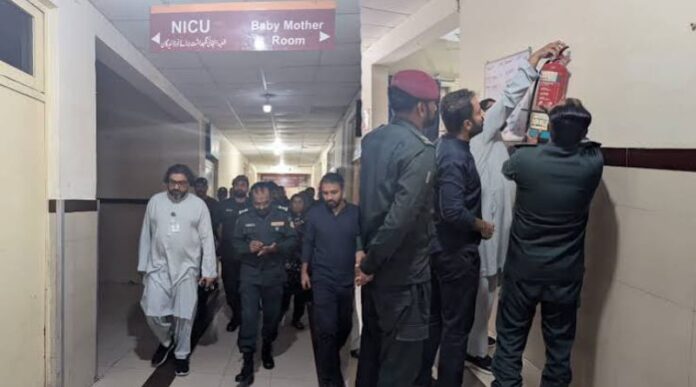

The heartbreaking fire tragedy at the Pakistan Institute of Medical Sciences (PIMS) in Islamabad has raised serious questions about fire safety in public hospitals across the country. After the devastating incident, authorities in Rawalpindi have started checking fire safety arrangements at another major government hospital.
The sudden inspections have once again brought an important issue into the public spotlight: why are safety checks often carried out only after a major disaster happens?
The recent tragedy at PIMS showed how dangerous a fire can become inside a hospital, especially in areas where newborn babies, elderly patients and critically ill people are receiving treatment. These patients may not be able to escape on their own, making proper fire safety systems extremely important.
Authorities have now started looking at the safety arrangements of Benazir Bhutto Hospital in Rawalpindi. The inspection was carried out after the deadly incident at PIMS, which shocked people across Pakistan and led to serious concerns about emergency preparations at other public hospitals.
Rawalpindi Authorities Begin Hospital Inspection
Following the PIMS tragedy, Rawalpindi administration officials moved to inspect fire safety measures at Benazir Bhutto Hospital. Additional Deputy Commissioner Enforcement Abdul Rehman Khan visited the hospital along with a Rescue team to examine the existing arrangements.
The purpose of the visit was to review whether the hospital has proper systems in place to deal with a fire or another major emergency. Such inspections can include checking fire extinguishers, emergency exits, electrical systems, access routes for rescue workers and the overall readiness of hospital staff.
The inspection is important because a hospital fire can quickly turn into a major disaster. Unlike many other buildings, hospitals have patients who may be unconscious, injured or connected to life-support equipment. Some patients cannot walk, while others may need doctors and nurses to help them move safely.
Newborn babies are among the most vulnerable patients. A fire in a nursery or intensive care unit can become especially dangerous because such areas may contain oxygen equipment, medical devices and other materials that can make rescue more difficult.
The Rawalpindi administration’s move to inspect Benazir Bhutto Hospital shows that the PIMS incident has created immediate concern about the condition of safety systems at other major healthcare facilities.
The PIMS Fire Shocked the Entire Country
The tragedy at PIMS in Islamabad was one of the most heartbreaking hospital incidents in recent years. Fourteen newborn babies lost their lives after a fire broke out in the neonatal intensive care unit of the Mother and Child Health ward.
Initial reports suggested that the fire may have started because of an electrical fault or a short circuit. Authorities also said that the presence of oxygen and medical equipment in the affected area may have caused the fire to spread rapidly.
The incident happened in an area where newborn babies were receiving critical care. Such patients are completely dependent on hospital staff and medical equipment. This makes any emergency much more dangerous.
Reports also raised serious questions about emergency access and the condition of fire safety arrangements at the hospital. Rescue teams reportedly faced difficulties while trying to reach the affected area, and an investigation was launched to determine exactly what happened and whether there were failures in safety or emergency response.
The tragedy was not only a loss for the affected families. It also became a warning for the entire healthcare system.
Why Are Safety Checks Starting After the Disaster?
One of the biggest questions being asked is why such important inspections were started after a tragedy had already taken place.
Fire safety should not become a priority only when lives are lost. Hospitals should already have regular inspections, working equipment and trained staff. A safety system is only useful when it is checked before an emergency, not after one.
The latest inspection at Benazir Bhutto Hospital may help identify possible problems, but authorities also need to explain whether similar safety checks were carried out regularly before the PIMS fire.
If safety inspections happen only after public pressure increases, there is a risk that the process may become temporary. Once public attention moves to another issue, routine checks may slow down again.
This is why experts and concerned citizens often stress the need for a permanent system. Hospitals should have regular and documented fire safety inspections throughout the year. Any problem found during an inspection should be fixed within a clear time period.
Simply visiting a hospital and checking a few fire extinguishers is not enough. Authorities must make sure that every identified problem is properly solved.
Fire Extinguishers Are Not Enough
Many people think that placing fire extinguishers inside a building is enough to make it safe. However, fire safety requires much more than this.
A hospital should have working fire alarms that can warn people immediately when smoke or fire is detected. Emergency exits must remain open and easy to use. Escape routes should not be blocked by furniture, equipment or other items.
Fire extinguishers must also be checked regularly. An expired or damaged extinguisher may fail when it is needed most.
Hospital staff must know where the equipment is located and how to use it. During a fire, even a few seconds can make a major difference. Staff members cannot be expected to learn emergency procedures at the time of a disaster.
Regular fire drills can help doctors, nurses, security staff and other workers understand their responsibilities. Every department should know how patients will be moved, who will call rescue services and which exits should be used.
The PIMS tragedy has shown the importance of checking the entire emergency system instead of focusing on only one piece of equipment.
Emergency Exits Must Always Remain Clear
Emergency exits are one of the most important parts of a building’s safety system. However, an exit is useless if people cannot reach it during a fire.
Hospitals should ensure that emergency routes remain clear at all times. Doors should be properly marked, and staff should know which routes are safest to use during different types of emergencies.
In some buildings, exits may remain locked because of security concerns. Hospitals must find a proper balance between security and emergency access. During a fire, every second matters, and people should not become trapped because an exit cannot be opened quickly.
Hospital managers should regularly check every emergency route. They should make sure that doors can open, corridors are clear and patients can be moved safely.
This is especially important in older hospital buildings where the original design may not fully meet modern safety requirements.
Hospital Staff Need Regular Training
A strong safety system depends not only on equipment but also on people.
Doctors and nurses are trained to save lives, but during a major fire, every worker inside a hospital may have an important role. Security guards, cleaners, administrative staff and other employees should also understand basic emergency procedures.
Regular training can teach workers how to use fire extinguishers, help patients move safely and guide people towards emergency exits.
Staff should also know when they should try to control a small fire and when they should immediately leave the area and wait for professional firefighters.
Hospitals should conduct proper fire drills instead of treating them as a formality. These exercises should test how quickly people can respond and whether the evacuation plan actually works.
A plan may look good on paper but fail during a real emergency. Regular drills can help identify weaknesses before lives are placed at risk.
Electrical Safety Also Needs Attention
Electrical faults are considered a major cause of fires in many buildings. Hospitals use a large number of electrical machines and medical devices every day. Air conditioners, incubators, ventilators and other equipment may run continuously.
Because of this, electrical systems must be properly maintained.
Old wiring, damaged cables and overloaded electrical connections can create serious risks. Hospitals should carry out regular inspections of their electrical systems, particularly in areas where critical medical equipment is used.
Air-conditioning systems should also receive regular maintenance. Any sign of electrical damage should be addressed quickly instead of being ignored.
Preventive maintenance may require money and planning, but the cost of preventing a disaster is far lower than the human and financial cost of dealing with one after it happens.
Authorities Need a Long-Term Plan
The inspection at Benazir Bhutto Hospital is an important step, but one visit cannot solve the larger problem.
Authorities need to inspect other major hospitals as well. Public and private healthcare facilities across the country should be reviewed according to proper safety standards.
The process should not be limited to hospitals in Islamabad and Rawalpindi. Every large healthcare facility should be prepared for emergencies.
Authorities should create clear inspection schedules and keep proper records. If a hospital fails to meet important safety requirements, it should be given a deadline to make improvements.
Serious violations should lead to action.
At the same time, hospital administrations must be given the resources they need to improve safety systems. It is not enough to issue orders if hospitals do not have the money or technical support required to replace old equipment or repair dangerous systems.
The PIMS incident should become a reason for lasting change, not just a temporary wave of inspections.
Public Hospitals Face Special Challenges
Public hospitals in Pakistan often deal with heavy pressure. Large numbers of patients arrive every day, and many facilities work beyond their original capacity.
Overcrowding can make emergency situations more difficult. Corridors may be full of patients and equipment, while staff members may already be working under pressure.
These problems do not remove the responsibility to maintain safety. Instead, they make safety planning even more important.
Hospital authorities need to plan for the real number of patients using their facilities. Emergency systems must consider overcrowding, limited space and the presence of patients who need special help.
A fire evacuation plan for an empty building is very different from an evacuation plan for a busy hospital.
A Lesson That Must Not Be Ignored
The deaths of the newborn babies at PIMS have deeply saddened people across Pakistan. Families who expected their children to receive medical care instead faced an unimaginable loss.
The tragedy has forced authorities to look closely at fire safety arrangements in other hospitals, including Benazir Bhutto Hospital in Rawalpindi.
But the main lesson is clear: safety should be a daily responsibility.
Fire inspections should be regular. Emergency exits should remain usable. Firefighting equipment should work properly. Electrical systems should be maintained, and staff should receive regular training.
Most importantly, authorities should act before a disaster happens.
The PIMS tragedy must not become another incident that leads to a few days of inspections and then slowly disappears from public attention. The loss of innocent lives should lead to real improvements in hospital safety across Pakistan.
The fire safety inspection at Benazir Bhutto Hospital is an important reminder that every hospital must be ready for the unexpected. Patients enter hospitals for treatment and protection. They should never have to face additional danger because basic safety measures were ignored.
If authorities use this tragedy to create a stronger and permanent safety system, future lives may be protected. However, that will only happen if inspections are followed by real action.
Pakistan’s hospitals need a culture of prevention rather than a system that responds only after a tragedy. The time to check fire alarms, emergency exits, electrical systems and staff readiness is not after people have died.
Read Also: check