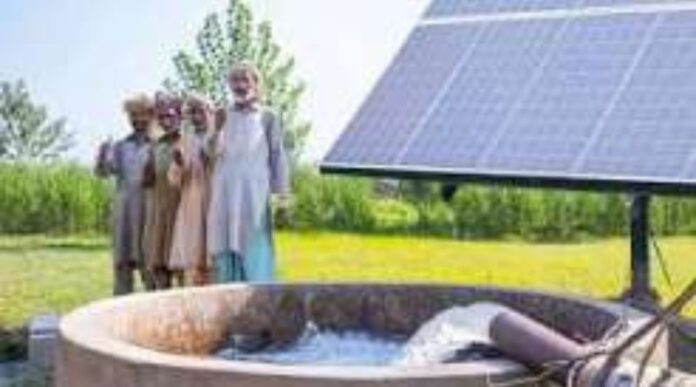

Pakistan’s agriculture sector is going through a major change. For decades, the sound of diesel engines was a normal part of farming across the country. Farmers depended heavily on diesel-powered tubewells and lift pumps to bring water from underground and irrigate their crops. Today, however, that situation has changed rapidly.
Solar energy has now become the biggest source of power for agricultural irrigation in Pakistan. New data from the 7th Agricultural Census 2024 shows that solar-powered pumps have overtaken diesel-powered pumps and now make up the largest share of irrigation equipment used by farmers.
This is a major shift for Pakistan’s farming sector. It is helping many farmers reduce their daily fuel expenses and become less dependent on expensive diesel and unreliable electricity. At the same time, the rapid spread of solar irrigation has created a serious concern about the increasing use of groundwater.
Diesel Pumps Lose Their Long-Standing Position
For more than 50 years, diesel was one of the main sources of power for agricultural irrigation in Pakistan. Farmers used diesel engines to operate tubewells and lift pumps, especially in rural areas where electricity connections were not available or were unreliable.
However, the latest agricultural census shows a clear decline in the use of diesel-powered irrigation equipment.
In 2004, Pakistan had around 833,953 diesel-powered tubewells and lift pumps. By the 2024 Agricultural Census, this number had fallen to around 530,500. This means the number of diesel-operated irrigation units dropped by approximately 36 percent over the past two decades.
The decline is even more important because Pakistan’s total number of irrigation pumps increased significantly during the same period.
The total number of tubewells and lift pumps in the country rose by around 97 percent to 1.83 million units. In simple words, Pakistan added a huge number of new irrigation pumps, but diesel was no longer the preferred choice for many farmers.
Instead, farmers increasingly moved towards solar and electricity-powered systems. The data shows that diesel has gone from being the main option for irrigation to a much smaller part of the overall market.
In 2004, diesel powered almost nine out of every ten irrigation pumps in the country. Today, fewer than three out of every ten pumps depend on diesel. This shows how quickly farming technology and energy use have changed in Pakistan.
Solar Energy Takes the Lead
The biggest reason behind the decline of diesel is the rapid rise of solar-powered irrigation.
Solar-powered pumps were not even listed as a major category in the 2004 agricultural machinery census. At that time, their use was extremely limited compared with diesel-powered systems.
Today, the situation is completely different.
Pakistan now has around 959,865 solar-powered tubewells and lift pumps. These include about 912,327 solar tubewells and 47,538 solar lift pumps.
Together, these solar-powered systems account for around 52 percent of all agricultural irrigation pumps in Pakistan. This makes solar energy the largest power source for farm irrigation in the country.
The growth of solar power is one of the biggest energy changes ever seen in Pakistan’s agriculture sector. Farmers across the country are installing solar panels to run water pumps and reduce their dependence on fuel.
Unlike a diesel engine, a solar irrigation system does not require the farmer to purchase fuel every day. The farmer has to spend money on buying and installing the solar system at the start, but after installation, sunlight becomes the main source of energy.
This makes solar especially attractive at a time when diesel prices have increased and farming costs are already putting pressure on growers.
Rising Diesel Prices Changed the Economics
The financial difference between diesel and solar power is one of the main reasons behind this major change.
A diesel-powered pump requires fuel whenever it is used. Farmers have to regularly spend money on diesel, and the total cost can become very high during the crop season.
As diesel prices increased over the years, irrigation became more expensive for many farmers. Fuel price changes also created uncertainty because farmers could not always predict how much they would have to spend to irrigate their land.
Solar systems work differently.
A farmer usually makes a larger investment at the beginning by buying solar panels, a pump and related equipment. However, after installation, the cost of operating the system can be much lower because sunlight does not have to be purchased.
This gives farmers more control over their irrigation expenses. They are also protected from sudden increases in diesel prices.
Research on solar irrigation in Pakistan has also shown that solar systems can reduce the long-term cost of running irrigation pumps compared with diesel. The higher starting cost remains a challenge for many small farmers, but the lower operating cost can make solar attractive over time.
Electricity-Powered Pumps Also Increased
Solar was not the only source of power that expanded during this period.
The number of electricity-powered irrigation units also increased strongly. Electric tubewells and pumps rose by around 320 percent to approximately 407,887 units.
This shows that farmers have been looking for alternatives to diesel from different sources.
However, electricity is not always a perfect solution in rural areas. Many farming regions continue to face load shedding, weak power supply and high electricity bills. Some farmers may have electricity connections but still cannot depend on the grid at the exact time they need water.
For this reason, solar has become more attractive for many growers. A solar pump can provide a direct source of energy during sunny hours without depending fully on the national electricity system.
The combination of expensive diesel, rising electricity costs and unreliable grid supply has helped push farmers towards solar technology.
Punjab Leads Pakistan’s Solar Irrigation Shift
Punjab has played the biggest role in the move towards solar-powered irrigation.
The province has around 1.54 million of Pakistan’s total tubewells and lift pumps. Because Punjab has a large agricultural area and depends heavily on irrigation, any major change in the province has a strong effect on national numbers.
Solar power has become a major source of irrigation energy across Punjab.
The province has around 862,238 solar-powered tubewells, compared with about 331,059 diesel-powered tubewells. This clearly shows that solar has moved far ahead of diesel in Punjab’s agricultural sector.
The trend is also visible in Sindh.
Solar-powered tubewells now outnumber diesel-powered tubewells in the province. Sindh has approximately 36,246 solar tubewells compared with around 25,017 diesel-operated tubewells.
These numbers show that the shift is not limited to one part of Pakistan. Farmers in different provinces are moving towards solar when the system is practical and affordable for their needs.
Why Farmers Prefer Solar Pumps
Farmers are choosing solar-powered irrigation for several reasons.
The first major reason is the lower running cost. Diesel must be bought regularly, while solar energy can power the pump during daylight without a daily fuel bill.
The second reason is independence. Farmers do not have to depend completely on fuel availability or electricity supply.
The third reason is greater control over irrigation timing. When there is enough sunlight, a farmer can operate the solar-powered pump and supply water to crops without waiting for electricity to return or arranging diesel.
Solar power can also help farmers in remote areas where the electricity network is weak or does not exist.
Pakistan receives strong sunlight in many agricultural regions, making solar technology a practical option for irrigation. As solar equipment has become more available and, in many cases, more affordable, its use has increased quickly.
This change can also reduce the amount of imported fuel used in the agricultural sector. Since Pakistan spends valuable foreign exchange on imported fuel, lower diesel use can provide wider economic benefits for the country.
Balochistan Still Depends Heavily on Diesel
Despite the rapid growth of solar energy, diesel remains very important in some parts of Pakistan.
Balochistan is the clearest example.
The province still has around 123,495 diesel-powered tubewells out of approximately 151,394 total tubewells. This means more than eight out of every ten tubewells in the province continue to depend on diesel.
The main reason is the geography and infrastructure of Balochistan.
Many farming areas are located far from major cities and have limited access to a reliable electricity network. Farmers often need powerful pumps to bring water from deep underground. In such areas, diesel engines remain an important and practical source of power.
Balochistan’s number of tubewells also increased dramatically over the past two decades. The province recorded a rise of around 623 percent since 2004.
As groundwater levels became deeper in some areas, farmers needed more tubewells and stronger pumping systems. In remote locations without dependable electricity, diesel remained one of the few available options.
This explains why the solar transition has not moved at the same speed in every province.
Diesel Also Remains Important in Khyber Pakhtunkhwa
Khyber Pakhtunkhwa is another province where diesel continues to power a large share of agricultural tubewells.
Around 33,834 out of the province’s approximately 61,063 tubewells run on diesel.
Like Balochistan, some areas of Khyber Pakhtunkhwa have difficult geography and limited access to reliable electricity. Farmers in such places may not always find solar systems suitable for their specific water needs.
Deep wells can require powerful pumps, and farmers may also need water at times when sunlight is not available. These practical issues mean that diesel still has an important role in several regions.
Therefore, while solar has become Pakistan’s biggest overall power source for farm irrigation, diesel has not disappeared. It continues to be necessary in areas where infrastructure, water depth and local conditions make other options difficult.
A Major Change Without One Big National Programme
One interesting part of Pakistan’s solar irrigation story is that much of this change happened through individual farmers and private investment.
The shift was not driven only by one large national programme that suddenly replaced all diesel pumps with solar systems.
Instead, many farmers made their own decisions based on cost and need.
When diesel became expensive and solar systems became more attractive, farmers began moving towards solar technology. Over time, thousands of separate decisions by farmers created a major national energy change.
The growth of solar-powered irrigation is therefore a strong example of how market conditions can quickly change the use of technology.
Pakistan’s agricultural sector has traditionally faced high energy costs and power supply problems. Solar offered many farmers a way to reduce these difficulties.
The Big Concern: Groundwater Use
Although the move from diesel to solar has many benefits, it has also created an important challenge.
Solar-powered pumps make it cheaper to extract groundwater. Once the solar system has been installed, farmers do not have to pay for each litre of diesel used to pump water.
This can create a problem.
When water becomes cheaper to pump, farmers may have less financial reason to control how much groundwater they use. They may run their pumps for longer periods because the direct cost of pumping is very low.
Pakistan already faces serious water challenges, and groundwater levels are falling in many areas.
Research comparing solar and diesel pumps in Pakistan’s Lower Indus Basin found that farms using solar pumps often extracted more groundwater than similar farms using diesel-powered systems. In 77 percent of the cases studied, solar-powered farms pumped more water. The research warned that solar irrigation has important economic and environmental benefits but must be expanded carefully to prevent excessive groundwater extraction.
This means solar power is not automatically a complete solution to Pakistan’s irrigation problems.
The energy itself is clean and cheaper to use, but groundwater is still a limited resource.
Pakistan Needs Better Water Management
The next challenge for Pakistan is to manage the success of solar irrigation.
The country now has nearly one million solar-powered irrigation units. Their growth can reduce diesel use, lower farming costs and improve energy security. However, the government and farming sector must also focus on protecting groundwater.
Better water management may include monitoring groundwater levels, encouraging efficient irrigation methods and promoting technologies that use less water.
Drip and sprinkler systems can help farmers deliver water more efficiently than traditional methods in suitable crops and areas.
Farmers may also need information about the long-term risks of excessive groundwater pumping. If water levels continue to fall, farmers will eventually have to drill deeper and spend more money to reach water.
This can turn today’s low-cost irrigation benefit into a serious future problem.
The goal should not be to stop solar irrigation. Instead, Pakistan needs to use solar power in a smarter way while protecting its underground water reserves.
A New Era for Pakistan’s Farmers
The replacement of diesel by solar as Pakistan’s biggest power source for agricultural irrigation is a historic change.
In only two decades, diesel-powered pumps have fallen sharply while the total number of irrigation units has almost doubled. Solar, which was barely part of the national picture in 2004, now powers more than half of the country’s farm irrigation pumps.
For farmers, the change can mean lower running costs, less dependence on imported fuel and greater control over irrigation.
For Pakistan, it can reduce fuel imports and support the wider use of renewable energy.
However, the success of solar irrigation also brings a new responsibility. Cheap pumping power can encourage the excessive use of groundwater if proper planning is not introduced.
Pakistan’s solar farming revolution has solved one major problem by reducing dependence on costly diesel. Now the country must make sure that this success does not create an even bigger water crisis in the future.
The numbers have clearly shown how quickly farmers have moved towards solar power. The next important task is to ensure that this major change supports both agriculture and long-term water security for future generations.
Read Also: check