
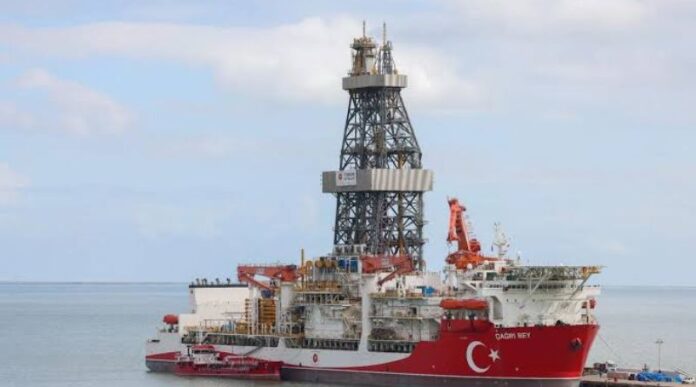

Pakistan is preparing for an important new step in its search for oil and gas, with Türkiye expected to begin offshore drilling activities in Pakistani waters soon. The move is part of a growing energy partnership between Pakistan and Türkiye and could open a new chapter in the two countries’ cooperation.
The development comes as Pakistan is trying to find more local sources of energy and reduce its heavy dependence on imported fuel. The country currently meets a large part of its energy needs through imports, which puts pressure on foreign exchange reserves and increases the impact of changes in global oil and gas prices.
Federal Petroleum Minister Ali Pervaiz Malik recently said that Turkish Petroleum is expected to start offshore drilling work in Pakistan soon. The announcement has increased hopes that exploration in Pakistan’s seas could lead to the discovery of new oil and gas reserves.
Türkiye Expands Its Energy Work in Pakistan
Türkiye’s involvement in Pakistan’s oil and gas sector is not a new development. The two countries have been working to increase cooperation in energy, and Turkish Petroleum has already joined hands with Pakistani companies for exploration activities.
In December 2025, Türkiye and Pakistan signed agreements covering oil and natural gas exploration and production. Under these agreements, Türkiye Petrolleri, also known as Turkish Petroleum, planned to work with Pakistani partners in five areas. Three of these areas are offshore, while two are located on land.
The agreements were seen as an important step because they brought a major Turkish energy company into Pakistan’s exploration plans. Turkish officials also said at the time that seismic research ships would come to Pakistan in 2026 and that the goal was to begin actual work during the year.
Seismic surveys are normally carried out before drilling. They help energy companies study underground rock layers and look for signs that oil or gas may be present. After studying the results, companies can decide where drilling has a better chance of finding useful reserves.
Pakistan Reopens Its Offshore Exploration
Pakistan’s offshore oil and gas sector has received fresh attention after remaining largely inactive for many years.
In May 2026, the Pakistani government announced the signing of Production Sharing Agreements and Exploration Licences for offshore blocks awarded under the Offshore Bid Round 2025. The move formally reopened Pakistan’s offshore exploration area after nearly two decades.
According to the government, the awarded blocks cover areas in the Indus and Makran offshore basins near the coastal areas of Sindh and Balochistan. The bidding process attracted interest for around 54,600 square kilometres of offshore territory, and 23 offshore blocks were awarded.
Two blocks, known as Offshore Deep-C and Offshore Deep-F, had already been awarded earlier to a partnership involving Mari Energies, Turkish Petroleum Overseas Company and Fatima Petroleum.
This means Türkiye’s upcoming drilling activity is part of a wider effort by Pakistan to bring its offshore energy potential back into focus.
Why Offshore Drilling Matters for Pakistan
Pakistan has been facing a serious energy challenge for years. The country imports a large share of the oil and gas it needs. This costs billions of dollars and creates pressure on the country’s foreign exchange position.
Any major discovery of oil or gas inside Pakistan’s territory could therefore provide important benefits.
Local production could help reduce the need for some imports. It could also improve energy security and make Pakistan less exposed to sudden increases in international fuel prices.
However, offshore exploration is not a quick process. Finding oil or gas is only the first step. Companies have to carry out surveys, drill wells, study the results and then determine whether a discovery is large enough to produce commercially.
For this reason, the start of drilling should not immediately be seen as a guarantee that Pakistan will become self-sufficient in oil or gas. It is an exploration effort, and the results will depend on what is found underground.
Turkish Petroleum Brings Experience
Türkiye has been increasing its role in offshore energy exploration in recent years. Its state-owned energy company has developed a growing fleet of research and drilling vessels and has started taking part in projects outside Turkish waters.
In 2026, a Turkish drilling vessel began work off Somalia after seismic studies identified a promising geological structure. Turkish officials described the operation as an important step in expanding the country’s energy activities beyond its own waters.
That experience could be useful in Pakistan.
Offshore drilling requires specialised equipment, trained workers and careful planning. The work is also much more difficult and costly than many onshore drilling projects because operations take place far from land and often in deep water.
Türkiye’s growing experience in this area gives Pakistan another partner as it tries to explore its offshore resources.
What Will Happen Before Large-Scale Production?
It is important to understand that drilling does not automatically mean oil or gas will be produced.
The first stage is exploration. Companies use geological information and seismic surveys to identify areas where underground structures may contain hydrocarbons. Once a promising location is selected, a drilling operation can begin.
A test well is then drilled deep below the seabed. Samples and other information collected during the process help engineers understand what is present below the surface.
If oil or gas is found, further testing is required. Companies need to know how much can actually be recovered and whether production would make financial sense.
If the discovery is large enough, the project can move toward development and production. This may require additional wells, offshore equipment, pipelines and other infrastructure.
Therefore, Pakistanis may have to wait for some time before any possible offshore discovery starts contributing to the country’s energy supply.
A Major Opportunity for Sindh and Balochistan
Pakistan’s offshore exploration plans cover areas connected to the Indus and Makran basins, close to Sindh and Balochistan. This gives the country’s coastal regions a potentially important role in future energy development.
Successful exploration could create work for local companies and workers. Support services such as transportation, engineering, maintenance, logistics and equipment supply may also benefit if offshore activity expands.
The development of energy projects can have a wider effect on coastal economies. New business activity may increase demand for ports, technical services and other support facilities.
At the same time, offshore projects need strong safety rules and environmental controls. Oil and gas exploration at sea must be managed carefully to protect marine life, coastal areas and fishing communities.
Pakistan Wants Greater Energy Security
The planned drilling comes at a time when the Pakistani government is putting greater focus on energy security.
Petroleum Minister Ali Pervaiz Malik has said the government wants to increase domestic exploration while also improving the country’s refining capacity. Pakistan currently depends heavily on imported energy, making local exploration an important part of the government’s wider strategy.
The government is also working on other measures to strengthen fuel security, including plans related to oil storage and refinery investment.
These efforts show that Pakistan is not relying on one project alone. Instead, it is trying to improve the energy system through more local exploration, better refining facilities and stronger arrangements for fuel supplies.
Stronger Pakistan-Türkiye Economic Ties
The offshore project also reflects the broader relationship between Pakistan and Türkiye.
The two countries have traditionally maintained close political and diplomatic relations, but energy is becoming a more important part of their economic cooperation.
The agreements signed in 2025 created a path for Turkish companies to take part in both onshore and offshore exploration in Pakistan. Turkish officials said the planned activities would involve working with Pakistani companies rather than operating completely on their own.
This kind of partnership can help both sides. Pakistan can gain access to investment, technology and technical experience, while Turkish companies get an opportunity to participate in a potentially important energy market.
The timing is also significant because Türkiye is expanding its energy activities in different parts of the world. Its offshore drilling work in Somalia shows that Turkish energy companies are becoming more active outside Türkiye.
Expectations Should Remain Realistic
News of offshore drilling naturally creates excitement, especially in a country that spends large amounts on imported fuel. But it is important to keep expectations realistic.
Pakistan has explored its offshore areas before, but previous efforts did not lead to commercially successful discoveries. The latest exploration campaign is based on newer studies, new investment and greater international cooperation, but there is still no guarantee of a major find.
Drilling a well is an expensive process. Even when hydrocarbons are discovered, the quantity, quality and cost of extraction determine whether a project can move into production.
For this reason, the first major milestone will simply be the completion of drilling and the results from the wells.
If commercially useful reserves are found, Pakistan could then begin planning the next stage.
What This Could Mean for Pakistan’s Future
If the new offshore programme produces successful results, the impact could go beyond the energy sector.
More local oil and gas production could reduce some import requirements. It could help save foreign exchange and provide greater protection against international fuel price changes.
New energy projects could also bring investment and create jobs. Pakistani companies working with international partners could gain valuable experience in offshore technology and project management.
There could also be long-term benefits for the country’s energy planning. A stronger domestic supply base would give Pakistan more options when dealing with international energy markets.
But all of these benefits depend on successful exploration and commercially useful discoveries.
Drilling Could Start a New Chapter
Türkiye’s planned offshore drilling operation marks an important stage in Pakistan’s renewed search for oil and gas beneath its seas.
The partnership comes after Pakistan reopened its offshore exploration sector and awarded new blocks to local and international companies. With Turkish Petroleum involved in several offshore areas, the two countries now have an opportunity to turn their energy agreements into practical work.
Pakistan needs new energy sources, while Türkiye is building its experience as an international player in oil and gas exploration. Their interests therefore meet at an important time.
The upcoming drilling will be watched closely because the results could provide valuable information about the country’s offshore resources.
For now, the main focus is on exploration rather than immediate oil or gas production. But if the drilling programme finds commercially useful reserves, it could become an important development for Pakistan’s energy sector and give a major boost to economic cooperation between Pakistan and Türkiye.
The next few stages will be critical. Once drilling begins, attention will turn to the results from the wells and whether they point toward reserves that can be developed at a reasonable cost.
For a country that imports much of its energy, even the possibility of finding new domestic resources is significant. Türkiye’s upcoming offshore work could therefore become an important part of Pakistan’s wider effort to improve energy security and reduce its dependence on foreign supplies.
Read Also : check