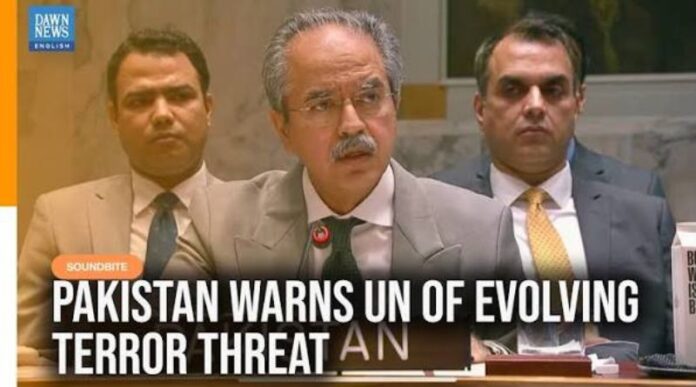

Pakistan has called on the United Nations to strengthen global efforts against terrorism as terrorist groups continue to change the way they operate. Islamabad has warned that the nature of terrorism is no longer the same as it was years ago. New technologies, online platforms, illegal financial networks, and changing regional conditions have created new challenges for countries around the world.
Pakistan made the call while highlighting the need for stronger international cooperation to deal with emerging security threats. The country stressed that no state can successfully fight terrorism alone because terrorist networks often operate across borders and use modern tools to spread their activities.
The message comes at a time when governments are facing a wider range of security challenges. Terrorist organisations are finding new ways to communicate, collect money, attract supporters, spread propaganda, and plan attacks. At the same time, the use of digital platforms has made it easier for extremist groups to reach people in different countries.
Pakistan believes that the international community must respond to these developments with stronger cooperation, better information sharing, and more effective action against terrorist financing.
Terrorism Is Changing Quickly
Terrorism has changed significantly with the development of technology. In the past, terrorist groups mainly depended on physical networks, face-to-face meetings, and traditional communication methods. Today, many extremist organisations can use the internet and social media to connect with supporters without being physically present in the same country.
Online platforms can be used to spread extremist material, recruit new members and encourage violence. Terrorist groups can also use encrypted communication tools to make it harder for security agencies to track their activities.
These developments have made counter-terrorism work more difficult. Security agencies now have to deal with both physical threats and online activities.
Pakistan has therefore urged the UN and its member states to make sure that global counter-terrorism policies keep pace with these changes.
The country has also stressed that international laws and cooperation systems need to be updated when necessary. Terrorist groups should not be allowed to take advantage of gaps between countries’ laws, security systems, or financial controls.
One of Pakistan’s key concerns is that terrorism is a cross-border problem. A group may have members in one country, financial supporters in another, and online networks operating from several different locations.
This makes cooperation between countries extremely important.
Pakistan has called for better sharing of information among states and international organisations. Timely information can help security agencies identify threats before they become major attacks.
Countries also need to work together on border security, investigations, financial monitoring, and the movement of suspected terrorists.
According to Pakistan’s position, counter-terrorism efforts should not depend only on individual countries. The international community needs a coordinated system where states can work together against common threats.
Such cooperation is especially important in regions where terrorist groups take advantage of weak borders or political instability.
Terrorist Financing Remains a Major Challenge
Cutting off money is one of the most important parts of fighting terrorism. Terrorist organisations need financial resources to maintain their networks, recruit people, buy equipment, travel, and carry out attacks.
Pakistan has repeatedly supported international efforts to stop terrorist financing. The country has also highlighted the need for stronger action against illegal financial channels.
Modern technology has created new challenges in this area. Terrorist groups can try to move money through informal networks, digital systems, illegal businesses, and other methods that may be difficult to identify.
For this reason, Pakistan believes countries need stronger financial monitoring and better coordination between financial institutions and law enforcement agencies.
International organisations also need to ensure that countries have the tools and knowledge required to identify suspicious financial activity.
Technology Has Created New Risks
Technology has brought major benefits to societies, but it can also be misused by terrorist groups.
The internet allows extremist organisations to spread messages quickly and reach audiences far beyond their traditional areas. Social media can also help them create online communities and influence vulnerable people.
Artificial intelligence and other advanced technologies may create additional challenges in the future. Terrorist groups could potentially use modern digital tools to create propaganda, manipulate information, or improve their communication methods.
This does not mean technology itself is the problem. Rather, the concern is how criminal and extremist groups may misuse it.
Pakistan has therefore stressed the importance of developing international rules and cooperation to prevent terrorists from taking advantage of new technologies.
At the same time, countries need to balance security requirements with people’s legal rights and access to technology.
Online Radicalisation Needs Attention
Another growing concern is online radicalisation.
Young people can be exposed to extremist content through websites, social media platforms, messaging services, and online communities. Extremist groups may use emotional messages, false information, or carefully prepared propaganda to attract new supporters.
Stopping this process requires more than security operations.
Governments, schools, communities, technology companies, and civil society organisations can all play a role in preventing radicalisation. Young people need access to education, employment opportunities, and positive online spaces.
Pakistan has maintained that counter-terrorism policies should also address the factors that can make people vulnerable to extremist messages.
Education and awareness can help people identify false claims and extremist propaganda before they become influenced by it.
Regional Security Concerns
Pakistan’s call also comes against the backdrop of continuing security challenges in the region.
South Asia has faced terrorism and extremism for many years. Pakistan itself has suffered heavily because of terrorist violence. The country has lost thousands of civilians and security personnel in attacks over the years.
Pakistan says its own experience has shown the importance of international cooperation in dealing with terrorist networks.
The country has carried out a number of security operations and strengthened its counter-terrorism institutions. However, Pakistan argues that national efforts need to be supported by international cooperation, especially when terrorist networks operate across borders.
Border management and information sharing are therefore important parts of Pakistan’s approach.
The UN Has an Important Role
Pakistan believes the United Nations has a central role in bringing countries together against terrorism.
The UN provides a platform where countries can discuss security threats, develop common policies, and coordinate their efforts.
However, Pakistan has called for the global counter-terrorism system to become more effective in dealing with new threats.
The international community must make sure that existing systems are not left behind as terrorist groups adopt new methods.
This includes improving cooperation between countries, strengthening international institutions, and supporting states that need technical or financial assistance to improve their counter-terrorism capabilities.
Developing countries may not always have the same resources as richer nations. Pakistan has therefore stressed the importance of capacity building so that countries can better protect themselves against terrorist threats.
Terrorism Cannot Be Linked to a Religion
Pakistan has also consistently maintained that terrorism should not be linked to any religion, race, or nationality.
The country has argued that terrorism is a security and criminal issue rather than something that belongs to a particular faith or community.
This distinction is important because unfairly linking terrorism with a religion or group can increase discrimination and social tensions. It can also create an environment that extremist groups may use to recruit people.
Pakistan has called for a balanced approach that targets terrorist organisations and individuals involved in violence while avoiding unfair treatment of innocent communities.
The international community must also work against hate speech, discrimination, and extremist ideas that can create further divisions.
Addressing the Root Causes
Military and security measures are important, but they cannot solve every aspect of terrorism.
Pakistan has also highlighted the need to address the conditions that can help extremist groups gain support. Poverty, lack of education, unemployment, political instability, and weak institutions can create difficult environments where extremist groups may attempt to expand their influence.
This does not mean that poverty automatically leads to terrorism. However, weak social and economic conditions can make communities more vulnerable to criminal and extremist networks.
Countries therefore need wider policies that support economic development, education, employment, and social stability.
The international community can assist countries by providing technical support, development opportunities, and training.
Protecting Civilian Rights
Pakistan’s call for stronger counter-terrorism measures also comes with the need to protect fundamental rights.
Security measures must be effective, but they should also respect international law. Governments need to ensure that counter-terrorism policies do not unfairly target innocent people.
Protecting civilians is especially important because terrorism itself causes serious harm to ordinary people. At the same time, excessive or poorly designed security measures can create further frustration and mistrust.
A successful counter-terrorism strategy should therefore maintain a balance between national security and the protection of people’s legal rights.
Closing Gaps in the Global System
The main message from Pakistan is that gaps in the international counter-terrorism system must be addressed before terrorist groups can take advantage of them.
These gaps can exist in several areas, including financial monitoring, border controls, information sharing, online activity, law enforcement, and international legal cooperation.
Terrorist groups do not follow national borders, but security systems often do. This creates opportunities for criminals and extremists to move between jurisdictions or use differences in national laws to avoid detection.
Closing these gaps requires countries to trust one another and share information in a timely manner.
It also requires stronger international standards and better implementation of existing agreements.
A Need for a Long-Term Strategy
Pakistan’s appeal to the UN highlights the need for a long-term approach to terrorism.
Terrorist threats can change quickly. A group that operates mainly through physical networks today may use online systems tomorrow. New technologies can create opportunities for terrorists while also giving governments new tools to stop them.
This means counter-terrorism strategies cannot remain fixed.
Countries need to regularly review their policies, train security officials, improve technology, and strengthen cooperation with international partners.
The private sector also has an important role, particularly technology companies and financial institutions. These organisations can help identify suspicious activity and prevent their systems from being misused.
Pakistan’s Message to the International Community
Pakistan’s latest position reflects its broader call for stronger international cooperation against terrorism.
Islamabad wants the United Nations and its member states to recognise that the threat is evolving and that old approaches may not always be enough.
The fight against terrorism now involves much more than preventing physical attacks. It includes stopping terrorist financing, controlling extremist propaganda, dealing with online recruitment, protecting borders, sharing intelligence, and preventing the misuse of new technologies.
Pakistan has urged countries to work together instead of responding to terrorism only after an attack has taken place.
A stronger preventive approach could help identify threats earlier and reduce the ability of terrorist organisations to expand.
Conclusion
Pakistan’s call at the United Nations highlights a major challenge facing the international community: terrorism is changing, and counter-terrorism systems must change with it.
Modern terrorist groups can use technology, online platforms, illegal financial networks, and cross-border connections to support their activities. These developments have created gaps that individual countries cannot always close on their own.
Pakistan believes the UN can play a key role in helping countries work together, improve information sharing, stop terrorist financing, strengthen border security, and respond to new technological threats.
At the same time, the fight against terrorism must protect civilian rights and avoid unfairly blaming entire communities for the actions of extremist groups.
A successful global strategy will require security measures, international cooperation, education, economic opportunities, and efforts to reduce the conditions that allow extremist networks to grow.
As terrorist threats continue to evolve, Pakistan’s message is clear: the international community must act together, close existing gaps, and prepare for new forms of terrorism before they become even more difficult to control.
Read Also: check