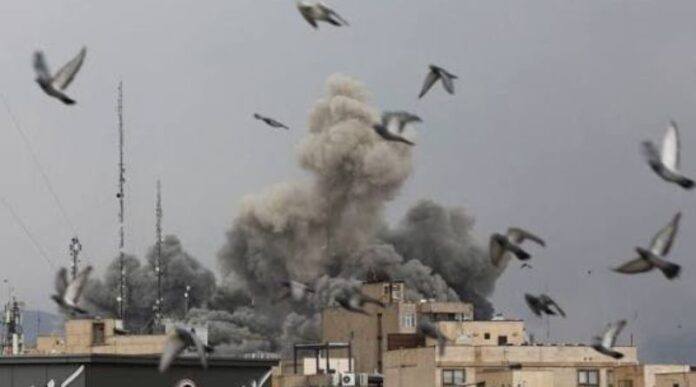

The latest developments have raised fresh questions about whether the conflict can be brought under control through diplomacy or whether more military action lies ahead. The situation remains uncertain, with both sides continuing to exchange threats and attacks while diplomatic efforts struggle to produce a lasting settlement.
The conflict has also created serious economic pressure. Oil prices have moved sharply because of concerns about supplies passing through the Strait of Hormuz, one of the world’s most important energy routes. At the same time, attacks involving ships and military bases have increased the risks for countries across the Gulf and beyond.
Fighting Spreads Beyond Iran
The latest escalation has not remained limited to Iranian territory. US forces have carried out attacks on Iranian military targets, while Iran has responded with missile and drone attacks against American positions in several countries.
Earlier in September, US strikes on targets in southern Iran were followed by Iranian attacks involving American interests in Bahrain, Jordan and Iraq. Kuwait also reported confronting Iranian missiles and drones. These developments showed how quickly the conflict could spread beyond the borders of the two main countries involved.
The exchange of attacks was among the most serious since the fighting entered a period of reduced intensity in July. The renewed strikes have increased concerns among regional governments that their territories could become part of the conflict.
For countries hosting US military bases, the situation is particularly difficult. They have to balance their security ties with Washington while also trying to avoid becoming direct targets in the confrontation with Tehran.
Strait of Hormuz Becomes a Major Flashpoint
One of the biggest concerns in the current conflict is the Strait of Hormuz.
The narrow waterway connects the Persian Gulf with the Gulf of Oman and is a major route for international oil shipments. Any serious disruption in this area can quickly affect energy prices and create problems for countries that depend on imported fuel.
The United States and Iran have increasingly focused their military activities around the waterway. Reports in early September said US forces targeted Iranian oil tankers, while Iran attacked tankers and fired missiles toward US naval forces operating near the strait.
The tanker attacks have made the situation even more complicated for international shipping companies. Ships passing through the area face greater security risks, while governments are under pressure to protect commercial vessels and keep energy supplies moving.
For the global economy, the concern is not limited to the price of crude oil. Higher shipping costs, insurance charges and fuel prices can eventually increase the cost of transportation, food and other goods.
Iran Targets US Forces in the Region
Iran has expanded its response beyond direct attacks on US forces inside the region. American military bases and other interests have come under pressure as Tehran seeks to respond to US operations.
Iran has also focused attention on US naval forces operating around the Strait of Hormuz. According to the Critical Threats Project, Iranian forces attempted to target US Navy vessels with ballistic missiles in early September. The attacks were described as part of an effort to make it more difficult for the United States to maintain its naval operations and pressure on Iranian ports.
The growing focus on American ships adds another dangerous element to the conflict. A successful attack causing major casualties or damage to a US warship could create pressure in Washington for a stronger military response.
This is one reason why even a single incident at sea could have consequences far beyond the immediate area.
US Faces a Difficult Choice
The Trump administration now faces difficult decisions about how to handle the conflict.
President Donald Trump has continued to leave open the possibility of further major military operations against Iran. At the same time, his administration has discussed diplomatic options and the possibility of bringing the fighting to an end.
In an interview reported by Axios on September 17, Trump said he was approaching an important decision point regarding the war. He was also preparing to discuss the situation with leaders from six Gulf countries, including Saudi Arabia, the United Arab Emirates, Qatar, Bahrain, Kuwait and Oman.
The United States has already committed large military resources to the region. Continuing the conflict for a longer period could place further pressure on American forces, weapons supplies and the country’s budget.
The financial cost has already become significant. An updated US Central Command estimate reported by the Associated Press put the cost of the war at $43.6 billion as of September 3, with a large part of the increase linked to weapons spending.
Iran Under Growing Economic Pressure
Iran is also facing serious economic challenges because of the conflict and international restrictions.
The war has affected oil exports, shipping and access to international markets. The situation around the Strait of Hormuz has added further pressure because the waterway is important for Iran’s own economic activity as well as global energy trade.
Reports have also pointed to growing economic pressure inside Iran. A prolonged conflict can make it harder for businesses to operate normally and can raise the cost of basic goods and fuel.
Despite these pressures, Tehran has continued to respond militarily and has shown no clear sign of accepting all US demands.
The two sides also remain divided over several major issues, including Iran’s nuclear programme, sanctions, the future of the Strait of Hormuz and the wider security structure of the region. The Council on Foreign Relations says a lasting settlement remains difficult because these major disputes have not been resolved.
Yemen Adds Another Layer to the Crisis
The situation in Yemen has made the regional crisis even more complicated.
The Iran-backed Houthi movement has increased military activity in Yemen, creating additional pressure around the Red Sea and the Bab el-Mandeb Strait. This waterway is another important route for international shipping.
Reuters reported in September that a rapid Houthi offensive in Yemen had increased concerns about the security of Bab el-Mandeb. The development created another challenge for Washington because the United States was already dealing with the conflict involving Iran.
Any major disruption at Bab el-Mandeb could have consequences for global trade. Ships may have to take longer routes, increasing fuel use, travel time and transport costs.
This means the effects of the US-Iran conflict are no longer limited to the Persian Gulf. They are increasingly being felt across several important shipping routes in the wider Middle East.
Oil Markets Remain Under Pressure
Energy markets have been among the biggest areas affected by the conflict.
Oil prices have moved higher because traders are worried about possible supply disruptions. The Strait of Hormuz is especially important because a major share of the world’s oil and gas shipments pass through the region.
The situation has also affected refined fuel markets. Disruptions to shipping and refining capacity can create shortages of diesel and other fuels even when crude oil itself remains available.
The Financial Times reported that the current energy shock has created serious problems for global fuel supplies and has pushed crude prices above $100 a barrel during the latest period of instability.
For countries such as Pakistan, higher global oil prices can be especially important. Pakistan imports a large amount of fuel, so an increase in international prices can raise the cost of petrol, diesel and transport.
Higher fuel costs can then affect electricity generation, farming, transportation and the prices of everyday goods.
Global Shipping Faces Greater Risks
The conflict has also increased risks for commercial ships.
Tanker attacks around the Strait of Hormuz have already forced shipping companies to closely monitor developments before sending vessels through the area. A longer conflict could increase insurance costs and force some companies to look for alternative routes.
The problem becomes even more serious when both Hormuz and Bab el-Mandeb face security threats.
These two waterways are important links in global trade. Disruptions can delay shipments between Asia, Europe and the Middle East.
Businesses may eventually pass higher transportation and insurance costs on to customers. As a result, a regional military conflict can create economic effects thousands of kilometres away.
Diplomatic Efforts Remain Important
Despite the continued fighting, diplomacy remains an important part of efforts to end the conflict.
The United States and Iran have held discussions at different stages, but major disagreements remain. A temporary reduction in fighting has not yet produced a permanent political agreement.
The challenge is that both sides have different demands and security concerns. Washington wants restrictions on Iran’s military and nuclear capabilities, while Tehran has demanded relief from economic pressure and sanctions.
The issue of the Strait of Hormuz has also become central to the dispute.
The longer the conflict continues, the more difficult it may become to reach an agreement because military operations can create new problems and increase mistrust.
Regional Countries Caught in the Middle
Countries across the Middle East are watching the conflict with concern.
Saudi Arabia, the UAE, Qatar, Bahrain, Kuwait, Oman, Iraq and Jordan all have important links with the United States. At the same time, they are directly exposed to the consequences of any conflict involving Iran.
Some of these countries host American forces or have important US military partnerships. That makes them strategically important but can also increase their exposure to Iranian retaliation.
Gulf governments also have strong economic interests in keeping oil production and shipping routes operating normally.
A wider conflict could damage infrastructure, reduce energy exports and create new security problems.
The Human Cost Is Growing
Behind the military developments is a growing human cost.
Military strikes can destroy homes, public infrastructure and businesses while forcing people to leave their communities. Civilian populations in countries affected by the fighting face fear and uncertainty.
The US military has also suffered casualties. Reuters reported on September 18, citing a Washington Post report, that at least 22 US military personnel had died in the conflict, four more than were listed in the Pentagon’s public database at that time. US Defense Secretary Pete Hegseth disputed the report.
The different casualty figures show how difficult it can be to establish a complete picture during an active war.
What Happens Next?
The future of the US-Iran conflict remains uncertain.
The fighting has already lasted much longer than some early expectations. Time magazine reported in September that the conflict had entered its seventh month, with no clear timeline for when the fighting would end.
The possibility of renewed large-scale US military operations remains. At the same time, diplomatic contacts could provide a path toward reducing tensions.
Much will depend on whether Washington and Tehran can agree on the main issues separating them.
A wider regional war would create serious risks for civilians, military forces, energy markets and international trade. Attacks involving shipping routes could also produce economic problems far beyond the Middle East.
For now, the region remains on edge. Military forces are on alert, shipping companies are watching key waterways closely, and governments are preparing for different possible outcomes.
The most important question is whether the current escalation can be contained or whether further attacks will pull more countries and armed groups into the conflict. With the Strait of Hormuz, the Red Sea and several regional military bases already affected, the consequences of the US-Iran confrontation are being felt far beyond the borders of the two countries.
Read Also: check