
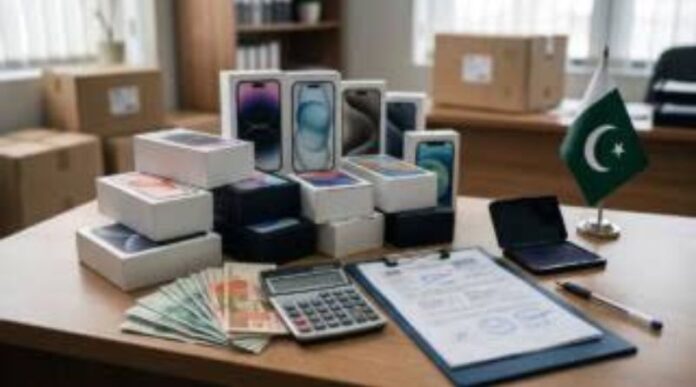

pakistan’s mobile phone imports recorded a significant decline during the first quarter of the financial year 2026-27 (FY27). The total value of mobile phones imported into the country fell by 16.6% to $417 million, showing a decrease compared with the same period of the previous financial year.
The decline highlights changes in Pakistan’s mobile phone market and the spending pattern of consumers. Mobile phones have become an important part of daily life, as people use them for communication, online shopping, banking, education, business, and entertainment. However, changes in prices, purchasing power, import costs, and demand can affect the number and value of phones brought into the country.
The latest figures are important for mobile phone sellers, distributors, manufacturers, and consumers. They provide an indication of how the market is performing at the beginning of FY27 and raise questions about the factors behind the lower import bill.
Although mobile phone imports remain an important part of Pakistan’s technology market, the drop in their value suggests that the sector is facing changing market conditions.
Mobile Phone Imports Reach $417 Million
Pakistan imported mobile phones worth $417 million during the first quarter of FY27. This represents a 16.6% decrease compared with the corresponding period of the previous financial year.
The decline means that Pakistan spent less on mobile phone imports during the three-month period than it did a year earlier. However, the lower import bill does not automatically mean that the number of phones entering the country also declined by the same percentage.
Import value and import quantity are two different measures. The total value can fall because fewer phones are imported, because consumers and businesses purchase less expensive models, or because of a combination of different market factors.
For example, if buyers shift from expensive flagship smartphones to affordable Android devices, the total value of imports may decrease even if the number of phones imported does not fall at the same rate.
Similarly, a reduction in demand for new phones can lead importers to bring fewer devices into the country. Without separate figures for the number of units imported and their average prices, it is not possible to identify the exact reason for the decline.
Nevertheless, the 16.6% reduction shows that the value of Pakistan’s mobile phone imports was lower during the opening quarter of FY27.
Why Mobile Phone Imports Matter for Pakistan
Mobile phones are among the most widely used technology products in Pakistan. Millions of people depend on smartphones for personal and professional activities, while businesses use them to communicate with customers and manage daily operations.
Pakistan’s mobile phone market includes a wide range of products, from basic handsets to affordable smartphones and high-end devices. International brands compete for customers by offering different prices, features, camera systems, battery capacities, and performance levels.
Many devices sold in Pakistan are imported as complete products or assembled locally using imported parts and components. This makes foreign trade an important part of the mobile phone industry.
When imports increase, it can reflect stronger demand for new devices or greater purchasing activity by importers. On the other hand, a decrease may point towards lower demand, changes in buying habits, higher costs, or a shift in the type of phones entering the market.
However, import figures alone do not provide a complete picture of the industry. Local manufacturing and assembly, exports, stock levels, and the availability of different models also affect the overall market.
For this reason, the latest decline should be viewed as one part of the broader picture of Pakistan’s mobile phone sector.
High Prices May Affect Consumer Buying Decisions
The price of a smartphone plays a major role in the purchasing decisions of Pakistani consumers. Many buyers compare several models before deciding which device offers the best value for money.
For a large number of people, a smartphone is a necessary expense rather than a luxury. Students need phones for online classes and educational material, office workers use them for communication, and small business owners depend on them to contact customers and receive orders.
Despite this need, not every consumer can afford to replace a phone regularly. When household budgets are under pressure, people may continue using their existing devices instead of buying new ones.
Some consumers may also choose lower-priced smartphones rather than expensive models. This change in buying habits can affect the overall value of mobile phone imports.
Import costs, exchange rate movements, taxes, and other expenses can also influence the final retail price of a device. When prices rise, customers may delay their purchases or look for cheaper alternatives.
These are possible factors that can influence the market, although the reported import figures alone do not confirm which factors caused the 16.6% decline in the first quarter of FY27.
Pakistan’s Mobile Phone Market Is Changing
The mobile phone market in Pakistan has changed considerably over the years. Smartphones are now used for many activities that previously required a computer or a visit to a physical office.
People use mobile applications to transfer money, pay bills, order food, book transport, attend online meetings, and access government services. Social media platforms and video-sharing applications have also increased the importance of smartphones in everyday life.
As a result, consumers often look for devices that provide reliable performance, long battery life, good cameras, and enough storage at a reasonable price.
The demand for different phone categories can change according to the financial situation of consumers. Some buyers prefer affordable devices that cover basic needs, while others are willing to spend more on advanced features.
A fall in the total value of imports could reflect changes in this mix of devices. However, confirming such a trend would require detailed information about the models and price categories imported during the period.
The market is also influenced by the availability of locally assembled smartphones. Local assembly can help suppliers offer a wider selection of devices, although prices still depend on several factors, including imported components, production costs, taxes, and distribution expenses.
The latest figures may encourage businesses to review their sales plans and pay closer attention to changing customer preferences.
Local Mobile Phone Assembly and Manufacturing
Local assembly has become an important part of Pakistan’s mobile phone market. Several companies operate in the country, producing or assembling devices for local consumers.
The availability of locally assembled phones can reduce dependence on importing complete handsets. It can also support employment, distribution networks, technical skills, and related business activities.
However, local assembly does not mean that every part of a phone is produced within Pakistan. Many devices still depend on imported components, including electronic parts and other materials required for production.
As a result, the value of complete mobile phone imports does not necessarily represent the total foreign spending associated with the mobile phone industry.
A decline in complete handset imports could occur alongside changes in local assembly activity. To understand the full situation, it is necessary to examine the relevant import categories, production figures, and local sales data together.
For example, if companies assemble more devices locally, imports of complete phones could decline even if overall consumer demand remains steady. At the same time, greater assembly activity may increase the need for imported components.
The available figure of $417 million relates to the value of mobile phone imports stated in the report. It should not be treated as a complete measure of all imported materials used in the country’s mobile phone industry.
Impact on Mobile Phone Dealers and Importers
A decline in import value can have different effects on businesses operating in the mobile phone market.
Importers generally plan their purchases according to expected demand, available stock, prices, and their ability to sell devices at a profit. When market conditions change, they may adjust the number or type of phones they order from international suppliers.
If demand weakens, importers may become more careful about bringing in large quantities of new models. This can help them avoid holding excess stock, particularly when new smartphones are expected to launch soon.
Retailers may also change their sales strategies. They could focus more on affordable models, offer discounts on older devices, or provide customers with different payment options where available.
However, a decline in imports does not automatically mean that mobile phone shops will experience lower sales. Dealers may already have stock purchased during an earlier period, and locally assembled devices may continue to meet a large part of consumer demand.
The impact will depend on the availability of products, customer spending, competition between brands, and the overall performance of the market.
Businesses will likely need to monitor demand carefully as the financial year progresses. The performance of the remaining quarters will provide a clearer picture of whether the lower import value represents a short-term change or a longer market trend.
What Does the Decline Mean for Consumers?
For ordinary consumers, the most important question is whether the lower import figure will affect mobile phone prices and availability.
A fall in imports does not necessarily mean that smartphone prices will decrease. Retail prices depend on several factors, including the cost of imported devices, exchange rates, taxes, transport expenses, local assembly costs, and profit margins.
If importers bring in fewer phones while demand remains strong, the supply of certain models could become limited. In such a situation, prices may not fall even though the total import bill is lower.
On the other hand, if the decline is linked to weaker demand, sellers may offer discounts to attract customers. The final outcome depends on the relationship between supply and demand.
Consumers should also remember that different phone categories can perform differently. Demand for affordable smartphones may remain strong even when sales of expensive flagship models slow down.
Anyone planning to purchase a new phone should compare prices from different sellers, check the device’s warranty, and confirm its PTA approval status where applicable.
It is also useful to consider the total cost of ownership, including repair expenses, battery performance, software support, and the availability of spare parts.
These steps can help buyers make informed decisions regardless of whether national import figures rise or fall.
The Role of Government Policies and Import Costs
Government policies can influence Pakistan’s mobile phone market in several ways. Taxes, customs procedures, import regulations, and policies supporting local assembly can affect the cost and availability of devices.
Changes in the exchange rate can also influence import costs because international suppliers generally price their products in foreign currencies. When the rupee weakens against the US dollar, importing the same product can become more expensive in rupee terms, all else being equal.
However, the relationship between import costs and total import value is not always straightforward. Higher prices can increase the value of imports even when fewer units are purchased, while lower quantities or a shift towards cheaper models can reduce the total bill.
Government policies aimed at encouraging local production may also affect how companies source and supply mobile phones.
For a clearer understanding of the 16.6% decline, it would be useful to examine the relevant policy changes, exchange rate movements, import quantities, and market demand during the quarter.
The available headline figure does not establish that any single government policy or economic factor was responsible for the reduction.
What to Expect in the Remaining Quarters of FY27
The performance of Pakistan’s mobile phone imports during the remaining quarters of FY27 will help determine whether the decline continues.
Several factors may influence the market in the coming months. These include consumer purchasing power, smartphone launch schedules, the prices of new devices, the availability of locally assembled phones, and changes in import costs.
New models from major brands could encourage consumers to upgrade their devices. However, buyers may also continue using their existing phones if replacement costs remain high.
The demand for affordable smartphones will be particularly important because price remains a key consideration for many households in Pakistan.
Importers and retailers will need to watch consumer demand and adjust their product selections accordingly. Manufacturers and local assembly companies will also need to understand which phone categories are attracting the most interest.
At the same time, future import figures should be compared with the corresponding periods of previous financial years. This will help account for seasonal changes and provide a more reliable picture of market performance.
One quarter’s figures are not enough to establish a long-term trend. Data from the next three quarters, along with local production and sales figures, will provide a better understanding of the sector’s direction.
Conclusion
Pakistan’s mobile phone imports fell by 16.6% to $417 million during the first quarter of FY27. The decline marks a reduction in the value of mobile phones brought into the country compared with the same period of the previous financial year.
The figures highlight the importance of monitoring consumer demand, import costs, local assembly, and changes in purchasing habits. However, the available data does not establish the exact reason behind the decline or show whether the number of imported handsets fell by the same percentage.
For consumers, the main concern will be the effect on phone prices and availability. For importers, retailers, and local manufacturers, the coming quarters will provide further information about market demand and business conditions.
As FY27 progresses, additional trade and production data will be needed to determine whether the decline is temporary or part of a wider change in Pakistan’s mobile phone market.
Frequently Asked Questions (FAQs)
1. How much did Pakistan spend on mobile phone imports in the first quarter of FY27?
Pakistan’s mobile phone imports were valued at $417 million during the first quarter of FY27.
2. By how much did mobile phone imports decline?
The value of mobile phone imports fell by 16.6% compared with the corresponding period of the previous financial year.
3. Does the decline mean fewer mobile phones were imported?
Not necessarily. The total import value can decrease because of lower quantities, cheaper models, changes in prices, or a combination of factors. Separate data on imported units would be needed to confirm the change in volume.
4. Will mobile phone prices fall in Pakistan?
Not automatically. Prices depend on import costs, exchange rates, taxes, supply, demand, and sellers’ margins. A decline in import value alone is not enough to predict future retail prices.
5. Does local mobile phone assembly affect import figures?
Yes. If more phones are assembled locally instead of being imported as complete devices, complete handset imports may decline. However, local assembly can still depend on imported components.
6. What will determine the mobile phone market’s performance during the rest of FY27?
Consumer purchasing power, phone prices, import costs, local assembly, new product launches, and demand for different phone categories will all help shape the market’s performance in the remaining quarters.
Read Also: check