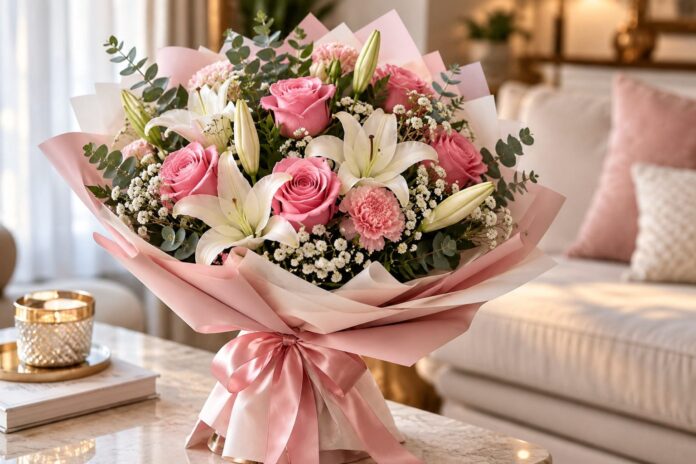

A bouquet does not have to be large or expensive to make someone feel special. Sometimes, a few carefully chosen flowers can communicate more than an elaborate gift.
What makes flowers meaningful is often the thought behind them. Remembering someone’s favourite colour, choosing an arrangement that suits their personality, or including a message that reflects a shared memory can turn a simple bouquet into a personal gesture.
Flowers are given for many reasons: to celebrate a birthday, mark an anniversary, thank someone, congratulate a friend, or brighten an ordinary day. The best choice depends less on following a set of rules and more on understanding the person receiving them.
Here are a few details that can make the experience more thoughtful.
Start With the Person, Not the Occasion
It is easy to choose flowers based entirely on the event. Red roses are often associated with romance, bright arrangements suit celebrations, and softer colours can create a more understated impression. These conventions can be useful, but they should not make the decision for you.
Think about the recipient first.
Someone who loves colour might appreciate a mixed bouquet with several flower varieties. A person with a simpler style may prefer a smaller arrangement in a restrained palette. If they have mentioned a favourite flower before, remembering that detail can make the gift feel especially considerate.
You do not need to know everything about floral design to make a good choice. Paying attention to someone’s preferences is often enough to narrow the options.
Choose Colours That Feel Right
Colour is one of the first things people notice about a bouquet. It affects the arrangement’s overall appearance and can help set the mood.
Red flowers are commonly associated with romance, while pink can suggest affection or admiration. White arrangements often create a clean, understated look, and yellow flowers can bring brightness to a celebration. Mixed colours offer more variety and can suit recipients who enjoy a lively style.
These associations are not universal. Flower meanings can differ between cultures, occasions, and personal experiences. A colour that feels romantic to one person may simply be their favourite colour to another.
Rather than treating colour symbolism as a strict guide, use it as a starting point. Consider the recipient’s taste and the feeling you hope the gift will convey.
Match the Arrangement to the Moment
The occasion can help determine the size, style, and overall character of a bouquet.
For a birthday, a colourful arrangement can feel cheerful and celebratory. For an anniversary, you might choose flowers that have a special connection to the relationship. A bouquet given to say thank you can be simple and understated, while flowers for a wedding celebration may suit a more formal presentation.
An unexpected bouquet is different again. Because there is no event to dictate the choice, you can focus entirely on what the recipient likes.
The goal is not to find a different formula for every occasion. It is to make sure the flowers feel appropriate to the moment without losing the personal touch.
Let the Arrangement Reflect Their Personality
Flowers come in different shapes, sizes, textures, and colours. These differences give you room to choose something that reflects the recipient’s style.
Classic roses may suit someone who appreciates traditional arrangements. Sunflowers or colourful mixed flowers might appeal to someone who prefers a brighter look. White flowers and subtle greenery can create a more understated effect.
You can also consider the overall presentation. A hand-tied bouquet has a different feel from flowers arranged in a box or wrapped in decorative paper.
When choosing a flower bouquet, compare the actual flowers and arrangement styles rather than judging by size alone. The right choice is the one that feels suited to the person receiving it.
A Personal Message Can Make the Difference
Flowers can express a feeling, but a message explains why you chose to send them.
A short card can add context that the arrangement itself cannot provide. For a birthday, it might recall a happy memory. For an anniversary, it could acknowledge something you value about the relationship. When saying thank you, a few sincere words can explain what the person’s help or kindness meant to you.
The message does not need to sound poetic. In fact, familiar and straightforward language often feels more personal than an elaborate quotation.
Try to mention something specific rather than relying on a generic greeting. A small reference to a shared experience can make the card feel as carefully chosen as the flowers.
Presentation Matters, Too
The wrapping, ribbon, and arrangement all contribute to the first impression.
A neat, coordinated presentation can help the flowers look considered and complete. It does not have to be elaborate. Simple wrapping can suit a delicate bouquet, while a more colourful arrangement may work well with a complementary accent.
The important thing is balance. Packaging should support the flowers rather than distract from them.
It is also worth considering the practical side. If the recipient will need to place the flowers in a vase, make sure they can easily remove the wrapping. A beautiful presentation is more enjoyable when it is convenient to handle.
Think About Timing and Delivery
A thoughtful gift should arrive at a moment when the recipient can appreciate it.
For a birthday or anniversary, arranging delivery in advance can reduce the risk of a last-minute problem. If you are sending flowers to someone’s workplace, consider whether they will have a suitable place to keep them. For a home delivery, make sure the address and contact details are correct.
Timing can be especially important when the sender and recipient live in different cities. Check delivery coverage and the expected arrival window before placing an order, particularly for an important occasion.
These details may seem practical rather than romantic, but they help the gesture work as intended.
Remember That Flowers Need Care
Part of giving flowers is helping the recipient enjoy them for as long as possible.
If the bouquet comes with care instructions, include them or make sure they are easy to find. As a general rule, cut flowers benefit from a clean vase, fresh water, and stems trimmed before arranging. Remove leaves that would sit below the waterline, and keep the arrangement away from direct sunlight, heat, and ripening fruit.
The exact care needed can vary by flower type, so follow any specific instructions provided with the arrangement.
These simple steps show consideration beyond the moment the bouquet is delivered. They help the recipient enjoy the flowers rather than having to guess how to look after them.
Flowers Do Not Need a Special Occasion
Some of the most memorable gestures happen on ordinary days.
A bouquet sent to say thank you, to recognise someone’s effort, or simply to let them know they are on your mind can be meaningful without a celebration attached to it. The absence of a formal occasion can even make the gesture feel more spontaneous.
You also do not need to make every gift elaborate. A single flower may be enough when it connects to a memory or reflects a preference you have remembered.
The value lies in the intention, not the number of stems.
Make the Gesture Your Own
There is no single perfect bouquet for every person or occasion. The most thoughtful choice comes from bringing together a few details: what the recipient likes, the reason for the gift, the appearance of the arrangement, and the message that accompanies it.
Flowers give you a simple way to express something that can sometimes be difficult to put into words. A little attention to the choices around them makes that expression more personal.
Ultimately, the art of giving flowers is not about following a set of floral rules. It is about noticing the small things that matter to someone and letting those details guide your choice.