
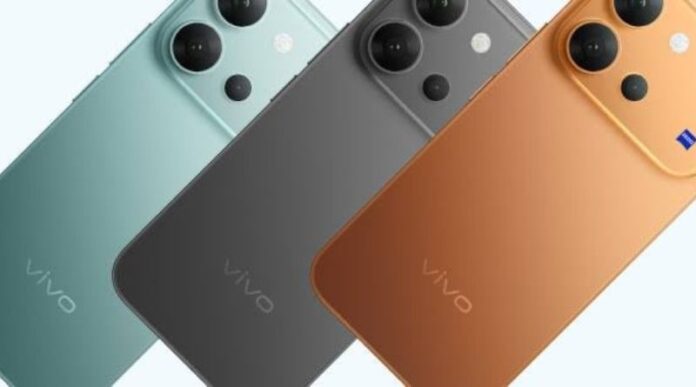

Vivo has introduced the Vivo V80 to the global market, bringing a large battery, a high-refresh-rate AMOLED display, and modern smartphone features to users looking for a powerful everyday device. With its reported 144Hz screen and 7,200mAh battery, the phone aims to offer a smooth viewing experience and longer battery life.
Smartphone users now expect more from their devices. They want bright displays, fast performance, good cameras, reliable battery life, and a design that looks attractive. Vivo has been working to meet these needs through its V series, which focuses on a mix of design, photography, and everyday performance.
The Vivo V80’s reported specifications have attracted attention because of its high screen refresh rate and large battery capacity. A 144Hz display can make scrolling and supported games feel smoother, while a 7,200mAh battery could help users spend more time using their phones without looking for a charger.
However, the full experience depends on more than these two features. The processor, camera system, charging speed, software, storage options, and final price also play an important role in deciding whether a phone is worth buying.
Vivo V80 Features a High-Refresh-Rate AMOLED Display
One of the main highlights of the Vivo V80 is its reported 144Hz AMOLED display. Both the display technology and refresh rate can affect how people use their phones throughout the day.
AMOLED screens are popular because they can produce deep blacks, strong contrast, and bright colours. Unlike traditional LCD panels, AMOLED displays can turn off individual pixels when showing black areas. This helps create darker blacks and can improve the viewing experience when watching videos or using apps with dark themes.
For people who enjoy watching YouTube videos, browsing social media, viewing photos, or streaming other content, an AMOLED screen can provide an enjoyable visual experience. Colours can look rich, while dark scenes may appear clearer because of the display’s strong contrast.
The reported 144Hz refresh rate is another important feature. Refresh rate refers to how many times a screen updates its image every second. A 144Hz display can refresh the image up to 144 times per second when operating at its maximum supported rate.
For comparison, a 60Hz display refreshes 60 times per second, while a 120Hz screen can refresh 120 times per second. A 144Hz panel offers an even higher refresh rate, although the actual benefits depend on the content being displayed and the phone’s software.
What Does a 144Hz Display Mean for Users?
A high refresh rate can make everyday tasks feel more responsive. Scrolling through long web pages, moving between menus, and browsing social media feeds can look smoother when apps and system animations support the higher rate.
Mobile gamers may also appreciate the extra smoothness. Games that support high frame rates can benefit from a display capable of refreshing at up to 144Hz. This can make movement appear clearer and controls feel more responsive in supported titles.
Still, a 144Hz display does not mean every game will run at 144 frames per second. The game’s settings, processor, graphics performance, and software support all affect the final result.
The refresh rate may also change automatically depending on the task and display settings. This can help the phone balance smooth performance with battery consumption.
For regular users, the main benefit is a more fluid experience when using the phone. Even people who do not play games may notice the difference when scrolling, opening menus, and moving between applications.
The exact screen size, resolution, brightness level, and display protection should also be considered before making a purchase. These details help determine how comfortable the phone is for reading, outdoor use, and watching videos.
Large 7,200mAh Battery Could Be a Major Advantage
Battery life is one of the most important factors for smartphone buyers, especially people who spend many hours away from home. The Vivo V80’s reported 7,200mAh battery is a major talking point because it offers a large amount of battery capacity.
Many users rely on their smartphones for work, study, communication, entertainment, and navigation. A large battery can help reduce the need to recharge the phone during the day, although actual battery life depends on how the device is used.
For example, someone who mainly uses WhatsApp, makes calls, reads news, and checks emails may get different results from a person who regularly plays demanding games or records videos. Screen brightness, mobile data, background applications, and network strength can also affect battery performance.
A larger battery may be especially useful for people who travel frequently, attend long meetings, work outdoors, or use their phones for navigation. It can also provide extra convenience during power outages, when charging opportunities may be limited.
In Pakistan, where many people depend on mobile phones for daily communication and online services, battery life can be an important buying factor. A phone that lasts longer between charges can make daily use more convenient.
However, the 7,200mAh figure alone does not guarantee a particular number of hours or days of use. Battery efficiency, the processor, software optimisation, and screen settings all influence how long the phone lasts.
Charging Speed Will Also Matter
A large battery can provide longer usage time, but charging speed is equally important. Users want their phones to recharge quickly when the battery becomes low.
The charging technology supported by the Vivo V80 will help determine how much time users need to spend connected to a charger. Fast charging can be useful for people who have limited time to recharge their devices before leaving home or returning to work.
However, the battery capacity should not be confused with charging speed. A 7,200mAh battery does not automatically mean the phone supports the fastest charging technology available.
Buyers should check the officially confirmed charging wattage, charger availability, and charging time before making a final decision. It is also useful to know whether the required charger is included in the retail box or sold separately.
Temperature management is another important factor. Smartphones may reduce charging speed when they become too hot to protect the battery and other internal parts.
For long-term battery health, users should follow the manufacturer’s charging guidance and avoid exposing their phones to excessive heat.
90W Fast Charging Support
The Vivo V80 also supports 90W wired fast charging, giving users a way to recharge its large battery without waiting too long. According to Vivo’s official product information, the phone can reach around 50% charge in 30 minutes under its stated fast-charging test conditions. Actual results may vary depending on temperature, usage, and other factors. <Cite refs={[“turn351399search2″,”turn351399search4”]}/>
This feature could be helpful for people who use their phones heavily throughout the day. A quick charging session during a lunch break or before leaving home may provide enough power for several more hours of use.
The phone also supports bypass charging in supported situations. This feature can supply power directly to the phone’s components while it is connected to a charger, helping reduce heat around the battery during activities such as gaming. Availability and performance depend on the supported mode and usage conditions.
Together, the large battery and fast charging support make the Vivo V80 an interesting option for users who want a phone that can handle demanding daily routines.
Vivo V80 Brings ZEISS Camera Technology
Camera performance is another major part of the Vivo V80 package. Vivo has included ZEISS camera technology and several photography features designed to help users take better pictures and videos.
The phone features a 50MP main rear camera with optical image stabilisation (OIS). OIS helps reduce the effect of small hand movements while taking pictures, particularly in situations where the lighting is not ideal.
The camera system also includes a 50MP ZEISS telephoto camera with 3x optical zoom and an 8MP ultra-wide camera. On the front, users get a 50MP selfie camera with autofocus. These specifications make the phone suitable for different types of photography, from portraits to group photos and wider outdoor scenes. <Cite refs={[“turn351399search4″,”turn351399search6”]}/>
Main Camera for Everyday Photography
The 50MP main camera is designed to capture everyday moments with plenty of detail. Users can use it for family gatherings, food photography, street scenes, travel pictures, and other common situations.
Optical image stabilisation can also help when taking pictures in low light, although the final quality depends on the camera sensor, software processing, and surrounding conditions.
Telephoto Camera for Portraits
The dedicated 50MP telephoto camera is particularly useful for portraits and distant subjects. Its 3x optical zoom brings subjects closer without relying entirely on digital zoom.
Vivo has also included portrait features developed with ZEISS, including a 100mm Center-Stage Portrait mode. These tools are intended to give portraits a more professional look, with attention to background blur, lighting, and subject separation.
This could appeal to users who regularly take pictures of friends, family members, or people at events.
Ultra-Wide Camera for Larger Scenes
The ultra-wide camera allows users to fit more of a scene into a single photograph. It can be useful for landscape photography, architecture, group pictures, and indoor spaces where moving farther away is not possible.
Although the 8MP ultra-wide sensor has a lower resolution than the main and telephoto cameras, it adds flexibility to the camera system.
50MP Front Camera for Selfies
The 50MP front camera is another notable feature. It is designed for selfies, video calls, and social media content. Autofocus can help keep faces clear at different distances.
However, a high megapixel count alone does not guarantee better pictures. Lighting, image processing, lens quality, and camera settings also affect the final results.
4K Video Recording for Content Creators
The Vivo V80 is not limited to photography. Vivo has highlighted its video recording features, including 4K recording at 60 frames per second on supported front and rear cameras.
This can be useful for people who create videos for YouTube, Instagram, TikTok, or other social platforms. Recording at 60 frames per second can produce smoother movement, especially when capturing people walking, outdoor activities, or fast-moving scenes.
The phone also offers cinematic video styles that allow users to apply different visual looks to their recordings. These features can help make everyday clips more interesting without requiring a separate editing application for every adjustment.
AI-powered camera tools add further options. Depending on feature availability, users can adjust lighting effects, improve photos, remove unwanted objects, or expand the visible area of an image.
Such tools can save time for people who want to share attractive photos without spending too much time editing them manually. However, results may differ depending on the picture and the feature being used.
Snapdragon 7 Gen 4 for Daily Performance
The Vivo V80 is listed with Qualcomm’s Snapdragon 7 Gen 4 processor. This is an eight-core chipset built using a 4nm process, designed to offer a balance between performance and power efficiency. <Cite refs={[“turn351399search3″,”turn351399search4”]}/>
For everyday users, this means the phone is designed to handle common activities such as browsing the internet, using messaging apps, watching videos, attending online meetings, and switching between applications.
The processor should also be suitable for many popular mobile games. However, demanding games may require lower graphics settings to maintain stable performance. The final gaming experience depends on the game, temperature, software, and other factors.
The Snapdragon 7 Gen 4 is not the same as the most powerful flagship processors, so buyers who mainly want the highest possible gaming performance should compare benchmark results and real-world tests before deciding.
For users who prioritise photography, battery life, display quality, and daily performance, the overall balance of features may matter more than having the fastest processor on the market.
RAM, Storage, and Software
Official Vivo listings show 8GB of RAM and storage options of 256GB and 512GB in certain markets. Other configurations may be offered depending on the country. The phone uses LPDDR4X RAM and UFS 3.1 storage, according to the listed specifications. <Cite refs={[“turn351399search3″,”turn351399search4”]}/>
The available RAM helps the phone manage open applications, while internal storage provides space for photos, videos, games, documents, and downloaded files.
People who record a lot of 4K videos or install many large games may find the 512GB version more suitable. Those with lighter storage needs may be comfortable with the smaller option.
The Vivo V80 runs Android 17 with Vivo’s OriginOS 7 interface in the listed markets. The software provides the main smartphone features alongside Vivo’s own tools, settings, and AI-based options.
Vivo also advertises long-term software support for the device in certain markets. Buyers should check the official support policy for their country to confirm the number of Android upgrades and the period of security updates.
Design, Colours, and Durability
Vivo has given the V80 a glass-backed design with a slim body. Its listed dimensions are approximately 157.52 × 74.33 × 7.69mm, and its weight is around 203 grams. These figures may vary slightly by version or measurement method. <Cite refs={[“turn351399search3″,”turn351399search4”]}/>
The phone is available in colours such as Sunrise Anthem, Horizon Blue, and Stellar Black in the Indian market. Colour choices can differ in other regions.
The device also carries IP68 and IP69 ratings in official regional specifications. These ratings indicate protection against dust and certain water exposure conditions when tested according to the relevant standards.
However, water resistance does not mean the phone is completely waterproof in every situation. Protection can weaken over time, and damage caused by liquid may not be covered by the warranty. Users should follow Vivo’s care instructions.
Vivo V80 Global Availability and Expected Price
Vivo has announced plans to bring the V80 to markets beyond India, including Southeast Asia and the Middle East. The company has also indicated that availability, pricing, and specifications may vary according to local market conditions. <Cite refs={[“turn351399news22″,”turn351399search9”]}/>
For buyers in Pakistan, the most important details are the local launch date, official price, warranty, and available storage variants. A global announcement does not automatically confirm that the phone is available for purchase in Pakistan.
As of the available announcement, buyers should check Vivo Pakistan’s official channels or authorised retailers for confirmed local pricing and availability rather than relying on unofficial estimates.
The final price will play an important role in determining the phone’s value. The Vivo V80 offers several premium features, but buyers should compare it with other phones in the same price range before making a decision.
Is the Vivo V80 Worth Considering?
The Vivo V80 brings together a 144Hz AMOLED display, a 7,200mAh battery, 90W charging, ZEISS-branded cameras, and a Snapdragon 7 Gen 4 processor.
Its display could appeal to people who enjoy smooth scrolling and gaming, while the large battery may attract users who need longer periods between charges. The dedicated telephoto camera and 50MP front camera also make it worth considering for photography and social media content.
At the same time, buyers should consider the processor’s performance, the phone’s size and weight, its charging speed, software support, and local price. These factors will help determine whether it offers better value than competing smartphones.
For users who want a modern phone with a strong focus on battery life, photography, and display quality, the Vivo V80 looks like an interesting addition to the company’s V series.
Frequently Asked Questions
1. What is the battery capacity of the Vivo V80?
The Vivo V80 has a 7,200mAh typical-capacity battery. The rated capacity may be lower.
2. Does the Vivo V80 support a 144Hz display?
Yes. It features a 6.59-inch AMOLED display with a refresh rate of up to 144Hz. The maximum rate is available only in supported applications and conditions.
3. Which processor does the Vivo V80 use?
The phone uses the Qualcomm Snapdragon 7 Gen 4 processor in the listed regional versions.
4. Does the Vivo V80 support fast charging?
Yes. It supports up to 90W wired fast charging when used with compatible charging equipment.
5. What cameras are available on the Vivo V80?
The listed camera setup includes a 50MP main camera, a 50MP telephoto camera with 3x optical zoom, an 8MP ultra-wide camera, and a 50MP front camera.
6. Is the Vivo V80 available in Pakistan?
A global rollout has been announced, but buyers should check Vivo Pakistan’s official channels for a confirmed local launch date, price, and availability.
Read Also: check