
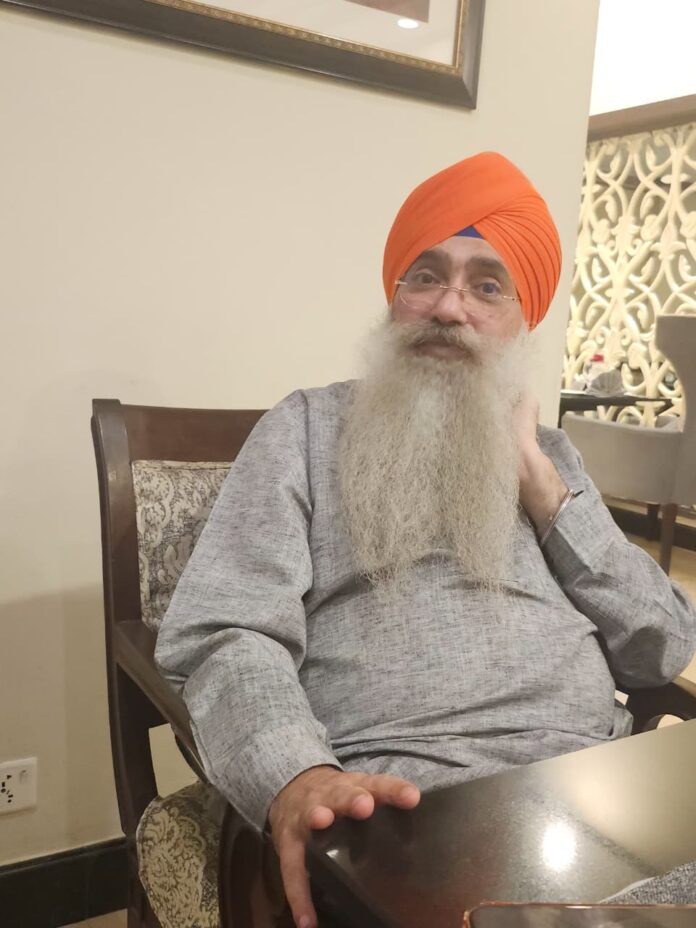

In an exclusive interview with FLARE Magazine, the Sikh leader says easier visas for people born in India who now hold Canadian or other foreign passports would bring more pilgrims to Pakistan and benefit its economy.
LAHORE (Special Report): Sikh leader Sardar Bhupinder Singh (Sadhu) has urged India to keep pilgrimage routes to Pakistan open and called on Pakistan to make it easier for people born in India who now hold passports from Canada or other countries to obtain visas to visit Sikh holy sites.
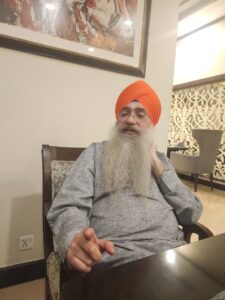
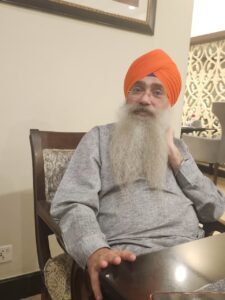
Speaking to FLARE Magazine during his visit to Pakistan, Singh said a simpler visa process would allow more families to visit Kartarpur Sahib and other shrines associated with Baba Guru Nanak. Pakistan’s economy would also benefit, he said, as more pilgrims would spend money on accommodation, transport and food during their stay.
Access to Kartarpur Sahib
Singh thanked Pakistan for building the Kartarpur Corridor and providing facilities that he said could accommodate up to 5,000 pilgrims a day. He criticised the Indian government’s handling of pilgrimage applications, saying it approved only a fraction of requests.
“Just as the doors of Makkah and Madinah remain open for Muslims at all times regardless of geopolitical tensions between countries, the land of Baba Guru Nanak and Kartarpur Sahib must also remain permanently open for Sikhs, completely free from politics,” he said.
Singh also cited reports that India’s central government had denied Bhagwant Mann, chief minister of the Indian state of Punjab, permission to visit Pakistan. If an elected chief minister faced such hurdles, he asked, how could an ordinary pilgrim expect to make the journey? He said restrictions on access to holy sites undermined religious freedom.
Historic gurdwaras in Pakistan’s villages
Addressing social media reports about the demolition of Sikh shrines, Singh described what he had seen in villages he visited in Pakistan. In some places where no Sikh families remained, he said, historic gurdwaras and temples were still standing and local residents continued to treat them with respect.
He praised the Evacuee Trust Property Board for restoring and reopening places of worship. Singh thanked Nasir Mushtaq, the board’s additional secretary for shrines, as well as Faraz and other staff members involved in the work.
Partition and the Sikh diaspora
Singh began his political career in the youth wing of the Shiromani Akali Dal and later chaired its Dharam Parchar Committee. He said he had also served on committees associated with Takht Hazur Sahib and Takht Patna Sahib, including during celebrations marking the 350th birth anniversary of Guru Gobind Singh. In Canada, he advocated for the right of turbaned Sikhs to ride motorcycles without helmets.
Reflecting on Partition in 1947, Singh said he believed Sikh leaders had made a mistake in trusting Jawaharlal Nehru’s assurances over Muhammad Ali Jinnah’s offers. He cited 1955, 1975 and 1984 as painful years for the community and said successive periods of unrest had prompted many Sikh families to seek a future for their children in Canada and the United States.
A welcome in Lahore’s markets
Singh said he felt safe exploring Lahore’s markets by scooter and rickshaw without a security escort. Some of his most memorable encounters, he said, were with the people he met along the way.
“There is immense love and respect for Sikhs in the eyes of ordinary Pakistanis. Young children run up to greet us and take photos, and many shopkeepers and tea stall owners refused to accept money from me out of sheer hospitality,” he said.
Recalling the Punjabi saying “Jinhe Lahore nahi vekhya, o jammya hi nahi” (One who has not seen Lahore has not truly been born), Singh encouraged Sikhs and Punjabis abroad to bring their families, visit the shrines and leave time to explore Pakistan’s markets and hill stations. He said such visits could help build lasting ties between people on both sides of the border.