
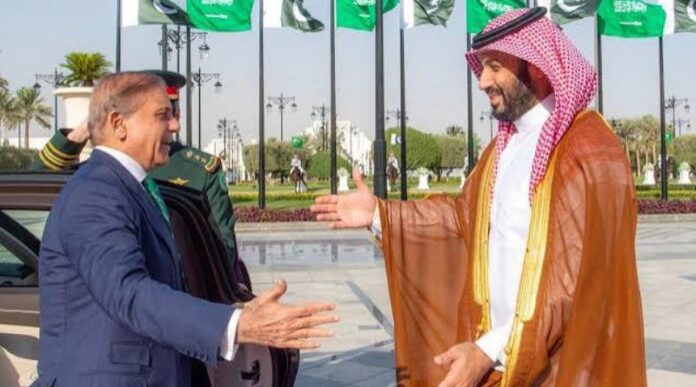

Pakistan is preparing to take a bigger role in protecting Arab countries as tensions betweenthe United States and Iran continue to create serious security concerns in the Middle East. Islamabad is set to contribute to a Saudi-led multinational maritime defense coalition that aims to improve the protection of important sea routes and help defend regional countries from possible attacks.
Under the new arrangement, Pakistan will provide the first deputy commander of the Saudi-led Multinational Maritime Defense Coalition. The move is an important step for Pakistan because it gives the country a direct role in the security structure being developed in the region.
The development comes at a time when the Middle East is facing a difficult security situation. The continuing conflict between the US and Iran has already affected several countries, while attacks on Gulf targets and concerns around major shipping routes have increased pressure on Arab states to improve their defenses.
For Pakistan, the new role is also a careful balancing act. Islamabad has close relations with Saudi Arabia and other Gulf countries, but it also shares a long border with Iran and has repeatedly tried to maintain diplomatic relations with Tehran. Pakistan has previously played a role in efforts to bring the United States and Iran closer to negotiations.
Pakistan to Take a Key Position
Pakistan’s decision to provide the first deputy commander of the maritime coalition shows the growing importance of its military experience in regional security.
The coalition is being developed under Saudi leadership and is expected to work on protecting maritime routes, supporting regional security and responding to threats that could affect Arab countries. Its importance has grown because the wider US-Iran conflict has created new risks for shipping and energy supplies.
The Gulf region is extremely important for the global economy. Large amounts of oil and other goods move through its waters every day. Any major disruption can quickly affect fuel prices, international trade and the economies of countries far outside the Middle East.
Pakistan’s participation therefore goes beyond military cooperation. It also has an economic and diplomatic side. A safer maritime environment can help protect trade routes and reduce the chances of further damage to regional economies.
Why Saudi Arabia Needs More Security Support
Saudi Arabia has been working to strengthen its defensive capabilities as attacks and threats in the region continue.
The kingdom has faced attacks involving Iran-linked groups, including threats to oil facilities, shipping and other important infrastructure. Saudi Arabia has responded by building stronger defense partnerships with regional countries while also trying to avoid becoming deeply involved in a wider war.
The new maritime coalition is part of this broader effort.
Saudi Arabia wants to make sure that its important sea routes remain open and that its ports, energy facilities and commercial interests remain protected. The country also wants regional partners to share responsibility for security rather than depending completely on Western powers.
Pakistan is a natural partner in this effort because of its long military relationship with Saudi Arabia. Pakistani military personnel have worked with Gulf countries for decades, providing training, advice and other forms of security cooperation.
A New Defense Arrangement
The latest move should also be viewed alongside the new defense agreement between Pakistan, Saudi Arabia and Turkey.
The three countries signed the Mecca Joint Defense Agreement on August 7, 2026. Pakistan’s Foreign Minister Ishaq Dar described the agreement as defensive and said it was not designed to target any particular country. Under the arrangement, an attack on one member is treated as an attack on all, in line with the right of self-defense under the UN Charter.
The agreement brings together three countries with different but important strengths.
Pakistan has a large and experienced military and is the only nuclear-armed Muslim-majority country. Saudi Arabia has major financial resources, a strong regional position and a large defense budget. Turkey brings advanced military technology, a powerful armed force and its position as a NATO member.
Together, these countries can provide a stronger regional security structure.
However, officials have made it clear that the agreement is defensive. This is especially important because Iran remains an important neighbor and trading partner for Pakistan, and Islamabad does not want its new partnerships to be seen as a direct move against Tehran.
Pakistan’s Difficult Position Between Saudi Arabia and Iran
Pakistan’s role in the Middle East is not simple.
Saudi Arabia is one of Pakistan’s closest partners in the Gulf. Millions of Pakistanis work in Saudi Arabia and send money back home. The two countries also have strong military and economic relations.
At the same time, Iran is Pakistan’s neighbor. The two countries share a border of around 900 kilometers and have long-standing cultural, religious and economic links.
Because of this, Pakistan has strong reasons to avoid a direct confrontation with Iran.
Islamabad has repeatedly called for dialogue and a peaceful solution to the US-Iran conflict. Pakistan has also tried to maintain communication with both sides rather than openly supporting one side against the other. Its previous mediation efforts have given it a useful diplomatic position in the region.
The new security role could make this balance more difficult.
Pakistan wants to protect Saudi Arabia and other Gulf partners, but it also does not want to become part of a war with Iran.
Maritime Security Has Become More Important
One of the biggest concerns in the current crisis is the safety of important shipping routes.
The Gulf and the wider Red Sea region are major routes for international trade. Oil, gas and other goods pass through these waters every day. Any attack on commercial ships or closure of a major waterway could create problems for countries around the world.
The Strait of Hormuz is especially important because it connects the Persian Gulf with the Gulf of Oman and the wider Indian Ocean. A serious security crisis in this area can have a major impact on global energy markets.
The ongoing conflict has already increased concerns about the safety of shipping. The United States and Iran have exchanged military attacks, while regional countries have faced pressure from different armed groups.
For Pakistan, maritime security is also directly connected to its own economic interests.
Pakistan has a long coastline along the Arabian Sea and depends on sea routes for much of its international trade. Any major regional conflict could affect shipping costs, fuel supplies and the movement of goods into and out of Pakistan.
This gives Islamabad another reason to support efforts aimed at keeping regional waters safe.
Pakistan’s Military Experience Could Help
Pakistan has considerable experience working with Gulf countries.
Pakistani military personnel have served as trainers and advisers in several Middle Eastern countries over the years. Saudi Arabia has maintained particularly close defense ties with Pakistan, and Pakistani troops have previously been deployed in the kingdom for defensive duties and training.
This experience can be useful in the new coalition.
Pakistan can provide military planning, training and operational experience while working with forces from other participating countries. Its navy can also bring knowledge of maritime security and the protection of sea routes.
The role of deputy commander will give Pakistan a place in the coalition’s command structure. This could allow Pakistani officers to take part in planning and coordination rather than simply providing individual military personnel.
The Coalition Is Not Only About War
Although the new defense structure has been created during a period of conflict, its purpose is not necessarily to prepare for an offensive war.
Officials have stressed that the arrangements are defensive. The main goal is to protect countries, people, infrastructure and important trade routes from attacks.
This distinction is important for Pakistan.
Islamabad has a long history of saying that it does not want regional conflicts to grow into larger wars. By focusing on defense and maritime security, Pakistan can support its Arab partners while still maintaining its position that disputes should be solved through talks.
The country can also use its position to encourage dialogue.
Pakistan has already tried to act as a bridge between different sides during the US-Iran crisis. Its location and relationships with both Gulf states and Iran give it a role that some other countries cannot easily play.
Growing Regional Cooperation
The new coalition is also part of a larger trend in the Middle East.
Regional countries are increasingly looking at ways to improve their own security rather than relying entirely on outside powers.
Saudi Arabia has been building partnerships with countries such as Pakistan and Turkey. A wider maritime coalition involving several regional countries could create a stronger security network across important waterways. Reports say a number of regional countries are expected to take part in efforts to secure Red Sea trade routes.
This could become important in the coming years.
If regional countries work together more closely, they may be able to respond faster to threats and protect important infrastructure without waiting for outside military powers to act.
For Pakistan, stronger cooperation with Arab countries could also increase its diplomatic and strategic importance.
What This Means for Pakistan
Pakistan’s involvement could bring several benefits.
First, it can strengthen relations with Saudi Arabia and other Gulf countries. These countries are important economic partners for Pakistan and provide jobs to millions of Pakistani workers.
Second, a stronger security partnership could increase Pakistan’s influence in the Muslim world.
Third, Pakistan could gain a greater role in regional diplomacy. Its ability to communicate with both Arab states and Iran gives Islamabad an opportunity to support peace efforts while also helping its partners improve their security.
There are risks, however.
The biggest concern is that Pakistan could be pulled deeper into the conflict between the US and Iran. If the situation becomes worse and Saudi Arabia comes under direct attack, Islamabad could face pressure to provide greater military support.
Pakistan would then have to carefully manage its relations with Iran.
Protecting National Interests
Pakistan’s main challenge will be protecting its own national interests while supporting its regional partners.
The country is already dealing with economic pressures and cannot afford a long or costly military engagement abroad. A wider Middle Eastern conflict could also increase fuel prices, disrupt trade and create problems for Pakistani workers in Gulf countries.
This is why Pakistan is likely to continue stressing the defensive nature of its military cooperation.
Islamabad can support Saudi Arabia’s security without necessarily seeking direct confrontation with Iran. At the same time, Pakistan can continue encouraging negotiations and peaceful solutions.
This approach could allow Pakistan to remain involved in regional security without completely abandoning its diplomatic relationship with Tehran.
A Larger Role for Pakistan
Pakistan’s decision to provide the first deputy commander of the Saudi-led Multinational Maritime Defense Coalition marks an important development in its foreign and defense policy.
The country is moving into a more active role in protecting important regional sea routes and supporting the security of Arab countries. At the same time, Pakistan is trying to keep its diplomatic doors open to Iran and support efforts to reduce the wider conflict.
The new role comes at a sensitive time. The US-Iran conflict has already created serious security and economic risks across the Middle East, while attacks on Gulf targets have increased concerns about the future of regional stability.
Pakistan’s challenge will be to remain a reliable security partner for Saudi Arabia while avoiding unnecessary escalation with Iran.
If Islamabad manages this balance successfully, it could become an even more important player in Middle Eastern security and diplomacy.
For now, Pakistan’s message is clear: it is ready to help protect its Arab partners and important maritime routes, but it also wants the region to move toward stability and peace rather than a wider war. The country’s new role shows that Pakistan is becoming increasingly involved in regional security at a time when cooperation between Muslim-majority countries is becoming more important.
Read Also: check


