
ISLAMABAD — September 2, 2026: By Dr. Noor ul Huda: Correspondent, Awan-e-Aam (Parliamentary Magazine) | Chairperson, Mind Empowerment Council | Academic Author & Teacher Trainer, Cantab
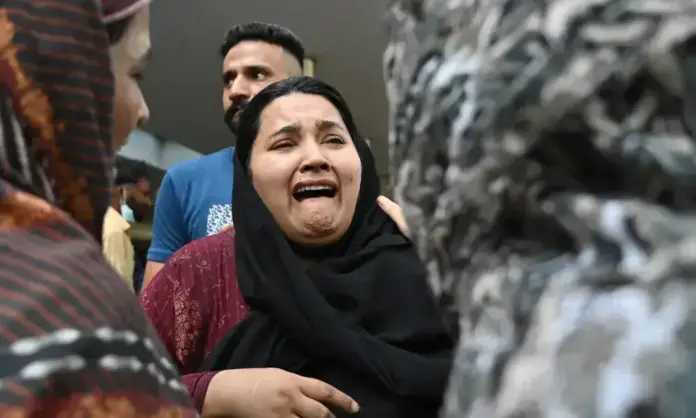
A tragedy that began on the third floor of a maternity ward has, within days, become one of the sternest tests of institutional accountability that Pakistan’s Parliament has faced in recent years. The deaths of fourteen newborns in a fire at the Pakistan Institute of Medical Sciences (PIMS) in Islamabad have moved from a hospital corridor to the floor of the National Assembly and the Senate, where lawmakers across the political divide are now demanding answers that the government has, so far, struggled to fully provide.
A Fire, and a Failure of Systems
The blaze broke out in the Mother and Child Hospital wing of PIMS, engulfing the neonatal nursery in a matter of minutes. Of the fifteen infants inside, only one survived. In the days that followed, grief gave way to outrage as reports surfaced of missing fire alarms, blocked emergency exits, and construction material left carelessly near the labour room — details that, if confirmed, point less to an accident than to a systemic breakdown in hospital safety oversight.
The government’s response was swift on paper: Prime Minister Shehbaz Sharif ordered the suspension of several officials and announced compensation of five million rupees for each bereaved family. Federal Health Minister Mustafa Kamal, appearing before both houses, struck a contrite tone, declaring the health system “rotten” and insisting that “not a single person” responsible would be spared, regardless of influence.
The Chamber Reacts
What has followed is a rare instance of Parliament asserting itself as an investigative body rather than a passive forum for condolence resolutions. The National Assembly passed a resolution condemning the “sheer negligence” behind the deaths and calling for strict enforcement of fire-safety standards across federal hospitals, particularly in neonatal and paediatric units. The Senate, for its part, unanimously backed the formation of a special joint parliamentary committee — an unusual step that reflects the scale of public anger the incident has generated.
Under the arrangement now taking shape, Senate Chairman Yousaf Raza Gilani and National Assembly Speaker Ayaz Sadiq have been tasked with jointly determining the committee’s composition and terms of reference. Notably, the health minister himself urged that the panel be given no fixed deadline, arguing that a rushed inquiry would serve no one, least of all the grieving families.
Cracks in the Official Narrative
The standing committees on health in both houses have meanwhile pressed ahead with their own scrutiny, and the picture emerging is not a flattering one for the hospital administration. Briefed on CCTV footage of the nursery, National Assembly health committee chairman Mahesh Kumar Malani voiced open skepticism about its completeness, noting that a nurse was seen entering the nursery but never seen leaving — a gap that has fuelled suspicion the footage may have been edited or withheld in part. Malani also disclosed that the inquiry committee appointed by the Prime Minister had failed even to establish with certainty how many infants were present in the nursery when the fire broke out.
Adding to the sense of institutional strain, the chairman of the Islamabad Healthcare Regulatory Authority resigned in the fire’s aftermath, citing pressures that had compromised the authority’s independence — a resignation that opposition lawmakers have seized upon as evidence of interference in what should have been an impartial regulatory process.
The Political Stakes
For a Parliament often accused of being reactive rather than proactive, the PIMS episode has become something of a litmus test. Opposition figures, including Majlis-e-Wahdat-ul-Muslimeen leader Allama Raja Nasir Abbas, have demanded the immediate removal of the PIMS executive director, while PTI lawmakers have laid responsibility squarely at the government’s door. Yet there is also a notable strand of cross-party consensus: few members, government or opposition, have argued against the need for a thorough, transparent inquiry.
Whether the special committee delivers on that promise — or quietly joins the long list of Pakistani inquiries whose findings are shelved rather than acted upon — will say much about whether this Parliament intends to treat the deaths of fourteen infants as a turning point, or merely a passing controversy. Health Minister Kamal, for his part, has insisted it must not become, in his words, “an episode lasting merely a few days.” For the families still waiting for answers, and for a health system now under unprecedented legislative scrutiny, the coming weeks will test whether that promise holds.