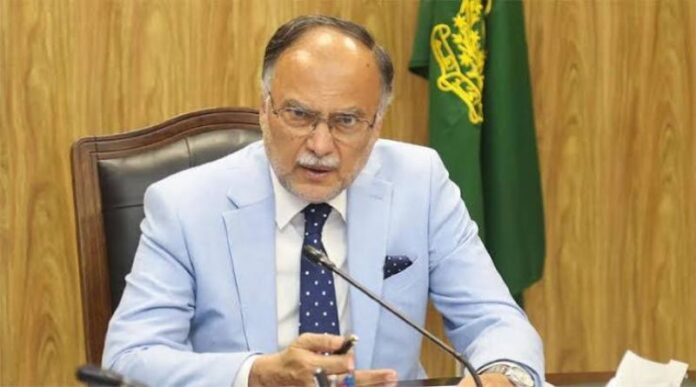

Federal Minister for Planning, Development and Special Initiatives Ahsan Iqbal has called for major changes in Pakistan’s civil service system, with a strong focus on performance, merit and professional skills.
Speaking at a multi-party consultation on civil service reforms in Islamabad on September 19, Iqbal said government officers should not move ahead in their careers mainly because they have spent more years in service. Instead, promotions and important appointments should be linked with their ability, performance and actual results.
The proposed reforms are part of a wider effort to change how Pakistan’s bureaucracy works. The government wants to create a civil service that is more specialised, accountable, technology-friendly and better prepared to deal with the country’s economic and development needs.
46 Recommendations Proposed for Civil Service
According to the Planning Ministry, the Prime Minister’s Committee on Civil Service Reforms has held around 15 meetings and prepared a framework containing 46 recommendations.
There is already broad agreement on 43 of these recommendations, while a few remaining matters still need further discussion with political leaders and other stakeholders.
The latest consultation was arranged to build wider political and institutional support for the proposed reforms. Senator Saleem Mandviwalla, Federal Minister Abdul Aleem Khan, former federal minister Asad Umar, senior policymakers and sector experts were among those who attended the meeting.
The idea is to make civil service reform a long-term national process rather than a project that ends when one government leaves office.
Iqbal said Pakistan needs an administrative system that can turn government policies into real results for citizens.
Promotion Should Depend on Performance
One of the most important points raised by Iqbal is the need to change the way government officers are promoted.
Under the proposed system, seniority alone should not be the main factor behind career growth. Instead, officers should be judged on their skills, competence and performance.
This means an officer who delivers strong results and successfully completes important assignments could have a stronger case for promotion than someone who has simply spent more time in government service.
The reform plan also proposes measurable performance indicators. Officers would be assessed against clear targets so that their contribution to government departments can be better understood.
The purpose is to create a culture where career progress is connected with actual work and results.
Specialised Officers for Different Fields
Another major change proposed by Ahsan Iqbal is the introduction of more specialised professional groups within the civil service.
At present, officers can be posted to departments that have little connection with their educational background or professional experience. Iqbal said this can create problems because important ministries require people with proper knowledge of their respective fields.
Under the proposed model, areas such as education, health, finance, information technology, agriculture, engineering and commerce could have specialised cadres.
For example, an officer with a strong background in information technology could develop a long-term career in the digital sector instead of being moved between unrelated departments.
Similarly, professionals working in health, agriculture or engineering could remain connected to their areas of expertise and gradually build deeper knowledge.
The government believes this approach could help ministries make better decisions because officers would have more experience in the fields they manage.
Why Pakistan Needs a Different Bureaucracy
Iqbal also spoke about the historical structure of Pakistan’s bureaucracy.
He said the country inherited an administrative system that was mainly designed during the colonial period to maintain law and order and collect revenue.
Those functions are still important, but the needs of a modern country have changed considerably.
Today, government departments have to deal with issues such as digital technology, artificial intelligence, economic competition, climate change, modern healthcare, education, international trade and complex financial systems.
A system that mainly focuses on regulation and control may not have all the skills needed to manage these new challenges.
According to the minister, Pakistan needs a civil service that can provide specialised knowledge, improve implementation and support long-term development.
Focus on Merit and Competence
Merit is another central part of the proposed reform plan.
Iqbal said appointments and promotions should be more closely connected with competence and demonstrated performance.
This would require a change in the traditional approach to career development in government departments.
The proposed system would place greater importance on what an officer has achieved rather than treating promotion mainly as a natural result of completing a certain number of years in service.
The goal is to develop professional leadership within government institutions.
A merit-based approach could also encourage officers to focus more strongly on completing projects, improving services and meeting targets.
Making Recruitment More Inclusive
Ahsan Iqbal also raised the issue of access to the civil service examination and recruitment system.
He argued that too much focus on advanced English language skills can create difficulties for capable candidates who may not have studied in elite educational institutions.
He said English remains important for official work, but extremely high-level English should not become a barrier for talented people.
The proposed reforms therefore seek to make recruitment more inclusive while maintaining the language skills needed for government responsibilities.
The discussion is important because Pakistan has a large population of talented young people from different educational and social backgrounds.
A recruitment system that gives capable candidates a fair opportunity could bring a wider range of skills into government service.
Technology Will Become More Important
Technology is also a major part of the proposed civil service reforms.
Iqbal said digital literacy has become necessary for modern public administration. Government officers increasingly need to understand data systems, artificial intelligence and digital applications.
Technology can help departments improve decision-making, reduce paperwork and provide faster services to citizens.
The minister has previously stressed that simply moving paper-based government processes onto computers is not enough. He has called for a broader shift towards digital governance in which government systems are designed around citizens, data and measurable results.
This approach could become increasingly important as Pakistan expands digital public services.
Learning from Other Countries
The committee has also studied civil service systems in several countries, including Australia, New Zealand, Malaysia and the United Kingdom.
According to Iqbal, these countries provide examples of public administration systems that have become more specialised, open and focused on merit.
The purpose of studying other countries is not necessarily to copy their systems completely. Instead, the committee is looking at how different countries have developed their public services and what lessons could be useful for Pakistan.
Pakistan has its own political, economic and administrative conditions, so any reform plan will need to take local realities into account.
More Changes Already Under Discussion
The latest proposals come after months of work on civil service reform.
A recent report by The Express Tribune said the committee had reached agreement on 43 recommendations, while several major issues were still under discussion. These included specialised recruitment, the possibility of taking competitive examinations in Urdu and the creation of a National Executive Service.
The report also said the committee had agreed on reducing administrative levels from five to three by removing certain positions, including section officer, joint secretary and special secretary.
Another proposal concerns movement between federal and provincial services after Grade 21, potentially allowing officers to become part of a wider pool at senior levels.
These proposals show that the planned changes could affect the structure of the civil service as well as recruitment and promotions.
Political Support for the Reform Plan
The government is also trying to build political support for the proposed changes.
The September 19 consultation included people from different political and professional backgrounds. The Planning Ministry said the participation of individuals who had served under different governments was aimed at creating wider ownership of the reform process.
This is important because civil service reform cannot easily be completed in a short period.
Changes to recruitment, promotions, departmental structures and career paths can take years to fully implement.
If reforms are linked only to one government, there is a risk that the process could slow down or change when political leadership changes.
Iqbal therefore stressed the need to treat civil service reform as a continuing state reform rather than a temporary programme of one administration.
From Reports to Practical Action
Pakistan has discussed civil service reform many times in the past.
One of the main challenges has been turning recommendations into lasting changes.
The latest consultation therefore focused not only on preparing proposals but also on creating political and institutional support for implementation.
Participants supported the idea of moving beyond repeated reform reports and focusing on practical and sustainable changes, according to the Planning Ministry.
For reforms to work, government departments would need clear rules, proper training and systems to measure results.
Officers would also need to understand what is expected from them and how their performance would affect their career development.
What the Proposed Changes Could Mean
If implemented, the proposed reforms could change several parts of the government service system.
Recruitment could become more focused on professional knowledge. Officers could spend more of their careers working in fields related to their education and experience.
Promotions could depend more on performance and competence. Departments could also use measurable targets to assess whether officers are delivering the expected results.
Technology could become a normal part of public administration, while recruitment could become more accessible to talented candidates from different educational backgrounds.
The broader aim is to create a government service that is better equipped to respond to modern problems.
A Long-Term Challenge
The proposals announced by Ahsan Iqbal represent a significant discussion about how Pakistan’s bureaucracy should work in the future. However, preparing recommendations is only one part of the process.
The difficult stage will be implementation.
Changes to an established government system require clear decisions, political support, administrative cooperation and continuous monitoring.
There will also be questions about how new professional cadres will be created, how existing officers will be moved into specialised roles and how performance will be measured fairly.
Similarly, making recruitment more inclusive will require careful changes to examination and selection systems while ensuring that candidates still have the skills required for public service.
Focus on a Modern Public Service
Ahsan Iqbal’s latest proposals show a push towards a civil service that is more specialised, merit-based, accountable and prepared for the digital age.
The government wants officers to have stronger professional skills and to be judged by the results they deliver. It also wants technology and artificial intelligence to become part of modern public administration.
At the same time, the proposed framework aims to reduce the gap between government departments and the people they serve.
The Planning Ministry says the ultimate objective is to create a professional and citizen-focused administration capable of turning public policies into measurable development results.
The framework currently contains 46 recommendations, with agreement reached on most of them. The remaining issues will require further consultation before the reform package moves ahead.
Read Also: check