
Pakistan and Saudi Arabia have taken another important step to strengthen their close relationship by agreeing to remove visa requirements for people holding diplomatic, official and special passports.
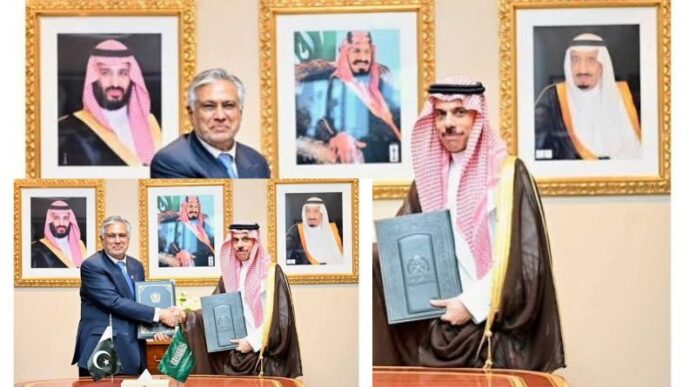
The agreement was signed on September 22, 2026, on the sidelines of the 81st session of the United Nations General Assembly in New York. Pakistan’s Deputy Prime Minister and Foreign Minister Ishaq Dar signed the agreement with Saudi Foreign Minister Prince Faisal bin Farhan.
The new arrangement is expected to make official travel between Pakistan and Saudi Arabia easier. It will also help government officials and diplomats from both countries travel for meetings, talks and other official activities without going through the normal visa process.
The development comes as Pakistan and Saudi Arabia continue to expand cooperation in several areas. Both countries have maintained close political, economic, defence and people-to-people relations for many years.
Visa Requirements Removed for Special Passport Holders
Under the newly signed agreement, holders of diplomatic, official and special passports from Pakistan and Saudi Arabia will be able to travel between the two countries without obtaining a visa, subject to the terms of the agreement.
This is different from a general visa-free arrangement for all Pakistani or Saudi citizens. Ordinary passport holders are not covered by this agreement simply because they are citizens of either country.
The agreement mainly focuses on people who travel on official government duties and other recognised special passports.
Diplomats, senior government officials and people travelling on official assignments often need to make frequent international trips. Removing the visa requirement can reduce paperwork and make such travel easier.
For these travellers, even a small reduction in travel procedures can save time and make it easier to attend meetings, conferences and official events.
Agreement Signed During UN General Assembly
The agreement was signed in New York while Pakistani and Saudi officials were attending the United Nations General Assembly session.
Deputy Prime Minister Ishaq Dar and Saudi Foreign Minister Prince Faisal bin Farhan signed the agreement on behalf of their respective countries.
The signing is being seen as another step in the continued development of Pakistan-Saudi relations.
The two countries regularly hold high-level meetings and maintain contact on regional and international issues. Officials from both sides also meet to discuss trade, investment, defence, energy, employment and other areas of mutual interest.
With the new visa arrangement, official visits could become easier and more convenient.
What the Agreement Means for Pakistani Travellers
The most important point for the public is that this agreement does not mean every Pakistani can now travel to Saudi Arabia without a visa.
The facility is specifically for holders of diplomatic, official and special passports covered by the agreement.
Pakistani citizens travelling on ordinary passports will continue to follow the visa rules that apply to their type of visit.
Saudi Arabia has different visa options for visitors, including tourist and other categories. Its official government platform continues to provide visa services and application procedures for eligible visitors.
Therefore, people planning to visit Saudi Arabia for tourism, Umrah, business, family visits or other personal reasons should check the relevant visa requirements before travelling.
Easier Official Travel
Government officials often need to travel at short notice because of meetings, diplomatic discussions and international events.
Visa applications can involve forms, documents, approvals and waiting periods. A visa waiver for eligible passport holders can remove some of these steps.
This can be especially useful for Pakistan and Saudi Arabia because officials from both countries regularly meet to discuss bilateral relations.
The new agreement may also make it easier for government delegations to visit each other. Meetings that require quick travel can potentially be arranged with fewer administrative delays.
In this way, the visa waiver is not only about travel. It can also support faster communication between government institutions.
Strengthening Pakistan-Saudi Relations
Pakistan and Saudi Arabia have long maintained close relations. Saudi Arabia is also home to a large Pakistani community, with many Pakistanis working in different sectors of the Saudi economy.
The two countries have cooperation in areas including investment, trade, energy, defence and employment.
Both sides have also continued to increase high-level engagement in recent years.
The new visa agreement adds another layer to this relationship by making official travel easier.
Foreign Minister Ishaq Dar said the agreement would help facilitate high-level engagement and institutional exchanges between the two countries. He also linked the development with the long-standing strategic relationship between Pakistan and Saudi Arabia.
A Move to Improve Institutional Cooperation
Institutional cooperation depends heavily on regular communication between government departments and officials.
When officials can travel more easily, meetings and exchanges can be arranged with less difficulty.
The agreement could therefore help Pakistan and Saudi Arabia maintain more regular contact between their ministries, government bodies and official institutions.
It may also support visits by official delegations when the two countries need to discuss specific issues.
Such arrangements are common between countries that have close diplomatic relations. Pakistan already has visa exemption arrangements with several countries for diplomatic and official passport holders, with the exact conditions varying from country to country.
The new agreement with Saudi Arabia follows this broader practice of facilitating official diplomatic travel.
Important Difference Between Ordinary and Special Passports
Many people may confuse a special or official passport with an ordinary Pakistani passport.
An ordinary passport is generally used by citizens for personal international travel. Diplomatic and official passports, on the other hand, are issued to eligible people for government-related duties under the relevant rules.
Because of this difference, the new Pakistan-Saudi agreement should not be understood as a complete removal of visa requirements between the two countries.
For ordinary Pakistani travellers, Saudi visa rules still apply.
Anyone planning a personal trip should therefore confirm the latest requirements through official channels before making travel arrangements.
Impact on Diplomats and Government Officials
The new arrangement could be particularly useful for diplomats who need to travel regularly between Islamabad, Riyadh and other locations.
Diplomatic work often involves meetings with government representatives, discussions on international matters and participation in official events.
Similarly, government officials may need to visit Saudi Arabia for bilateral meetings, economic discussions or institutional cooperation.
Removing visa requirements for eligible passport holders can make these trips more straightforward.
It may also encourage more frequent official exchanges because officials can travel with fewer administrative steps.
Broader Cooperation Between the Two Countries
The visa agreement comes at a time when Pakistan and Saudi Arabia are continuing to strengthen their wider strategic relationship.
The two countries have also been working closely on defence and regional matters. Pakistan, Saudi Arabia and Türkiye signed the Makkah Joint Defence Agreement in August 2026, which Pakistan has described as a defensive agreement focused on cooperation and collective security.
Against this wider background, the visa waiver provides another practical mechanism for closer contact between officials.
While the agreement itself deals with travel, its wider importance comes from the role that regular official visits play in maintaining diplomatic and institutional ties.
No Change for General Tourism Visa Rules
For ordinary Pakistani citizens, the announcement should not be treated as a new tourist visa-free policy.
People travelling to Saudi Arabia for tourism will still need to follow the applicable Saudi visa process.
Saudi Arabia provides electronic visa services for eligible visitors and has different requirements depending on the purpose and type of travel.
Pakistani citizens should therefore check the latest official information before booking flights or making other travel plans.
This distinction is important because the phrase “visa-free travel” can sometimes create confusion. In this case, the waiver is aimed at diplomatic, official and special passport holders rather than all citizens.
Why the Development Matters
The agreement may appear limited because it applies to a specific group of passport holders. However, official travel plays an important role in relations between governments.
Pakistan and Saudi Arabia regularly communicate at the highest levels. Ministers, diplomats and officials need to travel between the two countries to discuss matters of mutual interest.
Making that travel easier can support faster meetings and better institutional coordination.
It can also reduce the amount of paperwork involved in official visits.
For both countries, this could be useful at a time when cooperation covers a wide range of areas.
More Opportunities for High-Level Engagement
The agreement is expected to make high-level engagement between Pakistan and Saudi Arabia more convenient.
When senior officials and government representatives can travel without applying for visas under the new arrangement, meetings can potentially be organised more quickly.
This may prove useful during international conferences, bilateral discussions and regional meetings.
It also supports the idea of maintaining direct communication between the two governments.
Pakistan and Saudi Arabia have repeatedly described their relationship as close and strategic. The latest agreement provides a practical step towards making that relationship easier to manage at the official level.
What Pakistani Citizens Should Know
For the general public, there are a few important points to remember.
First, the new agreement is for diplomatic, official and special passport holders.
Second, it does not give ordinary Pakistani passport holders automatic visa-free entry into Saudi Arabia.
Third, people travelling for tourism, business, family visits or other personal reasons should continue to follow the visa requirements for their particular category.
Fourth, travellers should rely on official government sources for the latest rules because visa policies and entry conditions can change.
Saudi Arabia’s official government portal provides information about visa services, while Pakistan’s relevant government departments publish information about visa arrangements and exemptions.
A New Step in a Long-Standing Partnership
The Pakistan-Saudi visa waiver agreement adds another development to the long-standing relationship between the two countries.
By removing visa requirements for eligible diplomatic, official and special passport holders, both governments have made official travel easier.
The move is expected to support high-level meetings, institutional exchanges and closer communication between the two sides.
It is also a sign that Pakistan and Saudi Arabia are continuing to look for practical ways to strengthen their relationship.
Read Also: check