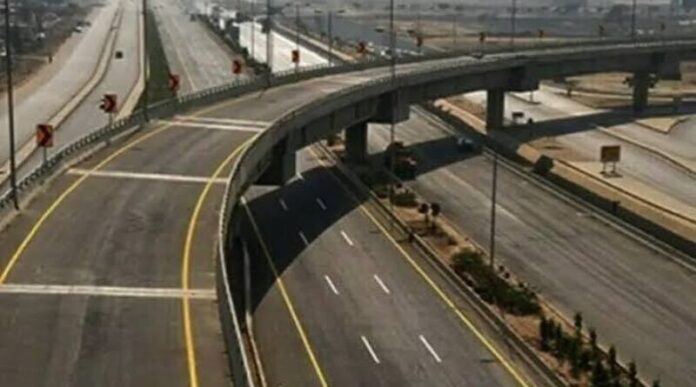

Pakistan’s long-awaited Sukkur-Hyderabad Motorway project has moved closer to becoming a reality, with authorities giving a fresh timeline for the start of construction. According to an update presented before the National Assembly Standing Committee on Communications, work on the M-6 Motorway is expected to begin by the end of October 2026. The committee also plans to visit the project site and attend its groundbreaking ceremony.
The announcement is important because the M-6 is considered the missing link in Pakistan’s main north-south motorway network. Once completed, the motorway will connect Hyderabad with Sukkur and help create a more continuous motorway route between Karachi and the northern parts of the country.
The M-6 project has been discussed for many years, but several delays, financing issues and procurement problems kept it from moving ahead at the expected pace. Now, with financing arrangements in place for different sections and a new construction timeline, the project is again receiving serious attention.
M-6 Motorway to Start Construction by End of October
The latest update came from the National Assembly Standing Committee on Communications during its meeting on September 2, 2026. Officials informed the committee that construction of the Sukkur-Hyderabad M-6 Motorway would commence by the end of October.
The committee responded by deciding to visit the project site, hold a meeting there and participate in the groundbreaking event. This means the October timeline is not simply an old plan but the latest schedule shared with parliament by the relevant authorities.
Earlier this year, the federal government had announced a different starting timeline. In February 2026, Communications Minister Abdul Aleem Khan said work on the M-6 would officially begin in May. However, that deadline passed, and the latest parliamentary update has now moved the expected start to the end of October 2026.
For people living along the route, the latest announcement is significant because the project has been delayed for a long time. A clear construction date could help bring more certainty to the project and allow contractors, local authorities and other departments to prepare for large-scale work.
What Is the M-6 Motorway?
The Sukkur-Hyderabad Motorway, also known as the M-6, is planned as a 306-kilometre-long, six-lane motorway. It will connect Hyderabad with Sukkur in Sindh and serve as a major part of the wider Karachi-to-Peshawar motorway connection.
The project has been described by the federal government as a major missing section of the country’s north-south transport corridor. At present, the motorway network does not provide a continuous high-standard route across this important part of Sindh.
Once the M-6 is completed, traffic coming from Karachi Port will have a much more direct motorway connection toward northern Pakistan. The federal government has said the route will eventually allow smoother movement toward cities including Peshawar and connections farther north.
The motorway is designed not only for private vehicles but also for commercial trucks and other heavy traffic. This is especially important for Pakistan because the Karachi area is home to major ports through which large amounts of imported and exported goods pass every year.
Five Main Sections of the Project
The M-6 project has been divided into five major sections to make construction and financing easier.
These sections are Hyderabad–Tando Adam, Tando Adam–Nawabshah, Nawabshah–Naushahro Feroze, Naushahro Feroze–Ranipur, and Ranipur–Sukkur. The National Assembly committee has been informed that different sections will be developed through different funding and construction arrangements.
Sections I and II, covering the Hyderabad to Nawabshah part of the motorway, are planned under a Public-Private Partnership, or PPP, model. Under this system, private sector companies can take part in financing and developing the project along with the government.
Sections IV and V will be financed through the Islamic Development Bank, while Section III will receive financing from the OPEC Fund.
This mixed approach is being used because the entire motorway is a large and expensive project. Bringing together government resources, international financing institutions and private investment is expected to help move different sections ahead instead of waiting for one single source of funding.
ADB Support for the Motorway
The financing and planning structure for the project received another major boost in April 2026 when the National Highway Authority and the Asian Development Bank entered into an agreement related to the M-6.
The government said the ADB would support the development of two sections and provide transaction advisory services. This includes helping prepare a bankable feasibility study, supporting project marketing, assisting with procurement and helping the project move toward financial close.
This role is important because large infrastructure projects often face delays not only because of money but also because of planning, procurement and technical issues. Support from an international development bank can help bring more structure to those stages.
The federal government has also said that financing for three other sections has already been approved through the Islamic Development Bank and the OPEC Fund.
Major Features of the M-6
The M-6 is not simply a long road between two cities. It is being designed as a modern motorway with several facilities to support daily traffic and long-distance travel.
According to the government, the 306-kilometre motorway will have six lanes, 15 interchanges and 10 service areas. It will also include modern tolling and safety systems.
Earlier project details from the National Highway Authority also included a major bridge over the River Indus, several overpass bridges, canal bridges and flyovers. The original project design also included a service road running alongside parts of the motorway.
These facilities are especially useful for commercial transport. Trucks travelling long distances need safe places to stop, while emergency services and maintenance teams need proper access to the road.
The plan for several interchanges will also allow traffic to enter and leave the motorway at different locations instead of forcing all vehicles to travel through only major city points.
Areas Expected to Benefit
The motorway will pass through or connect a number of important districts and population centres in Sindh. Earlier official project information identified areas including Jamshoro, Hyderabad, Matiari, Benazirabad, Naushahro Feroze, Khairpur and Sukkur.
For local residents, a major motorway can improve access to nearby cities, markets, hospitals, educational institutions and business centres. Better roads can also make it easier for farmers and small businesses to transport products to larger markets.
The benefits may also extend to towns that are not directly located on the motorway but are connected through interchanges and nearby roads. As travel becomes easier, businesses can potentially serve customers across a wider area.
The government has previously said the M-6 could create new livelihood opportunities in the areas along its route. Such opportunities can come from transport services, roadside businesses, construction work, warehouses, service stations and other supporting activities.
Why the M-6 Is Important for Trade
One of the biggest reasons for building the M-6 is to improve the movement of goods between Karachi and the rest of Pakistan.
Karachi is the country’s major port city and an important centre for imports, exports and industrial activity. Goods coming through the ports need reliable road links to reach Punjab, Khyber Pakhtunkhwa and other parts of the country.
Without a continuous motorway route through Sindh, commercial vehicles have had to depend on existing roads that may not offer the same speed, safety and traffic management as a modern motorway.
The government has described the M-6 as a key part of the country’s logistics network and has said its completion would improve regional trade connectivity.
A better motorway connection could also help reduce delays for freight companies. Faster transportation can make supply chains more efficient, especially for businesses that depend on regular deliveries.
Possible Impact on Travel Time and Fuel Use
Motorway projects can also have a direct effect on ordinary travellers. A controlled-access motorway generally allows vehicles to maintain more consistent speeds, with fewer interruptions from local traffic, crossings and roadside activity.
Previous official information on the M-6 project highlighted its role in reducing travel time and saving fuel by improving the connection between southern and northern parts of the country.
For families travelling between cities, a safer and better-managed route could make long journeys more comfortable. For transporters, even small improvements in travel time can become important when vehicles make frequent trips every week.
However, the actual benefits will depend on the speed of construction, the quality of the completed road and how well the new motorway connects with other highways.
Long Delays Before the New Deadline
The M-6 has had a long history of delays. The project was described by the federal government in April 2026 as a scheme that had remained stalled for more than 30 years.
Over the years, different governments discussed various ways to finance and construct the motorway. Public-private partnership plans were considered, while international financial institutions were also approached.
In December 2022, the government held a groundbreaking ceremony and announced that the project would be completed in about 30 months under a PPP model. At that time, the estimated cost was reported at around Rs307 billion.
Despite those earlier efforts, construction did not progress according to the original schedule. The latest financing arrangements and the revised October 2026 construction target are therefore being watched closely.
What Happens Next?
The immediate focus is now on completing the steps needed to start physical construction by the end of October.
The National Assembly committee’s plan to visit the project site for a meeting and groundbreaking ceremony suggests that officials expect visible progress around that time.
At the same time, work on separate sections will need to move forward according to their individual financing and contracting arrangements. The project has five sections, with PPP arrangements for two and international financing for the remaining sections.
The success of the project will ultimately depend on whether these arrangements remain on schedule and whether construction avoids the delays that affected the motorway in previous years.
The federal government has said it wants the whole M-6 project completed within two years under the current plan.
What the New Motorway Could Mean for Pakistan
The Sukkur-Hyderabad M-6 is much more than another road project. It is intended to close a major gap in Pakistan’s motorway network and improve the connection between Karachi and the northern parts of the country.
For businesses, the project could provide a more direct road link for transporting goods. For travellers, it could offer a safer and faster option between major parts of Sindh. For communities along the route, it could bring new commercial activity and better access to major cities.
Read Also: check