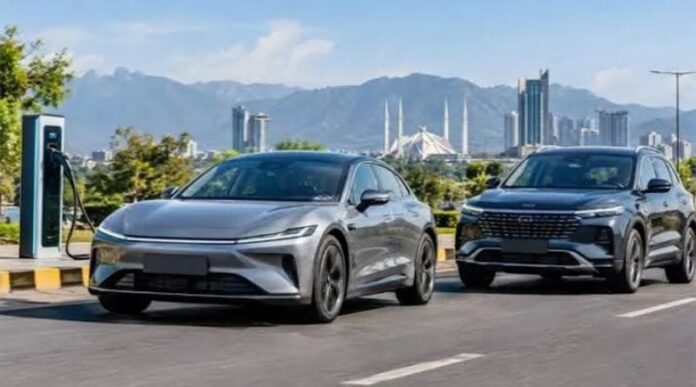

Pakistan’s federal government has announced a major step to promote electric vehicles (EVs) by increasing the vehicle financing limit from Rs3 million to Rs10 million. The decision is part of the government’s new automotive policy, which aims to make vehicles more affordable, encourage the use of electric cars, improve local manufacturing and reduce the country’s dependence on imported fuel.
The new policy is expected to provide more opportunities for people who want to purchase electric vehicles but cannot afford their high prices through direct payments. By increasing the financing limit and extending the repayment period, the government hopes to make electric cars more accessible to middle-income and lower-middle-income families.
Under the new plan, the maximum repayment period for electric vehicle financing will also increase from three years to five years. This change could make monthly instalments easier to manage for buyers who want to switch from petrol-powered vehicles to electric alternatives.
The announcement is part of Pakistan’s broader Automotive and Auto Parts Manufacturing Policy 2026-31, which focuses on affordable transportation, local production, exports, vehicle safety and the promotion of electric mobility.
Government Increases EV Financing Limit from Rs3 Million to Rs10 Million
One of the most important changes in the new auto policy is the increase in the financing limit for electric vehicles.
Previously, the State Bank of Pakistan’s vehicle financing arrangement offered a maximum financing amount of Rs3 million. However, this amount was not enough for many people interested in buying electric cars because several EV models are priced much higher than this limit.
Under the new policy, the government plans to increase the financing limit to Rs10 million for electric vehicles.
This is a major improvement for potential EV buyers. They will be able to apply for a larger loan instead of arranging most of the vehicle’s price through their personal savings.
The repayment period will also be extended from three years to five years. A longer repayment period can help reduce monthly instalments, although the final amount will depend on the bank’s interest rate, financing conditions and the buyer’s eligibility.
For example, someone purchasing an electric vehicle worth several million rupees may find it easier to manage the cost when the payment is divided over five years rather than three.
The move is particularly important for families who want to purchase an electric vehicle for daily travel but are concerned about the initial cost.
Why Has the Government Increased the EV Financing Limit?
Electric vehicles are becoming more popular in Pakistan, but their prices remain a major challenge for ordinary buyers.
Many people are interested in electric cars because they can reduce daily transportation expenses. However, purchasing an EV requires a significant investment, especially when compared with some locally assembled petrol-powered cars.
The previous financing limit of Rs3 million made it difficult for buyers to purchase many electric vehicles through bank financing.
By raising this limit to Rs10 million, the government wants to remove some of these financial barriers.
The decision also supports Pakistan’s plan to increase the use of electric transportation. The country spends a large amount of money importing petroleum products, which puts pressure on foreign exchange reserves and increases its dependence on international fuel markets.
Electric vehicles can help reduce petrol consumption, particularly when more people start using electric cars, motorcycles and scooters for everyday transportation.
The government also believes that promoting EVs can help reduce air pollution and carbon emissions in major cities.
New Auto Policy 2026-31 Focuses on Affordable Vehicles
The financing increase is only one part of the new Automotive and Auto Parts Manufacturing Policy 2026-31.
The federal government has introduced a five-year plan to improve Pakistan’s automobile industry and make locally manufactured vehicles more competitive.
Information Minister Attaullah Tarar and Adviser to the Prime Minister for Industries and Production Haroon Akhtar Khan presented the policy during a press conference in Islamabad on November 7, 2026.
The policy focuses on six major areas:
- Making vehicles more affordable for ordinary consumers.
- Increasing automobile and auto parts exports.
- Improving local manufacturing and production.
- Introducing better vehicle safety standards.
- Encouraging electric vehicle adoption.
- Improving transparency and competition in the automobile market.
The government believes that reducing manufacturing costs and import duties can help bring down vehicle prices.
According to the announcement, Prime Minister Shehbaz Sharif has directed the relevant departments to take steps to reduce the cost of vehicles in Pakistan.
The government also wants automobile companies to improve their production standards instead of depending mainly on imported parts and limited local assembly.
Electric Vehicle Taxes to Remain Lower
Another important part of the new policy is the proposed tax relief for electric vehicles.
The government wants to encourage people to purchase EVs by keeping their tax rates lower than those applied to conventional vehicles.
Under the proposed tax structure, battery electric vehicles will have a sales tax rate of 1% from 2026 to 2031. Range-extended electric vehicles will face a proposed sales tax of 6%, while plug-in hybrid electric vehicles will have a proposed rate of 9%.
These rates are intended to make electric and hybrid vehicles more attractive to buyers.
The government has also announced that electric vehicles priced up to $50,000 will not face capital value tax, withholding tax or federal excise duty under the announced incentive package. More expensive electric vehicles will be treated as luxury products and taxed under the normal rules.
However, the proposed tax incentives are subject to the relevant approvals, including approval from the International Monetary Fund (IMF).
Pakistan had previously faced pressure over its tax proposals for electric vehicles. However, the government has decided to maintain a supportive approach towards EV adoption instead of placing the same tax burden on all vehicle categories.
Government Plans to Make Electric Cars More Affordable
Electric cars are still expensive for a large number of Pakistani consumers. Although they can offer savings on running costs, their purchase prices remain a major concern.
The government wants to address this problem through a combination of better financing, tax incentives and lower import duties.
The new policy also proposes lower tariffs for smaller electric vehicles priced below $15,000.
This is important because affordable electric cars could attract more buyers who currently depend on petrol-powered vehicles.
The government believes that smaller and reasonably priced electric vehicles can play an important role in changing Pakistan’s transportation system.
If manufacturers introduce more affordable models and banks provide easier financing options, more people may consider switching to electric transportation.
However, the actual impact will depend on vehicle availability, prices, bank financing rates and the development of charging facilities across the country.
Charging Stations to Receive Government Support
A major challenge for electric vehicle owners in Pakistan is the limited availability of public charging stations.
Unlike petrol vehicles, electric cars need charging facilities. People who do not have charging arrangements at home may face difficulties when travelling long distances.
The government has recognised this problem and plans to encourage private companies to establish more EV charging stations.
Under the new policy, the government will help address the financial gap that makes investment in charging stations less attractive for businesses.
The government also plans to reduce the cost of importing and installing charging equipment.
According to the announced measures, sales tax on charging station equipment has been reduced to 1%, while customs duty has been removed.
These incentives could encourage businesses to invest in charging infrastructure.
More charging stations would make electric cars easier to use and help build confidence among people who are considering purchasing an EV.
The government believes that the growth of charging facilities is necessary for the successful transition towards electric transportation.
Pakistan Wants to Reduce Its Fuel Import Bill
Pakistan depends heavily on imported petroleum products to meet its energy needs. Changes in international oil prices can directly affect the country’s economy and increase the cost of transportation.
When petrol prices increase, vehicle owners have to spend more money on daily travel. Businesses also face higher transportation costs, which can affect the prices of goods and services.
The government believes that increasing the use of electric vehicles can help reduce this dependence on imported fuel.
Electric cars and motorcycles use electricity instead of petrol, which can lower the country’s demand for imported petroleum if EV adoption increases on a large scale.
The money saved through lower fuel imports could also support other important areas, including healthcare, education, infrastructure and public services.
Information Minister Attaullah Tarar has highlighted the importance of reducing the fuel import bill and improving the country’s local automobile industry.
He also said that previous policies had failed to deliver enough innovation and value addition in the automobile sector.
The government now wants manufacturers to focus on better technology, improved quality and local production.
Petrol Vehicles Below 1,000cc to Remain Unaffected
The new auto policy also considers people who cannot afford electric vehicles and continue to use small petrol-powered cars.
According to the government’s announcement, ordinary petrol vehicles with engine capacities below 1,000cc will remain unaffected by the proposed changes.
This decision is important for lower-income and middle-income families who depend on smaller vehicles for their daily transportation needs.
The government has also indicated that additional revenue will be collected from conventional vehicles with engine capacities above 1,000cc.
This approach is intended to support the EV incentive programme while maintaining the government’s revenue position.
The collected funds will also help support industrial development, export incentives and research and development activities.
Automobile Companies Will Face New Export Targets
Apart from encouraging electric vehicles, the new policy aims to make Pakistan’s automobile industry stronger in international markets.
The government wants local manufacturers to increase exports and reduce their dependence on domestic sales.
The policy sets an ambitious target of taking vehicle and auto parts exports to around $6 billion by fiscal year 2030-31.
Automobile companies will also have to meet export and local manufacturing targets.
Manufacturers that achieve their export commitments may receive incentives, including compensation equal to 5% of their export value. An additional incentive of 10% has also been proposed for exports above the previous year’s level.
However, companies that fail to meet their targets may face penalties and could lose access to certain incentives.
The government believes these measures will encourage automobile companies to improve production quality and compete with international manufacturers.
The policy also aims to connect Pakistan’s auto parts industry with international supply chains, creating more opportunities for local businesses.
Better Vehicle Safety Standards Under the New Policy
Vehicle safety is another important area covered by the Automotive Policy 2026-31.
Pakistan’s automobile industry has faced concerns about vehicle safety, quality and the availability of modern features.
To address these issues, the government plans to introduce 45 additional vehicle safety standards aligned with the United Nations’ WP.29 regulations.
These standards are expected to improve vehicle safety and bring local manufacturing practices closer to international requirements.
The government wants automobile companies to focus on producing vehicles that meet better safety standards instead of concentrating only on reducing manufacturing costs.
Improved safety requirements could also help Pakistani manufacturers prepare their vehicles for international markets.
Electric Motorcycles Show Growing Interest in Pakistan
The growing use of electric motorcycles and scooters is another reason behind the government’s focus on electric transportation.
According to figures shared by Adviser Haroon Akhtar Khan, electric two-wheeler sales increased from 60,000 units in fiscal year 2024-25 to 240,000 units in fiscal year 2025-26.
This increase shows that more people are becoming interested in electric transportation.
Electric motorcycles can be useful for students, office workers, delivery riders and people who travel short distances every day.
They can also help reduce petrol expenses, although the overall savings depend on electricity prices, battery costs and maintenance requirements.
The government hopes that similar growth will take place in the electric car market over the coming years.
What Does the New EV Financing Policy Mean for Buyers?
The increase in the EV financing limit from Rs3 million to Rs10 million could make a significant difference for people planning to purchase electric vehicles.
Buyers will have access to a higher financing amount, while the repayment period will increase to five years.
However, consumers should understand that a higher financing limit does not mean every applicant will automatically receive a loan of Rs10 million.
Banks will still consider income, credit history, repayment capacity and other financing requirements.
Customers should also compare financing rates and calculate the total amount they will pay before choosing a vehicle.
The availability of charging stations, battery warranty, vehicle range and after-sales support should also be considered before purchasing an electric car.
If the government successfully implements the new measures, the EV market could become more accessible to a wider group of Pakistani consumers.
Conclusion
Pakistan’s decision to increase the electric vehicle financing limit from Rs3 million to Rs10 million is an important part of its plan to promote electric transportation.
The extension of the repayment period from three years to five years could make monthly instalments more manageable for buyers. Along with proposed tax incentives, lower tariffs and support for charging stations, the government wants to encourage more people to consider electric vehicles.
The new Automotive and Auto Parts Manufacturing Policy 2026-31 also aims to reduce vehicle prices, improve local production, increase exports and introduce better safety standards.
However, the success of this plan will depend on its implementation, financing conditions, vehicle prices and the availability of charging facilities.
If these measures deliver the expected results, Pakistan could see greater adoption of electric cars and motorcycles in the coming years. The policy may also help reduce fuel imports, create employment opportunities and support the growth of the local automobile industry.
For now, the increase in the EV financing limit is a positive development for people who want to switch to electric transportation but need better financial support.
Frequently Asked Questions (FAQs)
1. What is the new EV financing limit in Pakistan?
The government plans to increase the electric vehicle financing limit from Rs3 million to Rs10 million under the new Automotive and Auto Parts Manufacturing Policy 2026-31.
2. What was the previous EV financing limit?
The previous vehicle financing limit was Rs3 million. The government now plans to increase it to Rs10 million for electric vehicles.
3. What is the new repayment period for EV financing?
The maximum repayment period is being extended from three years to five years, allowing buyers more time to repay their financing.
4. When was Pakistan’s new auto policy announced?
The federal government announced the new auto policy on November 7, 2026, during a press conference in Islamabad.
5. Why has Pakistan increased the EV financing limit?
The government wants to make electric vehicles more affordable, encourage EV adoption and reduce the country’s dependence on imported petroleum products.
6. What sales tax will apply to electric vehicles in Pakistan?
Under the proposed tax structure, battery electric vehicles will have a 1% sales tax, range-extended electric vehicles 6% and plug-in hybrid vehicles 9%. These proposals are subject to the required approvals.
7. Will electric vehicle prices decrease in Pakistan?
The government expects lower tariffs, tax incentives and reduced manufacturing costs to help make electric vehicles more affordable. However, actual prices will depend on manufacturers and market conditions.
8. Will the government provide support for EV charging stations?
Yes. The government plans to encourage investment in charging stations by reducing taxes on charging equipment and helping address financial challenges faced by investors.
9. Will petrol cars below 1,000cc be affected by the new auto policy?
According to the government’s announcement, ordinary petrol-powered vehicles with engine capacities below 1,000cc will remain unaffected by the proposed changes.
10. What is the main goal of Pakistan’s Auto Policy 2026-31?
The main goals are to reduce vehicle prices, promote electric vehicles, improve local manufacturing, increase exports, strengthen vehicle safety and reduce dependence on imported fuel.
Read Also: check