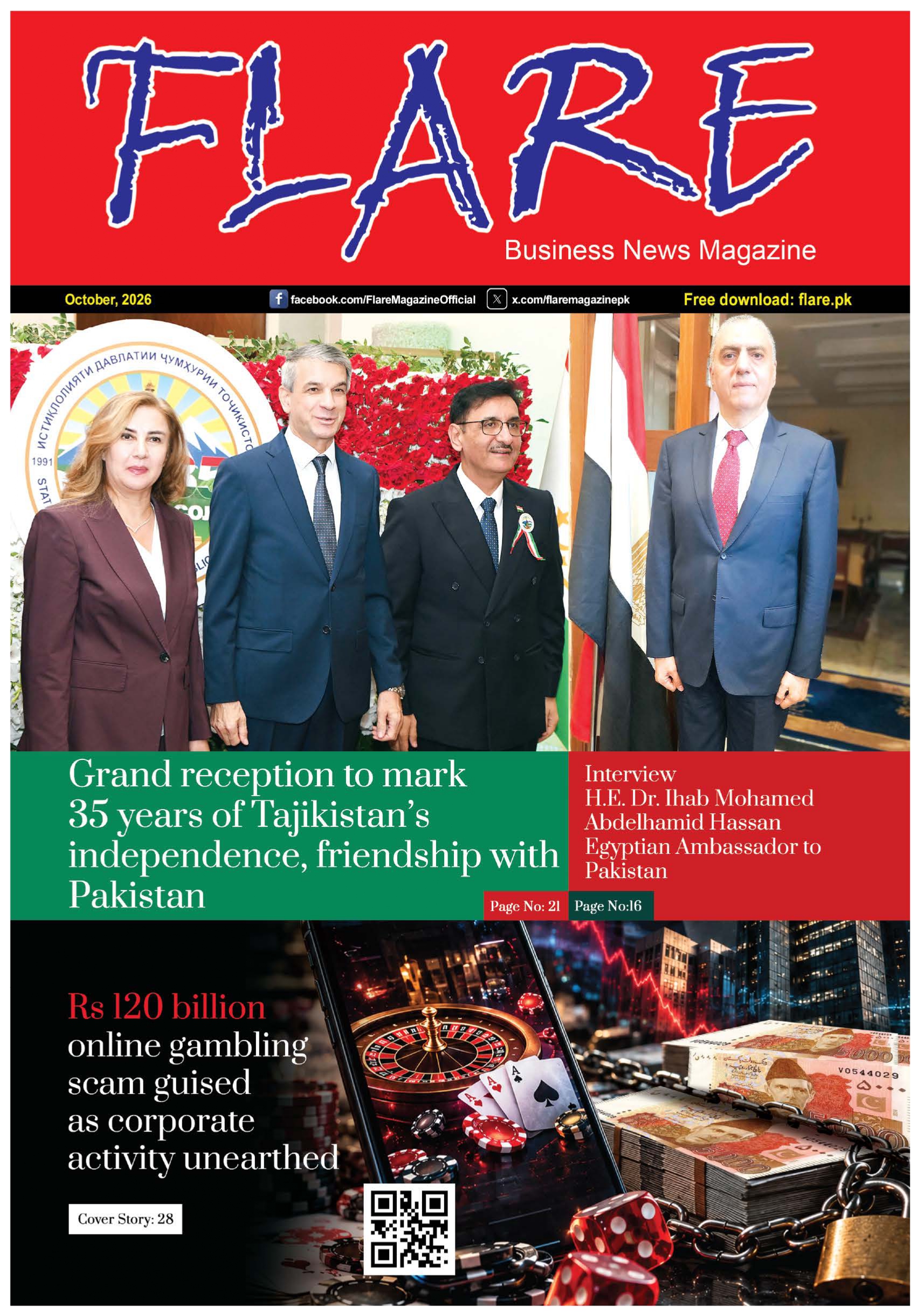
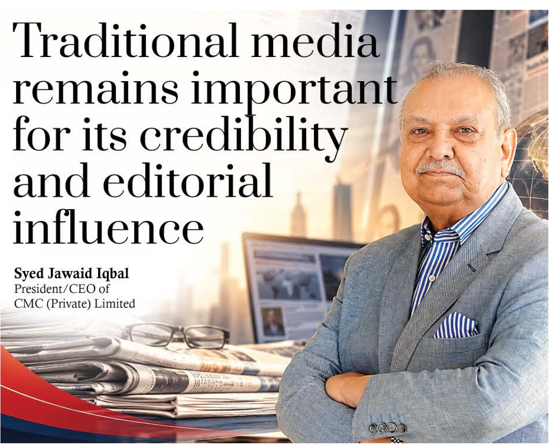

Syed Jawaid Iqbal
President/CEO of CMC (Private) Limited
Pull Quote:
“The Flare panel interviews CMC (Pvt) Ltd President/CEO Syed Jawaid Iqbal, who highlights that digital media has changed the speed and scale of communication, but the significance of human expertise is intact and irreplaceable. He notes that while AI can aid in research, monitoring and content development, it cannot replace skilled communicators and professionals. Machines analyse data and recognise patterns, but humans add context, creativity, cultural understanding, emotion, judgment and connection. He believes organisations should invest in skilled manpower, as effective communication relies on human experience, intelligence and relationships, not just technology”
Interview Transcript
Flare: How would you describe CMC’s journey, present position and core strengths in Pakistan’s communications industry?
Syed Jawaid Iqbal: CMC’s journey is closely linked with Pakistan’s communications industry. I began my advertising career in 1973 and established Corporate & Marketing Communications (CMC) in 1980. At that time, PR largely meant press releases and media appointments. We believed communication should become a management function that influences perceptions, builds relationships and supports business objectives.
CMC evolved into a broader communications and perception management company covering strategic communications, media relations, crisis management, corporate reputation, content, digital communication and stakeholder engagement. Its affiliation with the US-based Ketchum network has provided it with an international connection, alongside strong knowledge of Pakistan’s cultural, political, business and media environment.
Our key strengths remain experience, relationships, strategic understanding and local insight.
Flare: How has corporate communication and public relations changed in Pakistan during the past decade?
Syed Jawaid Iqbal: The change has been fundamental. A decade ago, PR centred on newspapers, television, press releases, events and media relations. Today, communication is continuous, multi-platform and increasingly audience-driven. The biggest change is the loss of the traditional gatekeeper. Customers, employees, investors, journalists, influencers and citizens now create and distribute information every day. Data Reportal estimates that Pakistan had 117 million internet users and 79.9 million social media user identities at the end of 2025. Corporate reputation can now be influenced by a social-media post, complaint, employee comment, video or creator’s opinion as easily as by a newspaper story. PR has, therefore, moved from publicity to reputation management. Professionals must understand business, data, digital behaviour, media, public sentiment and technology, while traditional media remains important for its credibility and editorial influence.
Flare: What are the biggest communications challenges facing Pakistani businesses today?
Syed Jawaid Iqbal: The first is trust. Information moves exceptionally quickly, while confidence in institutions and information sources can be fragile. Companies therefore need greater transparency and consistency. The second is the speed of the news cycle. Organisations may have only a few hours—or even minutes—to respond to an issue that can reach millions. A delayed response can allow speculation to become accepted as fact.
Third is audience fragmentation. Employees, regulators, investors, customers, communities and media may expect different information, making generic messages insufficient.
Businesses must also communicate sensitive issues such as pricing, taxation, layoffs, regulation, environmental impact and service disruptions without appearing defensive or disconnected from public concerns. Generally, clients want the PR agency to “control” the media. It cannot be done, as the media has to be “managed” and not “controlled.”
Communications should also be involved earlier in business decisions so stakeholder and reputational consequences are considered before implementation.
Flare: How are digital media, AI and data changing PR, reputation management and stakeholder engagement?
Syed Jawaid Iqbal: Digital media has changed the speed and scale of communication, while AI is beginning to change how communication is produced and managed. AI can improve research, monitoring, content development, audience analysis and workflow efficiency. It can identify themes, analyse conversations, develop initial content and accelerate creative processes. I have described AI as a tool that can enhance creativity, accelerate workflows and support research and content creation.
But AI does not replace communications professionals. Machines can identify patterns; people must understand context, culture, emotion, politics and consequences.
Urdu Text Box:
ہے دل کے لیے موت مشینوں کی حکومت
احساسِ مروت کو کچل دیتے ہیں آلات
Data is equally important. Modern PR should measure more than audience reach. We need to know whether the right stakeholders were reached, what they thought, whether sentiment changed, whether messages travelled and whether communication contributed to organisational objectives.
Pakistan is still developing this capability, with research highlighting opportunities for AI in monitoring and crisis management alongside the need for training, ethical safeguards and responsible use.
Flare: How does CMC approach crisis communication and misinformation?
Syed Jawaid Iqbal: Crisis communication must begin before a crisis, with clear responsibilities, spokespersons and response plans. When an issue emerges, we establish facts quickly and communicate accurately. Misinformation requires credible, transparent and human responses, while social listening helps identify emerging risks. Ultimately, a strong reputation provides resilience during crises.
Flare: What qualities should companies look for in a communications partner?
Syed Jawaid Iqbal: Look beyond agency size and media contacts. A good partner understands the business, stakeholders and regulatory environment and offers strategic advice. Credibility, integrity, confidentiality, judgement and digital capabilities are essential. Ultimately, an agency’s greatest asset is its people.
Flare: How important are research, measurement and accountability?
Syed Jawaid Iqbal: They are fundamental. Research ensures evidence-based strategies, while measurement should assess coverage quality, sentiment, engagement and changes in perception—not just impressions. Professionals must show not only what was achieved, but why it mattered.
Flare: Which sectors offer the greatest growth opportunities for communications?
Syed Jawaid Iqbal: Major opportunities exist in technology, fintech, energy, infrastructure, mining, healthcare, consumer businesses and education. These sectors need communication around innovation, trust, investment, regulation and social impact. The key opportunity is helping organisations explain their contribution to Pakistan’s economic and social development.
Flare: What are CMC’s priorities for the next few years?
Syed Jawaid Iqbal: We aim to strengthen CMC’s digital reputation, data and insights, crisis preparedness, corporate positioning, stakeholder engagement and integrated communications. AI will support this evolution, but human judgement remains essential. We will also continue investing in young talent and professional development.
Flare: What advice would you give young PR and communications professionals?
Syed Jawaid Iqbal: Learn beyond communications. Understand business, politics, economics, technology and people. Build listening skills, professional integrity and never compromise integrity. Use AI as a tool, not a substitute for judgement and empathy. Since I started my career in 1973, the fundamentals remain: understand people, tell the truth, build relationships and deliver on commitments.