
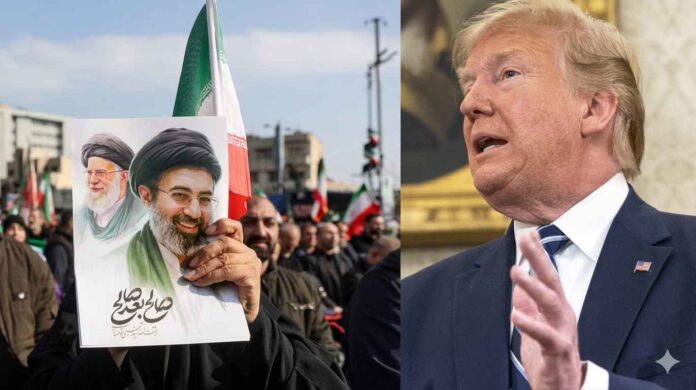

Major Diplomatic Claim Signals Possible Turning Point
A significant geopolitical development has emerged as the President of the United States announced that Iran has agreed to suspend its nuclear program indefinitely. This claim, if confirmed, could mark a historic turning point in one of the world’s most prolonged and volatile international disputes.
According to the statement, negotiations aimed at reducing tensions between the United States, Israel, and Iran have reached an advanced stage. The majority of key terms are reportedly finalized, with only a few remaining issues to be addressed in upcoming discussions. These final negotiations are expected to take place soon, potentially paving the way for a long-term framework agreement.
The announcement has already sent ripples across global markets and diplomatic circles, as analysts attempt to assess the implications of such a sweeping development.
Understanding the Scope of the Nuclear Suspension
The most striking element of the claim is the assertion that Iran’s nuclear program will be suspended without any defined time limit. Unlike previous agreements that imposed temporary restrictions, this proposed arrangement suggests a more open-ended or potentially permanent halt.
Such a move would represent a dramatic shift in Iran’s nuclear policy. For years, the country has maintained that its nuclear program is intended for peaceful purposes, while Western nations have expressed concerns about potential weaponization.
An indefinite suspension would signal a willingness to address these concerns in a comprehensive manner, potentially reducing the risk of military confrontation and easing long-standing tensions in the region.
Progress Toward a Broader De-Escalation Agreement
The nuclear suspension is reportedly part of a broader effort to de-escalate tensions involving multiple key players in the Middle East. The proposed agreement is said to include understandings between the United States, Israel, and Iran, aiming to stabilize the region and prevent further conflict.
The President indicated that the deal is “mostly complete,” suggesting that negotiators have made substantial progress in resolving critical issues. While details of the agreement have not been fully disclosed, it is believed to cover a range of security, political, and economic considerations.
If successfully implemented, this agreement could reduce the likelihood of military escalation and create a foundation for improved diplomatic relations among the involved parties.
Final Negotiations Expected Soon
Despite the optimistic tone of the announcement, some aspects of the agreement remain unresolved. Final negotiations are expected to take place in the coming days, where representatives from the involved countries will work to finalize the remaining details.
These talks are likely to focus on the long-term framework of the agreement, including verification mechanisms, enforcement measures, and potential incentives for compliance. The success of these discussions will be crucial in determining whether the proposed deal can be fully realized.
The location of the negotiations has also drawn attention, as it is expected that discussions may once again be hosted in Pakistan. This highlights the country’s growing role as a venue for high-level diplomatic engagement.
Rejection of Time-Limited Nuclear Restrictions
A notable aspect of the President’s statement was the rejection of claims that the nuclear suspension would expire after a fixed period, such as 20 years. Instead, he emphasized that the agreement would not be bound by a specific timeline, reinforcing the idea of a long-term or indefinite commitment.
This stance contrasts with previous nuclear agreements, which often included sunset clauses that allowed certain restrictions to expire over time. Critics of those agreements argued that they provided only temporary solutions, while supporters viewed them as practical steps toward long-term stability.
An indefinite suspension, if achieved, would address some of these criticisms by removing the uncertainty associated with time-limited arrangements.
Uncertainty Over Negotiation Leadership
While progress appears to have been made, questions remain regarding the leadership and composition of the negotiating teams. The United States has not yet finalized who will lead its delegation in the upcoming talks, adding an element of uncertainty to the process.
The choice of negotiators can play a critical role in shaping the outcome of such discussions. Experienced diplomats and technical experts are often required to navigate the complex issues involved, from nuclear verification to regional security arrangements.
As preparations for the final round of talks continue, attention will be focused on how these teams are assembled and what strategies they bring to the table.
Impact on Global Oil Markets
The announcement has already had a noticeable impact on global financial markets, particularly in the energy sector. Oil prices have declined following the reports, reflecting expectations of reduced geopolitical risk and potential changes in supply dynamics.
Prices have dropped to a five-week low, falling below $79 per barrel. This decline suggests that investors are responding to the possibility of improved stability in the Middle East, a region that plays a critical role in global oil production.
Lower oil prices can have wide-ranging effects, influencing everything from transportation costs to inflation rates. For countries that rely heavily on energy imports, such developments may provide some economic relief.
Geopolitical Implications of the Agreement
If the proposed deal is successfully implemented, its geopolitical implications could be profound. An indefinite suspension of Iran’s nuclear program would address one of the primary sources of tension between Iran and Western nations, potentially opening the door to broader diplomatic engagement.
Improved relations could lead to increased economic cooperation, reduced sanctions, and greater stability in the region. At the same time, the agreement would need to address the security concerns of regional actors, particularly those who have historically viewed Iran’s nuclear ambitions with suspicion.
Balancing these interests will be essential to ensuring the durability and effectiveness of the agreement.
Challenges and Risks Ahead
Despite the potential benefits, significant challenges remain. Negotiating a comprehensive and enforceable agreement is a complex process that requires careful coordination and mutual trust.
Verification of compliance will be a critical issue, as both sides will need assurances that the terms of the agreement are being upheld. This may involve international monitoring mechanisms and regular inspections.
Additionally, political dynamics within each country could influence the outcome. Changes in leadership, domestic pressures, and shifting alliances all have the potential to impact the agreement’s success.
Historical Context of Nuclear Negotiations
The issue of Iran’s nuclear program has been a focal point of international diplomacy for decades. Previous agreements have attempted to limit nuclear activities in exchange for economic and political concessions.
While some of these agreements achieved temporary success, they often faced challenges related to enforcement, compliance, and changing political circumstances. The proposed indefinite suspension represents a new approach that seeks to address these limitations.
By moving beyond time-bound restrictions, negotiators aim to create a more sustainable framework for long-term stability.
Economic and Strategic Outcomes
Beyond the immediate geopolitical impact, the agreement could have significant economic and strategic consequences. Reduced tensions may lead to increased trade and investment opportunities, both within the region and globally.
For energy markets, the potential normalization of relations could influence supply patterns and pricing trends. For governments, the agreement could free up resources previously allocated to military preparedness, allowing for greater focus on economic development.
Strategically, a successful deal could reshape alliances and influence the balance of power in the Middle East.
The Role of Diplomacy in Conflict Resolution
This development underscores the importance of diplomacy in addressing complex international challenges. While military options often dominate headlines, diplomatic efforts can provide more sustainable solutions by addressing underlying issues and fostering cooperation.
The reported progress in negotiations highlights the potential for dialogue to achieve meaningful results, even in situations characterized by deep mistrust and longstanding conflict.
As the final stages of the talks approach, the focus will be on whether this diplomatic momentum can be maintained and translated into a concrete agreement.
Conclusion: A Pivotal Moment in Global Politics
The claim that Iran has agreed to suspend its nuclear program indefinitely represents a potentially transformative moment in global politics. If confirmed and implemented, it could reduce tensions, stabilize markets, and open new avenues for cooperation.
However, the path forward is not without obstacles. Final negotiations, verification mechanisms, and political considerations will all play a role in determining the outcome.
As the world watches closely, the coming days will be critical in shaping the future of this agreement and its impact on international relations. Whether this marks the beginning of a new era of stability or another chapter in a complex geopolitical story will depend on the decisions made at the negotiating table.
Read More
Tobacco Giant Calls on Government to Avoid Tax Hike in Upcoming Budget


