
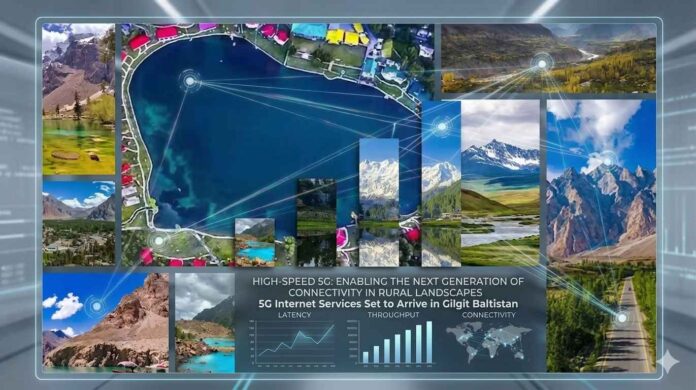

Gilgit Baltistan is preparing for a major technological transformation as the federal government formally approves policy directives allowing telecom operators to conduct 5G internet trials in the region. The development marks a historic step toward bringing next-generation digital connectivity to one of Pakistan’s most geographically challenging and strategically important areas.
The approval is expected to accelerate digital modernization, improve internet accessibility, strengthen communication infrastructure, and open new economic opportunities for residents, businesses, tourists, and educational institutions throughout Gilgit Baltistan.
For years, the mountainous region has faced connectivity limitations due to difficult terrain, infrastructure challenges, and slower expansion of advanced telecommunications networks. The arrival of 5G technology could significantly reshape the digital landscape by delivering ultra-fast internet speeds, reduced network latency, and improved reliability across urban centers and remote areas alike.
The move also reflects Pakistan’s broader push toward technological advancement, digital transformation, and expansion of next-generation communication systems nationwide.
Gilgit Baltistan Moves Toward a New Digital Era
The approval of 5G trial directives represents a major milestone in Gilgit Baltistan’s technological development journey.
Traditionally, the region has faced unique communication challenges because of its mountainous geography, scattered population centers, harsh weather conditions, and limited infrastructure expansion compared to larger urban areas.
Internet connectivity in many remote districts has historically remained slow, inconsistent, or unavailable, affecting economic activity, education, healthcare access, tourism development, and digital services.
The introduction of 5G technology has the potential to transform this situation by significantly improving network capacity and communication efficiency.
Unlike earlier mobile network generations, 5G technology offers dramatically faster data transfer speeds, lower delays in communication, and the ability to support large numbers of connected devices simultaneously.
This technological leap could enable entirely new digital services and applications that were previously difficult to implement in remote mountainous regions.
Experts believe the arrival of 5G may become one of the most significant infrastructure upgrades for Gilgit Baltistan in recent years.
Federal Government Approves 5G Policy Directives
The federal government has formally approved policy directives that will allow telecom operators to begin conducting 5G trials in Gilgit Baltistan.
The directives were prepared through regulatory coordination mechanisms aimed at extending advanced telecommunications infrastructure to the region under the relevant legal and administrative framework governing Gilgit Baltistan.
The approval creates the regulatory foundation necessary for telecom companies to begin testing and deploying next-generation mobile communication technology in the area.
Authorities believe the policy framework will encourage telecom operators to expand investment and infrastructure development within Gilgit Baltistan while preparing for future commercial 5G services.
The move is also expected to support long-term digital integration between Gilgit Baltistan and the rest of Pakistan’s evolving telecommunications ecosystem.
Government officials have described the approval as part of broader efforts to modernize communication infrastructure and improve digital inclusion across underserved regions.
What 5G Technology Means for Gilgit Baltistan
The arrival of 5G technology could fundamentally change how people in Gilgit Baltistan communicate, work, study, travel, and access digital services.
5G networks are designed to deliver internet speeds significantly faster than current 4G systems while also reducing network congestion and improving reliability.
Users may eventually experience smoother video streaming, faster downloads, higher-quality video calls, improved online gaming performance, and more stable internet connections.
However, the benefits of 5G extend far beyond faster smartphone internet.
The technology also supports advanced applications involving smart infrastructure, remote healthcare services, digital education, tourism technologies, cloud computing, agriculture monitoring, emergency communication systems, and connected devices.
In mountainous regions like Gilgit Baltistan, improved connectivity could help bridge long-standing digital gaps and create greater access to opportunities previously concentrated in larger cities.
Experts believe advanced connectivity may help reduce geographic isolation while improving integration with national and global digital networks.
Tourism Sector Could Benefit Significantly
Tourism is expected to become one of the biggest beneficiaries of improved 5G connectivity in Gilgit Baltistan.
The region attracts thousands of domestic and international tourists every year due to its mountains, valleys, lakes, glaciers, trekking routes, cultural heritage, and adventure tourism opportunities.
However, weak internet coverage and communication limitations have often remained a challenge for travelers visiting remote destinations.
Improved 5G connectivity could enhance tourism experiences by enabling better navigation services, live streaming, digital travel platforms, online bookings, emergency communication, remote work opportunities, and high-speed connectivity for visitors.
Tourism businesses such as hotels, guest houses, travel companies, restaurants, transport providers, and local guides may also benefit from stronger digital infrastructure.
Digital payment systems, online marketing, cloud-based operations, and real-time customer services could become more accessible across the tourism industry.
As global travelers increasingly prioritize reliable internet access, stronger digital connectivity may also improve Gilgit Baltistan’s attractiveness as a tourism destination.
Business Opportunities Expected to Expand
The rollout of 5G infrastructure could create substantial new business opportunities across Gilgit Baltistan’s economy.
Faster and more reliable internet services may support entrepreneurship, e-commerce expansion, digital freelancing, remote employment, technology startups, and online business operations.
Many young people in Gilgit Baltistan already participate in Pakistan’s growing freelance economy, offering services in software development, graphic design, content creation, digital marketing, and online consulting.
Improved internet infrastructure could allow more residents to participate in digital economic activities without relocating to larger urban centers.
Local businesses may also gain better access to online marketplaces, digital banking services, cloud applications, and communication tools necessary for modern commerce.
Experts believe enhanced connectivity may encourage technology investment and create new economic possibilities in areas previously constrained by weak digital infrastructure.
Education and Online Learning Could Improve Dramatically
Education is another sector likely to experience major improvements through 5G deployment in Gilgit Baltistan.
Students and educational institutions in remote areas often face difficulties accessing high-quality online learning resources due to slow internet speeds and unstable connectivity.
The expansion of advanced mobile internet could improve access to virtual classrooms, educational videos, online certifications, research materials, remote tutoring, and digital collaboration tools.
Schools, colleges, and universities may increasingly integrate digital learning platforms into academic programs as connectivity improves.
Students in remote mountain communities could gain greater access to educational opportunities previously limited by geography and infrastructure challenges.
The improvement in online learning capabilities may also support broader educational development and skill-building initiatives across the region.
Healthcare Services Could Become More Accessible
5G technology could also strengthen healthcare accessibility in Gilgit Baltistan, especially in remote and hard-to-reach areas.
Telemedicine services, remote consultations, digital diagnostics, emergency communication systems, and online healthcare platforms rely heavily on stable high-speed internet connections.
Improved connectivity may allow healthcare providers to communicate more effectively with specialists located in larger cities, reducing delays in medical consultations and improving patient support.
Remote monitoring technologies and digital healthcare systems may also become more practical as communication infrastructure improves.
In mountainous regions where physical travel can be difficult and time-consuming, stronger digital healthcare capabilities could provide important long-term benefits for local communities.
Telecom Operators Preparing for Future Expansion
The approval of 5G trial directives also lays the groundwork for future spectrum allocation and commercial network deployment.
Telecom operators are expected to evaluate infrastructure requirements, coverage planning, network performance, and technical feasibility through trial operations before large-scale commercial expansion begins.
The development could eventually lead to future 5G spectrum auctions that would formally allocate frequencies required for next-generation mobile services in Gilgit Baltistan.
Industry analysts believe telecom companies may initially focus on urban centers, tourism hubs, and strategically important areas before expanding coverage into more remote districts.
The pace of deployment will likely depend on infrastructure investment, commercial viability, regulatory approvals, and technological readiness.
However, the official approval of policy directives represents the first major step toward eventual commercial 5G availability in the region.
Pakistan Accelerating Its Digital Transformation Agenda
The move toward 5G deployment in Gilgit Baltistan reflects Pakistan’s broader national strategy aimed at accelerating digital transformation and telecommunications modernization.
Authorities have increasingly emphasized the importance of expanding digital infrastructure to support economic development, innovation, financial inclusion, and technology-driven growth.
The country has witnessed rapid growth in smartphone usage, digital payments, e-commerce, online education, freelancing, and internet-based services over recent years.
As digital adoption continues rising nationwide, demand for faster and more reliable communication infrastructure is also increasing rapidly.
The expansion of 5G services is expected to play an important role in supporting future technological innovation and digital economic development across Pakistan.
Experts believe advanced telecommunications infrastructure will become increasingly essential for long-term competitiveness in the global digital economy.
Challenges Still Remain for Large-Scale Deployment
Despite the positive momentum, several challenges may still affect the pace and scale of 5G deployment in Gilgit Baltistan.
Mountainous terrain creates significant technical and logistical difficulties for telecommunications infrastructure development. Building towers, fiber networks, and power systems in remote regions often requires higher investment and engineering complexity.
Weather conditions, transportation limitations, and sparse population density may also influence commercial deployment decisions.
Additionally, large-scale 5G infrastructure requires substantial investment in network equipment, backhaul systems, energy supply, and spectrum resources.
Telecom operators will need to carefully evaluate economic feasibility while balancing infrastructure expansion goals with commercial sustainability.
Experts note that successful deployment will likely require ongoing coordination between regulators, telecom companies, local authorities, and infrastructure providers.
Digital Inclusion Becoming Increasingly Important
The expansion of 5G services into Gilgit Baltistan also highlights the growing importance of digital inclusion within national development strategies.
Access to high-quality internet connectivity is increasingly viewed as essential for education, business, healthcare, communication, financial services, and economic participation.
Regions lacking advanced digital infrastructure risk falling behind in an increasingly technology-driven global economy.
By extending next-generation connectivity into underserved areas, authorities aim to reduce digital inequality and improve access to opportunities for remote communities.
Improved internet infrastructure may also help young people access remote work opportunities, online learning platforms, and entrepreneurship channels without migrating away from their home regions.
Future Outlook for 5G in Gilgit Baltistan
The future outlook for 5G connectivity in Gilgit Baltistan appears increasingly promising following the official approval of trial directives.
As telecom companies begin testing next-generation networks, the region could gradually move toward commercial deployment of ultra-fast internet services over the coming years.
The transformation may significantly improve communication infrastructure while supporting economic development, tourism growth, educational advancement, healthcare access, and digital innovation.
Experts believe the arrival of 5G could mark the beginning of a broader technological shift that reshapes how residents, businesses, and institutions interact with the digital economy.
Although challenges remain, the approval represents a historic step toward integrating Gilgit Baltistan into Pakistan’s next generation digital future.
For a region long constrained by geographic isolation and connectivity limitations, 5G technology could become a powerful catalyst for modernization, inclusion, and economic transformation.
Read More
Rupee Gains Against Dollar but Crashes Hard Against Pound and Euro


