

Sindh Police to Set Up Digital Forensic Lab
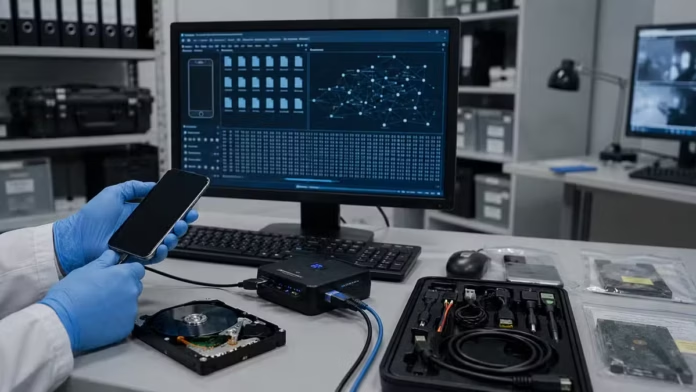
Sindh Police has decided to establish a Digital Forensic Laboratory to strengthen criminal investigations and better deal with crimes involving modern technology. The new facility will help investigators collect, examine, and analyze digital evidence from electronic devices such as mobile phones, computers, laptops, and other digital equipment.
The decision was discussed during a review meeting held at the Central Police Office on Tuesday. The meeting was chaired by Inspector General (IG) of Police Javed Alam Odho, who emphasized the importance of using modern technology in law enforcement.
During the meeting, IG Javed Alam Odho said that crime has changed significantly over the years. Many criminals now use smartphones, computers, social media, and other digital tools to commit offences, making it difficult to solve cases through traditional investigation methods alone.
He said that police investigations must now rely more on technology and digital evidence instead of only depending on eyewitness statements or conventional investigation techniques. According to him, using scientific and evidence-based methods will improve the quality of investigations and help police solve cases more accurately.
Several senior police officials attended the meeting, including the Additional Inspector General of the Counter-Terrorism Department (CTD), Deputy Inspectors General (DIGs) from the headquarters, IT, telecommunications, transport, and training departments, along with Assistant Inspectors General and other senior officers.
During the meeting, officials reviewed different proposals for establishing the Digital Forensic Laboratory. The IT project director gave a detailed presentation explaining the laboratory’s planned functions, technical requirements, equipment, and how it will operate once completed.
Officials informed the meeting that around 97 percent of criminal investigations now involve digital devices, including mobile phones, computers, laptops, tablets, and other electronic equipment. These devices often contain valuable evidence such as messages, call records, emails, social media activity, location history, photos, videos, and other digital data that can help investigators identify suspects and solve crimes.
The meeting was also told that nearly 90 percent of criminal cases around the world now depend on digital evidence in one way or another. This highlights the growing importance of digital forensic technology in modern policing.
The planned Digital Forensic Laboratory will enable Sindh Police to examine electronic evidence more efficiently, improve the accuracy of investigations, speed up criminal cases, and strengthen the prosecution process by providing reliable digital evidence in courts.
By introducing modern forensic technology, Sindh Police aims to improve its ability to investigate cybercrime, financial fraud, terrorism, online scams, digital harassment, and other crimes that involve electronic devices. The initiative is expected to modernize the province’s law enforcement system and help police keep pace with the increasing use of technology in criminal activities.
Sindh Police has decided to establish a Digital Forensic Laboratory to strengthen criminal investigations and better deal with crimes involving modern technology. The new facility will help investigators collect, examine, and analyze digital evidence from electronic devices such as mobile phones, computers, laptops, and other digital equipment.
The decision was discussed during a review meeting held at the Central Police Office on Tuesday. The meeting was chaired by Inspector General (IG) of Police Javed Alam Odho, who emphasized the importance of using modern technology in law enforcement.
During the meeting, IG Javed Alam Odho said that crime has changed significantly over the years. Many criminals now use smartphones, computers, social media, and other digital tools to commit offences, making it difficult to solve cases through traditional investigation methods alone.
He said that police investigations must now rely more on technology and digital evidence instead of only depending on eyewitness statements or conventional investigation techniques. According to him, using scientific and evidence-based methods will improve the quality of investigations and help police solve cases more accurately.
Several senior police officials attended the meeting, including the Additional Inspector General of the Counter-Terrorism Department (CTD), Deputy Inspectors General (DIGs) from the headquarters, IT, telecommunications, transport, and training departments, along with Assistant Inspectors General and other senior officers.
During the meeting, officials reviewed different proposals for establishing the Digital Forensic Laboratory. The IT project director gave a detailed presentation explaining the laboratory’s planned functions, technical requirements, equipment, and how it will operate once completed.
Officials informed the meeting that around 97 percent of criminal investigations now involve digital devices, including mobile phones, computers, laptops, tablets, and other electronic equipment. These devices often contain valuable evidence such as messages, call records, emails, social media activity, location history, photos, videos, and other digital data that can help investigators identify suspects and solve crimes.
The meeting was also told that nearly 90 percent of criminal cases around the world now depend on digital evidence in one way or another. This highlights the growing importance of digital forensic technology in modern policing.
The planned Digital Forensic Laboratory will enable Sindh Police to examine electronic evidence more efficiently, improve the accuracy of investigations, speed up criminal cases, and strengthen the prosecution process by providing reliable digital evidence in courts.
By introducing modern forensic technology, Sindh Police aims to improve its ability to investigate cybercrime, financial fraud, terrorism, online scams, digital harassment, and other crimes that involve electronic devices. The initiative is expected to modernize the province’s law enforcement system and help police keep pace with the increasing use of technology in criminal activities.


