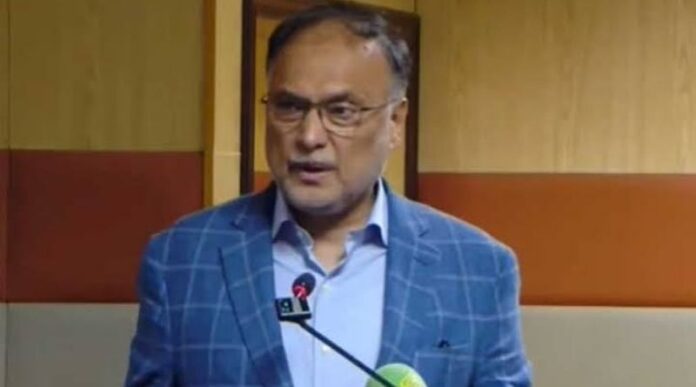

The federal government has once again announced a major effort to improve and modernise Pakistan Railways, with a new focus on the important Rohri-Multan section of the Main Line-1, commonly known as ML-1. Federal Minister for Planning, Development and Special Initiatives Ahsan Iqbal has said that upgrading the country’s railway system remains one of the government’s key priorities.
The latest move comes after years of repeated promises, plans and announcements regarding the revival of Pakistan Railways. According to information shared during a recent meeting, the country’s railway network has suffered serious damage and neglect over the years, leading to hundreds of derailments and many other accidents.
The government is now looking at a new financing plan for the Rohri-Multan section of ML-1, which is expected to cost more than Rs. 450 billion. Officials are considering several ways to arrange the required funds, including government development spending, foreign loans, private investment, local banks and Pakistan’s domestic capital market.
The latest announcement has once again raised hopes that Pakistan Railways may finally receive the investment and attention needed to become a safer, faster and more reliable transport system.
A New Push for the Railway System
Ahsan Iqbal chaired a meeting of a committee that was formed on the directions of the Prime Minister to examine possible financing options for the Rohri-Multan section of ML-1.
During the meeting, the Planning Minister said that the modernisation of Pakistan’s main railway line was an important national priority. He stressed that Pakistan needs a modern, safe and efficient railway network to support the economy, improve passenger travel and make it easier to transport goods across the country.
The ML-1 project is one of the biggest railway development projects in Pakistan. The railway line connects Karachi with Peshawar and passes through many important cities and commercial centres. It is considered the backbone of Pakistan’s railway network.
However, despite being one of the country’s most important transport routes, the ML-1 railway line has faced serious problems because of old tracks, weak infrastructure, limited investment and delayed development work.
The government now wants to upgrade different parts of this important railway route in stages. The Rohri-Multan section is one of the main areas currently under discussion.
More Than Rs. 450 Billion Needed
Officials informed the meeting that the estimated cost of upgrading the Rohri-Multan section is more than Rs. 450 billion.
This is a huge amount of money, especially at a time when Pakistan is facing pressure on its development budget. Because of limited government resources, the authorities are not relying on only one source of funding.
Instead, they are examining different options.
These include funding through the Public Sector Development Programme, foreign financing, public-private partnerships, local commercial banks and Pakistan’s domestic capital markets.
The committee also discussed a proposal from the Frontier Works Organization, or FWO, regarding the development of the Rohri-Multan section through private investment.
The government wants to prepare a complete and practical financing plan before moving forward with the project. The aim is to make sure that the project does not remain stuck because of a shortage of funds.
Ahsan Iqbal stressed the need for a strong and realistic financial plan so that work on the railway project can be completed properly and without unnecessary delays.
Hundreds of Derailments Show the Serious Condition of the Railway
One of the most worrying details discussed during the meeting was the condition of the existing railway infrastructure.
Officials informed the committee that 399 train derailments had taken place during the last 10 years because of the poor and deteriorating condition of the railway line.
In addition to these derailments, another 158 railway accidents were also reported during the same period.
These figures show the serious problems facing Pakistan Railways.
Train accidents do not only cause delays and financial losses. They also put the lives of passengers, railway staff and other people at risk. In many cases, old tracks and outdated railway systems can make travel slower and less safe.
The repeated derailments are also a reminder that the railway system cannot continue to operate properly without major investment and timely repairs.
The government believes that the modernisation of ML-1 can help reduce these problems by improving railway tracks and other important parts of the network.
A modern railway system could improve safety, reduce travel time and provide better services to passengers.
Independent Study Ordered for Rohri-Multan Section
Ahsan Iqbal directed the relevant authorities to arrange a complete feasibility study for the Rohri-Multan section of ML-1.
He said the study should be carried out by a credible and independent third party.
The purpose of the study will be to examine whether the project is technically possible, financially practical and economically beneficial.
The independent review will also help the government select the best financing model for the project.
This is important because the project involves a very large amount of public and private money. Before making a final decision, the government wants a detailed assessment of the expected costs, possible benefits and future financial requirements.
The study will look at the technical condition of the railway section and the work required for its upgrade.
It will also help the government understand how the project can be financed without creating unnecessary pressure on the national budget.
According to the Planning Minister, the final financing model should be practical and sustainable.
Karachi-Rohri Work Expected to Move Forward
While the Rohri-Multan section is still being examined for financing, the government has also announced progress on the Karachi-Rohri section of ML-1.
Ahsan Iqbal said that work on the Karachi-Rohri railway section will begin during the current fiscal year with financing support from the Asian Development Bank.
The relevant authorities have been directed to complete all necessary preparations in time.
The Karachi-Rohri section is another important part of Pakistan’s railway network. Its improvement is expected to strengthen the movement of both passengers and goods.
The railway route between Karachi and the rest of the country is particularly important because Karachi is Pakistan’s biggest port city and a major centre for trade and business.
A stronger railway connection can make it easier to transport goods from ports to different parts of Pakistan.
It can also reduce pressure on roads and highways, where heavy trucks currently carry a large amount of freight.
The government hopes that a better railway network will improve trade and reduce transport costs.
Pakistan Railways Needs More Than New Tracks
During the meeting, Ahsan Iqbal also directed the Ministry of Railways to prepare a complete assessment of the railway system’s future needs.
He asked officials to examine the requirements for new locomotives, freight wagons and passenger coaches.
These needs should be included in one complete plan for the future modernisation of Pakistan Railways.
This shows that the government is not only focusing on railway tracks.
A modern railway system also requires reliable engines, better passenger coaches and enough freight wagons to carry goods.
Pakistan Railways has faced problems with old locomotives and aging coaches for many years. Passengers often complain about delays, poor facilities and technical problems.
Freight services also need better planning if the railway system is to compete with road transport.
The Planning Minister said the future financial requirements for these improvements should also be properly calculated and included in an overall railway development plan.
Development Budget Cuts Remain a Major Problem
Ahsan Iqbal also pointed out that continued reductions in the development budget are affecting major national projects.
Large infrastructure projects need stable funding over many years. When funds are reduced or delayed, work can slow down and project costs can increase.
This is one of the biggest challenges facing Pakistan’s development sector.
Because of these financial pressures, the government is now looking for alternative ways to fund major projects.
Public-private partnerships are being considered as one option. Under this model, private companies can invest in government projects under agreed arrangements.
Local banks and capital markets are also being examined as possible sources of funding.
Foreign financial institutions may also provide loans or support for railway development.
The main challenge will be to find a financing method that is affordable for Pakistan and does not create unnecessary financial pressure.
The government has been asked to use available resources more effectively while also looking for new sources of investment.
Why ML-1 Is Important for Pakistan
The ML-1 project is not just about repairing railway tracks.
According to Ahsan Iqbal, it is a major national project that can have a strong impact on Pakistan’s transport system, trade, industry and overall economic activity.
Pakistan’s railway network has the potential to play a much bigger role in the national economy.
Railways can carry large numbers of passengers and huge amounts of cargo over long distances. Compared with road transport, trains can also help reduce pressure on highways.
A better railway system can make travel easier for the public and improve the movement of goods for businesses.
Industries can benefit from a reliable freight railway service because goods and raw materials can be moved in large quantities.
Pakistan also wants to improve regional trade and connectivity. A stronger railway system could support future transport links with neighbouring countries and other regional markets.
For these reasons, the modernisation of ML-1 is considered important for Pakistan’s long-term economic development.
A Long History of Railway Revival Plans
Pakistan Railways has seen many revival plans and reform announcements over the years.
Successive governments have promised to improve railway tracks, introduce modern trains, increase passenger facilities and strengthen freight operations.
However, many projects have faced delays because of funding shortages, changes in government priorities and other administrative problems.
The latest plan is therefore another major test for the government.
The figures showing hundreds of derailments over the last decade also make clear that the need for improvement is not new.
Pakistan’s railway infrastructure requires long-term planning rather than short-term announcements.
For the latest effort to succeed, the government will need to arrange stable funding, complete feasibility studies and ensure that development work is carried out on time.
The project will also require proper monitoring to make sure that public money is used effectively.
Government Hopes to Build a Modern Railway Network
Ahsan Iqbal said that a modern and efficient railway system is essential for the country.
The government believes that improved railway services can support economic growth, make passenger travel safer and help businesses transport goods more easily.
The plan is to move towards an integrated railway system that includes modern tracks, improved locomotives, better freight wagons and upgraded passenger coaches.
Such a system could improve the overall experience of railway passengers and help Pakistan Railways increase its role in national transport.
However, the success of the plan will depend on how quickly and effectively the government can move from discussions to actual development work.
The financing of the Rohri-Multan section remains one of the biggest challenges.
With a cost of more than Rs. 450 billion, the project requires careful financial planning.
The government is therefore considering every available option before making a final decision.
The Road Ahead
The latest meeting shows that the federal government is once again trying to find a workable path for the long-delayed modernisation of Pakistan Railways.
The Rohri-Multan section of ML-1 is now a major focus, while work on the Karachi-Rohri section is expected to move ahead with Asian Development Bank financing.
The government is also planning an independent feasibility study and a complete review of the future needs of the railway sector.
This includes the need for locomotives, freight wagons and passenger coaches.
For ordinary Pakistanis, the most important question will be whether these plans finally lead to visible improvement.
Passengers want safer trains, better coaches, fewer delays and more reliable services.
Businesses want an efficient system that can move goods across the country at a reasonable cost.
The government has once again presented railway modernisation as a major national priority. The coming months will show whether this latest attempt can finally turn years of railway revival promises into real progress.
If the required financing is arranged and the projects are completed on time, the ML-1 upgrade could become an important step towards a safer, faster and more modern railway system for Pakistan.
Read Also: check