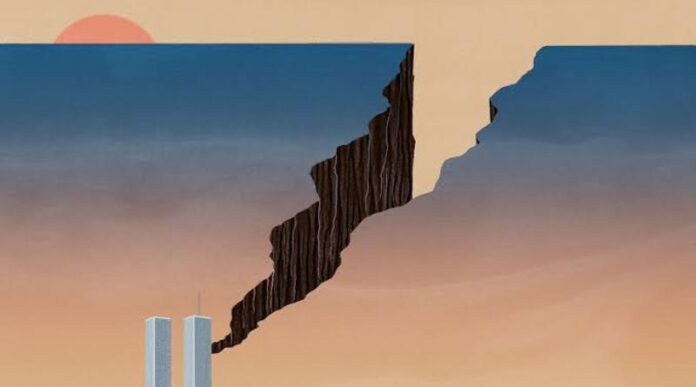

The attacks of September 11, 2001, changed the United States and much of the world in ways that are still visible today. What began as a deadly attack on American soil quickly led to a long period of wars, military operations, security campaigns, and major changes in government policy.
The attacks killed thousands of people and created deep fear across the United States. In response, the American government launched what became known as the “War on Terror.” At first, the main target was al-Qaeda and the Taliban government in Afghanistan. Later, the campaign expanded to Iraq and other parts of the Middle East, Africa, and Asia.
Over time, critics began to question the human cost of these policies. They argued that military operations carried out in the name of national security often harmed ordinary civilians. At home, new security laws also gave the government greater powers to monitor people, collect information, and detain suspects.
More than two decades after 9/11, the effects of those decisions continue to shape international relations, American politics, civil rights, and the lives of millions of people around the world.
The Beginning of a New Era
On September 11, 2001, members of al-Qaeda hijacked four commercial airplanes in the United States. Two planes were flown into the World Trade Center towers in New York, while another hit the Pentagon near Washington, D.C. A fourth plane crashed in Pennsylvania after passengers tried to take control of it.
Nearly 3,000 people died in the attacks.
The scale of the violence shocked the American public. The government quickly declared that those responsible would be brought to justice. President George W. Bush announced a global campaign against terrorism and made it clear that the United States would target both terrorist groups and governments accused of supporting them.
Afghanistan became the first major battlefield.
The Taliban government had allowed al-Qaeda leader Osama bin Laden and his organization to operate from Afghanistan. When the Taliban refused to hand bin Laden over, the United States and its allies launched military operations against the Taliban and al-Qaeda in October 2001.
The Taliban government was removed from power, but the conflict did not end.
Instead, the war continued for another two decades.
Afghanistan and the Longest U.S. War
The initial American military campaign in Afghanistan was successful in removing the Taliban from government control. However, Taliban fighters regrouped and began an insurgency against U.S. and allied forces.
The United States spent enormous amounts of money and deployed large numbers of troops over the years. The goal was not only to defeat terrorist groups but also to help create a stable Afghan government and strengthen the country’s security forces.
Despite these efforts, Afghanistan remained unstable.
Fighting continued in different parts of the country, and civilians frequently became victims of the conflict. Bombings, airstrikes, roadside attacks, and military operations affected communities far from the original events of 9/11.
For Afghan families, the war was not an abstract fight against terrorism. It became part of everyday life.
Many civilians lost relatives, homes, businesses, and access to basic services. Millions were also displaced during years of fighting.
The United States eventually began negotiations with the Taliban. American troops were finally withdrawn in 2021, nearly 20 years after the war began. The Taliban quickly returned to power.
The withdrawal ended America’s major military presence in Afghanistan, but it also raised difficult questions about the cost and results of the war.
The Iraq War
Afghanistan was not the only country affected by the post-9/11 security campaign.
In 2003, the United States invaded Iraq. The administration of President George W. Bush argued that Iraqi leader Saddam Hussein had weapons of mass destruction and posed a serious threat.
However, no active stockpiles of such weapons were found after the invasion.
The Iraq War became one of the most controversial decisions of the post-9/11 period.
American and allied forces quickly defeated Saddam Hussein’s government, but the country soon faced widespread violence and political instability. Armed groups carried out attacks, while sectarian violence increased.
Ordinary Iraqis suffered heavily.
Markets, roads, schools, hospitals, homes, and public services were affected by years of conflict. Large numbers of people were killed, injured, or forced to leave their homes.
The war also created conditions in which extremist organizations could grow. Groups linked to al-Qaeda in Iraq eventually became part of the wider movement that later developed into the Islamic State, also known as ISIS.
This created a cycle in which military action intended to fight terrorism was followed by new instability and new forms of armed violence.
Civilians and the Human Cost of War
One of the biggest criticisms of the post-9/11 wars concerns civilian deaths.
Modern militaries use advanced aircraft, drones, surveillance systems, and precision weapons. However, even highly advanced weapons cannot completely remove the risk of civilian casualties.
Airstrikes and military operations sometimes killed people who were not involved in fighting. Families could lose parents, children, and relatives during attacks aimed at suspected militants.
In countries affected by these wars, civilians often had little control over what happened around them.
A person could be killed because of an intelligence mistake, a wrong identification, or information that turned out to be false. Communities could also be caught between armed groups and government forces.
The human cost went beyond deaths.
People who survived attacks often faced injuries, trauma, displacement, poverty, and the loss of homes and livelihoods.
Children growing up in war zones experienced disrupted education and long-term fear. In many places, rebuilding basic services became extremely difficult because violence continued for years.
The Rise of Drone Warfare
Another major development after 9/11 was the expansion of drone warfare.
Unmanned aircraft allowed the United States to carry out strikes against suspected militants without putting American pilots directly into dangerous areas.
Drones were used in countries including Pakistan, Yemen, and Somalia.
Supporters argued that drones could target militant leaders while reducing the risk to American troops. Critics, however, raised serious concerns about civilian deaths, secrecy, accountability, and the psychological effects on people living under constant surveillance.
Pakistan was particularly affected by drone operations in its tribal areas.
The United States viewed parts of the region as important areas for militant groups. Drone strikes targeted suspected members of organizations such as al-Qaeda and the Pakistani Taliban.
The strikes became a major source of tension between Pakistan and the United States. Pakistani officials and citizens repeatedly raised concerns about civilian casualties and national sovereignty.
For people living in areas where drones operated, the sound and presence of unmanned aircraft became a source of fear.
The debate over drone warfare showed one of the central problems of the War on Terror: how far governments should go in fighting terrorism and what limits should apply when civilians may be harmed.
New Security Powers Inside America
The consequences of 9/11 were not limited to foreign countries.
The attacks also led to major changes inside the United States.
Congress passed the USA PATRIOT Act soon after the attacks. The law expanded the government’s ability to investigate suspected terrorists and collect certain types of information.
Supporters said these powers were necessary to prevent another attack.
Civil liberties groups argued that some measures went too far and could threaten privacy and constitutional rights.
Surveillance became one of the biggest issues.
Government agencies gained greater access to information and developed large systems for monitoring communications and identifying possible threats. Later revelations about government surveillance programs created further public debate about privacy.
The question was difficult: how could a country protect its citizens from terrorism without giving the government excessive power?
Detention and Torture Controversies
The War on Terror also brought serious criticism over the treatment of terrorism suspects.
The United States detained people at facilities including Guantanamo Bay. Some suspects were held for long periods without traditional criminal trials.
Reports also emerged about harsh interrogation methods used by American personnel and intelligence agencies.
The issue became especially controversial after details about treatment at Abu Ghraib prison in Iraq became public. Images showing prisoners being abused caused international outrage.
Human rights organizations argued that such treatment violated basic human rights and international rules.
American officials defended some actions as part of efforts to gather intelligence and prevent future attacks. Critics responded that national security could not justify torture or the denial of basic legal protections.
These debates remain part of the wider discussion about the balance between security and freedom.
The Impact on Muslim Communities
The post-9/11 period also had a major effect on Muslims living in the United States and other Western countries.
Fear of terrorism sometimes led to suspicion toward entire communities because of the actions of a small number of extremist groups.
Muslim Americans reported experiences of discrimination, hate, profiling, and increased government scrutiny.
At airports and other security checkpoints, Muslim travelers and people from certain backgrounds sometimes faced additional questioning.
The distinction between terrorism and ordinary religious or cultural identity became an important issue.
Many Muslim organizations and civil rights groups argued that fighting terrorism should focus on criminal behavior and credible threats rather than targeting people because of their religion or background.
A War Without a Clear End
One reason the post-9/11 conflicts became known as “forever wars” is that there was no simple ending.
The United States defeated governments, killed or captured militant leaders, and weakened major terrorist networks. Yet new groups continued to emerge.
Al-Qaeda remained active in different regions. ISIS later became a major threat, particularly in Iraq and Syria.
Military operations expanded across borders, often involving smaller deployments, airstrikes, special forces, intelligence operations, and partnerships with local governments.
This changed the nature of war.
Instead of one clearly defined battlefield, the War on Terror became a global campaign involving many countries and different forms of military and intelligence activity.
The result was a conflict that could continue without a traditional declaration of victory.
The Cost Beyond Money
The financial cost of these wars was enormous.
The United States spent large amounts on military operations, weapons, intelligence, reconstruction, veterans’ care, and security programs.
But financial figures only tell part of the story.
The deeper cost was paid by people.
American soldiers returned home with physical injuries and emotional trauma. Some struggled to adjust to civilian life. Families faced the effects of long deployments and the loss of loved ones.
In Afghanistan and Iraq, the cost was much greater for civilians who lived through years of fighting.
Entire communities were changed by war.
Buildings could be rebuilt, but lost family members and childhoods could never be recovered.
The Debate Over 9/11’s Legacy
More than 20 years after the attacks, the legacy of 9/11 remains deeply debated.
There is no question that governments have a responsibility to protect people from terrorism. The attacks demonstrated the devastating consequences of extremist violence.
At the same time, the response to 9/11 created its own set of problems.
Wars that were presented as necessary for security resulted in long periods of instability and civilian suffering. Expanded surveillance raised concerns about privacy. Detention policies created legal and human rights controversies. Military operations in several countries changed local politics and contributed to new conflicts.
The central question remains whether the extraordinary measures introduced after 9/11 made the world safer or created new dangers.
Lessons for the Future
The history of the post-9/11 period offers important lessons for governments around the world.
Security is important, but it cannot come at the complete expense of human rights.
Military power can remove a government or weaken an armed group, but it cannot by itself solve political, economic, and social problems.
Long-term peace often requires strong institutions, education, economic opportunities, fair justice systems, and political solutions.
The experience of Afghanistan and Iraq also shows that entering a war can be much easier than ending one.
For civilians caught in conflict, the consequences can last for generations.
The events of September 11 changed American policy and international politics forever. But the response to those attacks also changed the lives of millions of people far beyond America’s borders.
The “War on Terror” may have begun as a response to one horrific day, but its consequences lasted for decades. From Afghanistan and Iraq to Pakistan, Yemen, Somalia, and other places, military campaigns and security operations became part of a much larger global struggle.
Inside the United States, the period brought new security powers, surveillance programs, detention policies, and debates over civil rights.
The lasting lesson may be that fighting terrorism requires more than military force. Governments must also consider the human cost of their actions and protect the rights they claim to defend.
The story of 9/11 and its aftermath is therefore not only about terrorism and war. It is also about civilians, freedom, security, accountability, and the difficult choices governments make during times of fear.
More than two decades later, the questions raised by that era have not disappeared. They continue to shape debates about war, national security, human rights, and the limits of government power around the world.
Read Also: check