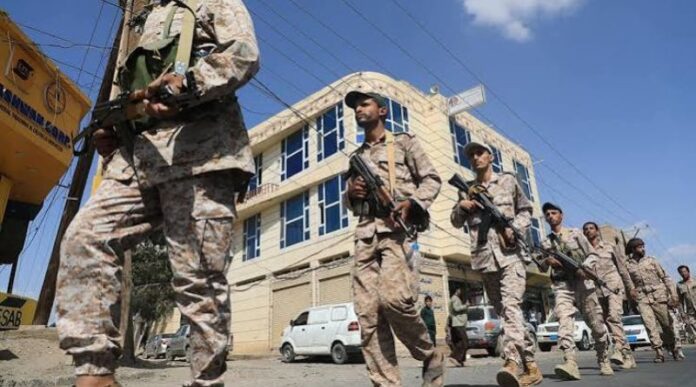

The use of artificial intelligence in military activities is becoming a growing concern around the world. Recent reports have raised another serious question after Yemen’s Houthi movement was reportedly linked to the use of Anthropic’s Claude AI in work connected with guided weapons.
The case shows how easily modern AI tools can become part of military projects, even when they were not designed for that purpose. It also highlights the difficulty technology companies face when trying to stop their AI systems from being misused by armed groups.
According to reports, the Houthis used Claude, an artificial intelligence chatbot developed by US-based company Anthropic, as part of their efforts to support weapons-related work. The reports have attracted attention because Claude is widely known as a general-purpose AI system that can help users with research, writing, coding, analysis and other tasks.
The reported use of the system has raised concerns about the growing role of commercial AI in conflicts. It also comes at a time when governments and technology companies are still trying to understand how AI can be safely used without becoming a tool for violence.
What Is Claude AI?
Claude is an AI assistant created by Anthropic. Like other modern AI systems, it can understand questions and provide information in response to user instructions. It can also help with technical tasks, coding, research, writing and problem-solving.
Anthropic has introduced several safety measures designed to prevent Claude from being used for harmful activities. The company has policies that restrict certain types of dangerous or illegal use.
However, reports about the Houthis show that preventing misuse can be difficult. People can sometimes try to use AI systems for purposes that are very different from the normal activities for which these tools are marketed.
The reported case is therefore important not only because of the group involved, but also because it raises wider questions about the limits of AI safety systems.
Houthis and the Wider Conflict
The Houthi movement, officially known as Ansar Allah, controls large parts of Yemen and has been involved in the country’s long-running conflict.
The group has developed and used missiles, drones and other weapons. In recent years, the Houthis have also carried out attacks and military operations linked to the wider conflict in the Middle East.
Their activities have attracted international attention, particularly because of attacks involving commercial shipping in and around the Red Sea.
The Red Sea is an important international shipping route. Any major disruption in the area can affect global trade, shipping costs and the delivery of goods.
Against this background, reports that the Houthis used an AI chatbot for weapons-related work have added another dimension to an already complicated security situation.
How AI Can Become Part of Military Work
AI systems are becoming useful in many areas because they can process information quickly and help people solve problems. The same abilities that are useful for businesses, students and software developers can also attract military users.
An AI assistant can help with tasks such as organising information, explaining technical subjects, writing computer code and reviewing large amounts of text.
These abilities can become sensitive when they are applied to military activities.
It is important to note that an AI chatbot does not automatically create a complete weapon on its own. Building a working weapon normally requires specialised knowledge, physical equipment, testing, manufacturing facilities and people who understand engineering and military systems.
However, AI can potentially support parts of a larger process. This is one reason why governments and technology companies are paying closer attention to how advanced AI tools are being used.
A New Challenge for Technology Companies
The reported Houthi use of Claude presents a difficult problem for AI companies.
Companies such as Anthropic develop systems for general use. Their products can be accessed by people around the world for many legitimate reasons. At the same time, companies must try to prevent their tools from being used to support violence or other harmful activities.
This creates a difficult balance.
If an AI system refuses too many requests, it may become less useful for normal users. But if safety controls are too weak, people may find ways to use the system for dangerous purposes.
AI companies therefore continue to improve their safety systems, monitor misuse and update their policies.
The reported case involving the Houthis shows why these efforts are becoming increasingly important.
AI and the Future of Warfare
The development of AI is changing many areas of modern life, and warfare is unlikely to remain outside this change.
Military organisations around the world are already studying AI for areas such as intelligence, surveillance, logistics, planning and data analysis.
The concern is that advanced technology could make military systems faster and more capable.
At the same time, AI may lower the barrier to accessing certain types of technical information. Groups that do not have the same resources as major governments may still attempt to use commercially available AI systems to support their activities.
This does not mean that every AI user can suddenly become capable of producing advanced military equipment. Weapons development remains a complex process requiring people, resources and specialised facilities.
But the possibility of AI assisting parts of such work is enough to concern governments and security experts.
The Importance of AI Safety Rules
The incident also highlights the need for strong rules around artificial intelligence.
Technology companies have already introduced restrictions covering harmful uses of their systems. Governments are also working on laws and policies aimed at controlling high-risk applications of AI.
However, technology develops quickly. Rules created today may not be enough to deal with the capabilities of future AI systems.
This means that safety policies will likely need to change regularly.
Companies must also think about how their systems are accessed. Simply creating a rule that says certain activities are not allowed may not always be enough. Strong monitoring and security measures may also be needed.
The Houthi case is another reminder that AI safety is not only a technology issue. It is also a national security and international security issue.
Why the Report Matters
The reported use of Claude by the Houthis is significant because it shows how commercial AI can enter areas that technology companies may not have expected.
A chatbot that is normally used for writing, coding or research can potentially be tested by users for much more sensitive purposes.
This raises questions about responsibility.
Should AI companies be responsible for everything users do with their systems? How much monitoring should companies conduct? What information should AI systems refuse to provide? And how can companies distinguish legitimate technical research from harmful activity?
These questions do not have simple answers.
The technology industry is still developing best practices for dealing with them.
AI Is Becoming Easier to Access
One of the biggest changes brought by modern AI is accessibility.
In the past, advanced computing and technical information were often available mainly to governments, universities and large organisations. Today, many powerful AI tools can be accessed through ordinary internet services.
This has created major benefits.
Students can learn more easily. Small businesses can use AI for daily tasks. Developers can receive help with software. Researchers can process information faster.
But the same accessibility can create risks.
If a person or organisation wants to misuse an AI system, they may attempt to use commercially available tools instead of developing their own system.
This is why responsible AI development has become a major issue for the technology industry.
The Need for Stronger Controls
The reported case may encourage technology companies to examine their safety systems more closely.
AI providers may need to improve their ability to detect suspicious activity and respond when their systems appear to be used in violation of their rules.
At the same time, stronger controls must be designed carefully.
A system that blocks every discussion about science, engineering or military history could create problems for legitimate users, including researchers and journalists.
The challenge is finding a balance between openness and safety.
AI companies will likely continue to invest heavily in this area as their systems become more powerful.
A Warning for the Global AI Industry
The situation involving the Houthis is not only about one armed group or one AI company. It is part of a much larger discussion about the future of artificial intelligence.
As AI becomes more capable, its potential uses will continue to grow. That means the possible risks will also become wider.
Technology companies need to think about how their systems can be misused before problems occur rather than only responding after an incident.
Governments, researchers and international organisations also have a role to play. They need to work together on common standards and rules for the responsible use of advanced AI.
This will become even more important as AI systems gain stronger abilities in coding, analysis, research and other technical areas.
What Could Happen Next?
The reported Houthi use of Claude could lead to more discussion about how AI companies deal with users connected to armed groups and sanctioned organisations.
It may also encourage companies to strengthen their screening and monitoring systems.
Governments could increase pressure on technology firms to prevent their products from being used for military or terrorist activities.
At the same time, AI companies will need to continue improving their systems without making them unnecessarily difficult for ordinary users.
The issue is likely to remain part of the wider debate over AI regulation.
Conclusion
Reports that Yemen’s Houthis used Claude AI in work linked to guided weapons highlight a growing challenge for the technology industry.
Artificial intelligence has many positive uses, but the same technology can potentially be misused when placed in the hands of people involved in conflict.
The reported case does not mean that an AI chatbot can independently design and produce a sophisticated weapon. Military development still requires specialised knowledge, equipment, materials, testing and human expertise.
However, the incident shows that even general-purpose AI systems can become part of sensitive activities.
As AI continues to improve, companies will face increasing pressure to make their systems safer and harder to misuse. Governments will also need to develop clear rules that address the changing risks without blocking legitimate innovation.
The central lesson is simple: AI is becoming more powerful and more widely available, and its safety cannot be treated as only a technology-company issue. It is becoming an important part of global security as well.
The reported use of Claude by the Houthis is therefore another warning that the world needs to think carefully about how advanced AI tools are developed, distributed and controlled.
Read Also: check