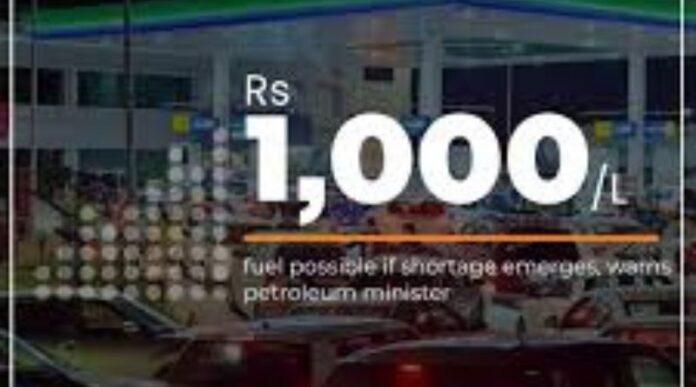

Pakistan’s fuel market could face a serious crisis if the country experiences a shortage of petrol and other petroleum products, with a federal minister warning that the price of petrol could rise as high as Rs1,000 per litre under an extreme shortage situation.
The warning has raised fresh concerns among consumers, transporters, businesses and industries already dealing with high fuel costs. Petrol prices have a direct impact on almost every part of daily life in Pakistan because fuel is needed not only for cars and motorcycles but also for public transport, goods delivery, agriculture, factories and power generation.
The minister’s statement highlights the possible impact of a major disruption in fuel supplies. However, the Rs1,000 figure represents a warning about what could happen in a severe shortage situation rather than a confirmed future petrol price.
Fuel Supply Remains a Major Concern
Pakistan depends heavily on imported petroleum products to meet its energy needs. Any disruption in international supply chains can therefore create pressure on the local market.
Fuel prices in Pakistan are influenced by several factors. These include international oil prices, the exchange rate, import costs, government taxes and duties, transportation expenses and the overall availability of petroleum products.
When international oil prices rise, the cost of importing fuel can increase. Similarly, if the Pakistani rupee loses value against the US dollar, imports become more expensive in local currency.
A shortage can create an additional problem.
When demand remains high but fuel supplies become limited, prices can come under strong pressure. This is why the minister warned that an extreme shortage could take petrol prices to levels that would be extremely difficult for ordinary consumers.
Why a Shortage Can Cause Prices to Rise Sharply
The basic relationship between supply and demand is important in understanding the warning.
Pakistan has millions of vehicles on its roads. Motorcycles, cars, buses, trucks, tractors and other vehicles all depend on petroleum products. Businesses also need fuel to transport goods from one city to another.
If fuel supplies suddenly fall while demand remains high, the market can face a supply gap.
In such a situation, fuel companies and the government may have to find alternative supplies at higher prices. Importing additional fuel at short notice can also increase costs.
Transport costs could then rise, followed by higher prices for many other products.
For example, if the cost of diesel increases, the expense of moving vegetables, wheat, fruits, construction materials and other goods from one place to another can also increase. These higher costs may eventually reach consumers.
This makes fuel shortages much more than an issue for vehicle owners.
Impact on Ordinary People
A major increase in petrol prices would put additional pressure on household budgets.
Many Pakistani families depend on motorcycles for daily travel. Students, office workers, delivery riders and small business owners use motorcycles because they are generally cheaper to operate than cars.
If petrol prices rise sharply, these people would have to spend more money simply to travel to work, school or markets.
Car owners would also face higher monthly expenses. People who travel long distances every day could see a significant increase in their fuel bills.
Public transport fares could also come under pressure.
Bus, van and taxi operators have to purchase fuel regularly. If their operating costs increase, they may seek higher fares to cover their expenses.
This could create another burden for people who do not own private vehicles and rely on public transport.
Transport Sector Could Face Heavy Pressure
Pakistan’s transport sector is closely linked with fuel prices.
Trucks carry goods between ports, warehouses, factories and markets. Buses connect cities and towns. Smaller vehicles transport goods within urban areas.
A major fuel shortage could disturb this entire system.
If transporters cannot obtain fuel easily, they may reduce the number of trips they make. Some operators could also increase their charges because of higher fuel costs.
For businesses, this means that transporting raw materials and finished products could become more expensive.
The impact could be especially serious for small businesses that already operate with limited profit margins.
A shopkeeper, for example, may have to pay more to receive products from a supplier. The supplier may also be paying higher transportation charges. These additional costs can eventually increase the retail price of goods.
Food Prices Could Also Be Affected
Fuel prices and food prices are closely connected.
Farmers use fuel for tractors, tube wells and other agricultural machinery. Diesel is also used to transport crops from farms to markets.
After harvesting, food products need to be moved to wholesale markets and then to shops and consumers.
A major increase in fuel costs can therefore raise expenses throughout the food supply chain.
This could put more pressure on prices of vegetables, fruits, grains and other basic food items.
For lower-income families, even a small increase in the price of essential items can make household budgeting more difficult.
A fuel shortage could therefore create wider economic pressure beyond petrol stations.
Businesses May Face Higher Operating Costs
Industries across Pakistan depend on energy and transportation.
Factories need fuel to move raw materials and finished goods. Some businesses also use generators or other backup systems when electricity supplies are disrupted.
If petroleum products become expensive or difficult to obtain, companies could face higher operating expenses.
Manufacturers may have to spend more on transportation and logistics. Retailers may face higher delivery costs. Construction companies could also experience higher expenses because fuel is needed to move cement, steel, sand and other materials.
Some businesses may pass these higher costs on to customers.
Others may try to absorb the additional expense, which could reduce their profits.
For small businesses, the situation could become particularly difficult because they usually have less financial room to handle sudden cost increases.
International Situation Can Also Affect Pakistan
Pakistan’s fuel market is connected to global energy markets.
International events can affect crude oil prices and shipping costs. Problems in major oil-producing regions or important shipping routes can create uncertainty in global markets.
When shipping becomes more expensive or fuel supplies are delayed, importing petroleum products can become more difficult.
Pakistan must therefore closely monitor developments in international energy markets.
Any prolonged disruption could increase the cost of bringing fuel into the country.
This is one reason why maintaining sufficient reserves and securing reliable supply arrangements are important for energy security.
Government Faces a Difficult Challenge
The government has several options when fuel prices come under pressure, but each option has financial consequences.
One approach is to allow higher international costs to pass directly to consumers. This can protect government finances but increase the burden on households.
Another option is to reduce taxes or provide some form of relief. However, lower fuel taxes can reduce government revenue at a time when Pakistan already faces significant financial needs.
The government may also use other measures to manage prices or protect specific groups.
Finding the right balance can be difficult.
If prices are kept artificially low for too long, the government may face a larger financial burden. If prices rise quickly, consumers and businesses can face serious difficulties.
Fuel Stocks Are Extremely Important
Maintaining adequate fuel stocks is one of the most important ways to reduce the risk of a shortage.
Oil marketing companies and relevant government departments need to monitor supply levels and future demand.
If stocks fall too low, new supplies must be arranged before the situation becomes critical.
Pakistan’s fuel demand can also change depending on the season, economic activity and transport needs.
During periods of increased travel, demand can rise. Agricultural activity can also increase diesel consumption in some areas.
Proper planning can help reduce the risk of sudden shortages.
Petrol Prices Have a Wider Economic Impact
Petrol is often viewed simply as a cost for vehicle owners, but its effect on the economy is much wider.
Fuel is part of the cost of producing, transporting and selling many goods and services.
When petrol and diesel prices rise, businesses usually review their expenses. Transporters may increase charges, while manufacturers and retailers may adjust prices.
This can contribute to broader inflation.
For consumers, the result can be higher expenses on transport, food, household goods and other daily needs.
That is why any warning about a possible fuel shortage receives strong public attention.
Rs1,000 Per Litre Is an Extreme Warning
The minister’s warning about petrol reaching Rs1,000 per litre is likely to attract serious attention because it is far above the prices consumers are accustomed to paying.
It is important to understand the context of the statement.
The figure was presented as a possible outcome if a severe shortage emerges. It should not automatically be treated as an announcement that petrol will actually reach Rs1,000 per litre.
The actual price of petrol depends on several factors, including international oil prices, supply conditions, exchange rates, taxes and government decisions.
Still, the warning shows how serious the consequences of a major fuel shortage could become.
Consumers Are Watching the Situation Closely
For millions of Pakistanis, petrol prices are an important part of monthly household planning.
Motorcycle and car owners regularly calculate their fuel expenses. Transporters consider fuel costs when setting fares and delivery charges. Businesses include fuel in their operating budgets.
Any major change can therefore affect financial decisions across the economy.
Consumers will likely continue watching government announcements, international oil prices and local fuel supply conditions for signs of further pressure.
What Could Prevent a Major Crisis?
Avoiding a serious fuel crisis requires careful planning.
The government and fuel companies need to maintain sufficient stocks, arrange imports on time and monitor supply chains closely.
It is also important to respond quickly when international conditions create a risk for petroleum supplies.
Better planning can help prevent a temporary supply problem from becoming a major shortage.
Pakistan can also reduce some of its exposure to international oil price changes by improving energy efficiency, promoting public transport and increasing the use of alternative energy sources over time.
However, these measures require long-term planning and investment.
Conclusion
The warning that petrol could reach Rs1,000 per litre if a severe shortage develops has highlighted the risks facing Pakistan’s fuel market. The figure reflects an extreme shortage scenario rather than a confirmed petrol price.
A serious fuel shortage could affect much more than petrol stations. It could raise transport costs, increase food prices, put pressure on businesses and add to the financial burden faced by ordinary households.
Pakistan’s dependence on imported fuel means that international oil markets, shipping conditions and exchange rates will continue to play an important role in determining local prices.
Read Also: check