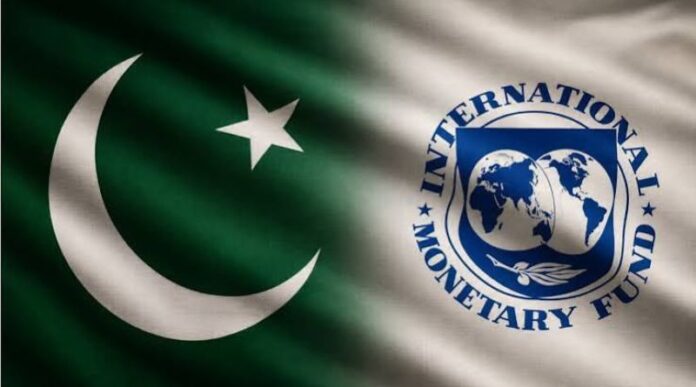

Pakistan’s government believes it has made enough progress to meet most of the conditions agreed with the International Monetary Fund (IMF), although some targets are still not fully complete. Finance Secretary Imdadullah Bosal shared this position while briefing the National Assembly Standing Committee on Finance and Revenue on September 24.
The meeting focused on Pakistan’s IMF programme, tax reforms, losses of state-owned companies, privatisation and government spending controls. The finance secretary told lawmakers that the country had already completed three reviews under the IMF programme and had made progress on several important areas.
However, he also admitted that some programme targets had not been fully achieved. One of the areas discussed was circular debt, which remains a major issue for Pakistan’s energy sector.
The IMF delegation has now arrived in Pakistan for the fourth review of the programme. Formal discussions between the IMF and Pakistan’s Ministry of Finance are scheduled to begin on Monday. The outcome of these talks will be important for the government as it tries to continue the programme and maintain economic stability.
Government Claims Major Progress on IMF Programme
Finance Secretary Imdadullah Bosal said Pakistan had made substantial efforts to complete the conditions attached to the IMF programme. According to him, the programme has already produced improvements in some important economic areas.
He pointed to better foreign exchange reserves, improved ability to make debt payments and lower pressure on external payments. These are important issues for Pakistan because the country needs enough foreign currency to pay for imports and meet its external financial obligations.
The government has also worked on tax reforms and other measures required under the IMF agreement. Some tax exemptions have been withdrawn, while restrictions have been placed on supplementary grants.
These steps are part of a wider effort to control government spending and increase revenue. Pakistan has struggled for years with a narrow tax base and high government expenses. The IMF programme requires the country to improve its finances and reduce the gap between revenue and spending.
The government believes the progress made so far shows that Pakistan is moving in the right direction.
Some IMF Targets Are Still Incomplete
Despite the government’s confidence, the finance secretary made it clear that not every target has been achieved.
Circular debt remains one of the major areas where Pakistan continues to face challenges. Bosal said the circular debt was being kept within a specified limit, but the government has not completed every related target under the programme.
Circular debt has been a long-running problem in Pakistan’s power sector. It develops when payments are delayed at different stages of the energy supply chain. These unpaid amounts can eventually create financial pressure on power companies and the government.
Keeping circular debt under control is therefore important for the wider economy. The issue has also remained a key part of Pakistan’s discussions with international lenders.
The government’s position is that progress has been made, even though some targets still require more work.
Fourth IMF Review Is About to Begin
The arrival of the IMF delegation marks another important stage for Pakistan.
The country has already gone through three reviews under the current programme. The fourth review will examine Pakistan’s performance against the agreed targets and reforms.
Formal talks are expected to begin on Monday between the IMF team and Pakistan’s Ministry of Finance. During the review, both sides will discuss economic performance, government finances, tax collection, energy-sector reforms and other commitments.
The IMF normally examines whether agreed targets have been met and whether the government has taken the required steps to keep the programme on track.
For Pakistan, completing the review successfully is important because the IMF programme provides financial support while also helping the country maintain access to other sources of international financing.
The review will therefore be closely watched by investors, businesses and financial institutions.
Tax Reforms Remain a Major Focus
Tax reforms were another important topic during the committee meeting.
Pakistan has been working to improve its tax system and increase the amount of revenue collected by the government. The finance secretary said several steps had already been taken in this area.
One of the key developments is the establishment of a Tax Policy Office. The office will analyse tax data and support the government in making further changes to tax policy.
Better use of tax data can help the government identify areas where taxes are being avoided or where businesses and individuals are not being properly included in the tax system.
The government has also withdrawn some tax exemptions. These exemptions can reduce government revenue when certain sectors, products or activities are allowed to avoid taxes or receive special treatment.
Reducing unnecessary exemptions is part of the broader effort to increase tax collection without depending only on higher tax rates.
Changes to Companies Act Also Planned
The committee was also informed about proposed changes to corporate laws.
According to the finance secretary, 74 amendments have been proposed to the Companies Act. These changes are part of the wider reform process being carried out by the government.
Corporate laws are important because they set the rules under which companies operate. Changes in these laws can affect businesses, investors, company management and government regulators.
The proposed amendments are expected to support improvements in the business and regulatory environment.
The government is also working on reforms in different economic sectors as part of its commitments under the IMF programme.
Sugar Sector Liberalisation Discussed
The sugar sector was another issue discussed during the meeting.
The government is working on sugar-sector liberalisation, which could bring changes to how the sector is regulated.
According to Bosal, three provinces have agreed to deregulation, while one province has raised objections.
The disagreement shows that implementing economic reforms across the country can be difficult. Federal policies often require cooperation from provincial governments, particularly when the issue affects markets, businesses and local regulation.
The government will need to continue discussions with the provinces if it wants to move forward with the proposed changes.
No More Tax Concessions for SEZs
The finance secretary also said that the government would not provide additional tax concessions to Special Economic Zones, commonly known as SEZs.
Special Economic Zones are created to encourage investment and industrial activity by offering businesses certain facilities and incentives.
However, providing too many tax concessions can reduce government revenue. As Pakistan works to improve its tax collection, the government is under pressure to review exemptions and incentives.
The decision not to offer additional tax concessions is therefore linked to the government’s broader tax reform efforts.
It also reflects the pressure to balance investment incentives with the need to increase government revenue.
Remittances Continue to Perform Well
The committee also discussed overseas Pakistani remittances.
The finance secretary said the government was gradually ending the remittance subsidy scheme from July 1. Despite the withdrawal of the subsidy, remittances have continued to perform strongly.
Remittances are extremely important for Pakistan because they provide foreign currency and support the country’s external account.
Millions of Pakistanis working abroad send money back to their families every year. These funds are used for household expenses, education, healthcare, housing and other needs.
Strong remittance flows also help Pakistan increase its foreign exchange reserves and meet external payment requirements.
The government’s statement suggests that the withdrawal of the subsidy has not caused a major decline in remittance performance so far.
Government Officials’ Asset Declarations
Asset declarations by government officials were another subject discussed during the meeting.
Bosal said the process had started and that the Federal Board of Revenue would provide certain asset information to the Establishment Division.
The purpose of such declarations is to improve transparency and help authorities identify unusual changes in the wealth or assets of government officials.
The finance secretary said disciplinary action could be taken if significant discrepancies were found.
At the same time, he said there was no deliberate obstruction in providing information. Some information, however, had been withheld because of security concerns.
The issue is important because stronger monitoring of assets is part of wider efforts to improve transparency and governance.
IMF Programme Has Broader Economic Impact
Pakistan’s IMF programme is not limited to receiving financial support. It also requires the government to make changes in taxation, energy, public spending, state-owned companies and other areas of the economy.
These reforms can affect businesses, households and government institutions.
The government says the programme has helped improve economic stability and reduce pressure on foreign payments. The IMF has also stressed the importance of maintaining sound fiscal and monetary policies and building stronger economic foundations.
At the same time, the reforms can create difficulties for ordinary people and businesses, especially when they involve higher costs, reduced subsidies or changes in taxes.
This is why every IMF review receives significant attention in Pakistan.
What Comes Next for Pakistan?
The next major step will be the fourth IMF review.
Pakistan will have to explain its progress and provide evidence that it has met the agreed conditions or is taking steps to complete pending reforms.
The government is confident that the work already completed will help it move through the review process. However, the IMF will make its own assessment of Pakistan’s performance.
The fact that some targets remain incomplete means that discussions could continue around areas such as circular debt, tax reforms and other programme commitments.
Pakistan’s ability to keep the programme on track will depend not only on completing individual targets but also on maintaining economic discipline over the coming months.
A Delicate Stage for the Economy
Pakistan has made progress toward economic stability, but the country still faces major financial challenges.
Foreign exchange reserves, debt payments, tax collection, energy-sector losses and government spending remain important issues. The IMF programme is designed to help Pakistan address some of these problems through financial support and economic reforms.
The government now believes it has done enough to satisfy most of the IMF’s requirements. The upcoming review will provide a clearer picture of whether that progress is sufficient from the IMF’s perspective.
For now, officials are highlighting the improvements already achieved while acknowledging that some work remains.
The fourth IMF review will therefore be an important test for Pakistan’s economic reform programme. If the government can show continued progress, it could help maintain confidence in the country’s economic management. At the same time, completing the remaining reforms will be necessary if Pakistan wants to address the deeper problems that have repeatedly created financial pressure in the past.
The latest briefing shows that Pakistan has made progress, but it also confirms that the IMF programme is still a work in progress. The coming weeks will show whether the government’s assessment of its performance matches the IMF’s own review.
Read Also: check