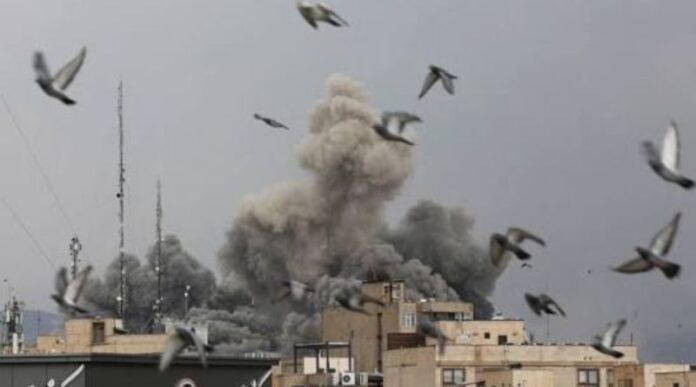

The conflict between the United States and Iran has entered another serious phase, raising fresh concerns that the fighting could spread further across the Middle East. What began as a direct confrontation between Washington and Tehran has increasingly affected nearby countries, shipping routes, energy supplies and the wider regional security situation.
As the fighting continues, governments across the Middle East are watching developments closely. The Strait of Hormuz has become one of the main points of concern because it is a major route for global oil shipments. Any long-term disruption in the waterway could affect energy prices and trade far beyond the region.
At the same time, there are signs that diplomacy has not completely failed. Qatar and other mediators are working to bring the United States and Iran back into discussions. Reuters reported on September 28 that separate talks involving the two sides were expected as part of a new effort to end the war.
Fighting Continues as Tensions Rise
The latest phase of the conflict follows months of military exchanges between the United States and Iran. Both countries have carried out attacks and responded to actions by the other side, while the possibility of further escalation remains a major concern.
The conflict has also moved beyond land-based attacks. The Strait of Hormuz has become an important part of the confrontation, with attacks involving oil tankers and military vessels increasing fears about the safety of commercial shipping.
Earlier in September, the United States and Iran exchanged major attacks, while Iran also targeted US naval forces in the region. Reports said Iranian missiles were fired toward US Navy vessels, although the US military said the ships were not hit.
The growing role of the sea in the conflict has made the situation more difficult for international businesses and shipping companies. Tankers moving through the Gulf face greater risks, while governments are trying to protect important trade routes.
Strait of Hormuz Becomes a Major Concern
The Strait of Hormuz is one of the world’s most important energy routes. A large amount of oil and other energy products normally passes through the narrow waterway every day.
Because of its importance, any major disruption can quickly affect international markets. The current conflict has already pushed oil prices higher at different points, especially when fears about a longer closure or further attacks have increased.
On September 28, oil prices again moved higher as hopes for an immediate agreement between Washington and Tehran weakened. Brent crude was reported above $107 a barrel after rising by more than 2%.
For countries that depend heavily on imported fuel, higher oil prices can create serious economic pressure. More expensive oil can increase the cost of petrol, diesel, transport and electricity. It can also add pressure to household budgets and businesses.
The situation is therefore not only a military issue. It can affect economies and ordinary people in countries thousands of kilometres away from the fighting.
Iran Warns That the War Could Expand
Iran has repeatedly warned that further attacks could lead to a wider response. Iranian officials have indicated that Tehran could expand the geographical area of the conflict and use additional military capabilities if attacks continue.
Iranian Revolutionary Guard officials have also warned that the conflict could move to new areas if the United States resumes major attacks.
Such statements have increased fears among neighbouring countries. Governments in the Gulf region are particularly concerned because they are geographically close to Iran and host important energy facilities, ports and military bases.
The possibility of attacks involving regional groups also adds another layer to the crisis. Fighting involving Iran-linked groups in places such as Yemen has already created additional risks for shipping and energy infrastructure.
Yemen and Other Regional Fronts
The US-Iran conflict is not taking place in isolation. Other conflicts and armed groups across the Middle East are connected to the wider regional crisis.
Yemen has become especially important because attacks linked to the conflict can threaten ships moving through nearby waters. Any increase in attacks around the Red Sea could place additional pressure on global shipping.
Recent reports have also highlighted fighting and tensions involving Iran-aligned groups in the region. The situation has raised concerns that a new round of attacks could create several active fronts at the same time.
This is one of the main reasons governments are trying to prevent the conflict from spreading. A larger regional war could be much harder to control than the current direct confrontation between Washington and Tehran.
Gulf Countries Remain Alert
Countries in the Gulf are closely monitoring the situation. Saudi Arabia and other regional states have strong economic and security interests in preventing further damage to oil facilities, airports, ports and shipping routes.
Saudi Arabia has already faced security concerns linked to attacks connected with the wider conflict. The situation has also affected normal activities in the region, with reports that schools in Riyadh shifted to remote learning for a week because of security concerns.
For Gulf governments, the challenge is to protect their countries without becoming directly involved in a larger war.
They also have to balance their relationships with the United States and their regional concerns about Iran. At the same time, they want to keep energy exports and international trade moving.
US Military Presence Adds to Concerns
The United States continues to maintain a significant military presence in the region. American forces and military assets have been involved in the conflict, while Washington has also taken steps to maintain its ability to respond to further Iranian actions.
On September 28, reports said the USS Theodore Roosevelt had departed San Diego for what was expected to become an extended Middle East deployment.
The movement of additional military assets shows that Washington is preparing for different possibilities while diplomatic efforts continue.
For the region, however, the presence of more military forces can increase concerns about further escalation. A single attack on a major military target could potentially trigger another round of retaliation.
Trump Says Talks Could Continue
Despite the military tensions, diplomatic efforts are still taking place.
US President Donald Trump has rejected Iran’s latest proposal connected to reopening the Strait of Hormuz, but reports say he has also indicated that negotiations could continue during the week.
Qatar is playing a role in trying to bring both sides closer to discussions. According to Reuters, Qatari mediators were expected to hold separate meetings with Iranian and US representatives on September 28 or 29.
The talks are important because both sides have strong disagreements over the conditions needed to stop the fighting.
Iran has called for a negotiated solution, while the United States has demanded changes from Tehran. The two sides have also exchanged strong public statements, making it difficult to know how quickly diplomacy can produce a lasting agreement.
Iran Remains Open to Diplomacy
Iran has signalled that it is willing to consider diplomacy while also preparing for continued military confrontation.
Iranian Foreign Minister Abbas Araqchi has said that a negotiated solution is needed to resolve the situation. At the same time, Iranian officials have made it clear that Tehran does not want to appear weak under military pressure.
This creates a difficult situation for negotiators.
A possible agreement would need to address the main issues that caused the conflict while also providing a way for both sides to step back without immediately returning to fighting.
The reopening of the Strait of Hormuz is another major issue. A deal that can restore safe shipping would reduce pressure on global energy markets and provide some relief to countries worried about fuel supplies.
Oil Markets Feel the Pressure
The conflict has had a clear effect on oil markets.
When traders fear that oil supplies could be disrupted, prices normally rise because markets begin to prepare for possible shortages. The current crisis has repeatedly produced this kind of reaction.
Reuters reported on September 28 that Middle Eastern crude exports had recovered to around 12.8 million barrels per day during September, according to Kpler data. However, the situation remains below normal levels in some areas and uncertainty continues.
Higher oil prices can have a wider impact on the global economy. Airlines, factories, transport companies and power producers can all face higher costs.
Developing countries can be particularly exposed because they often depend on imported energy. Higher fuel bills can put pressure on foreign exchange reserves and increase inflation.
Global Shipping Also Faces Problems
Energy is not the only concern.
The Strait of Hormuz and nearby shipping routes are essential for international trade. If ships cannot safely travel through the area, companies may need to delay journeys or use longer routes.
Longer routes mean higher fuel costs, more time at sea and higher insurance expenses. These costs can eventually reach consumers through higher prices for imported goods.
The conflict has therefore created concerns for businesses around the world, even in countries that are not directly involved in the fighting.
Shipping companies are closely watching developments because another major escalation could make some routes too risky for normal commercial operations.
The Risk of a Wider Regional War
The biggest concern remains the possibility that the conflict could expand.
The Middle East already has several major conflicts and security problems. Adding a direct and prolonged US-Iran war could place additional pressure on countries such as Iraq, Syria, Lebanon, Yemen and Gulf states.
A wider conflict could involve military bases, oil facilities, airports, ports and shipping routes across several countries.
This is why diplomatic efforts remain important even while military operations continue.
Every additional front increases the chances of misunderstanding or accidental escalation. A strike in one country could lead to retaliation somewhere else, making the situation much harder to control.
What Happens Next?
The next stage of the conflict will depend heavily on whether Washington and Tehran can make progress through negotiations.
For now, there is no clear guarantee that a lasting ceasefire will be reached. Iran and the United States continue to disagree on key issues, while military pressure remains in place.
At the same time, the fact that mediators are still working with both sides shows that diplomacy remains an option.
A successful agreement could reduce pressure on shipping, help bring oil prices down and lower the risk of more attacks across the region.
If talks fail and military action increases again, the situation could become more difficult for the countries surrounding Iran and the wider global economy.
Middle East Watches Closely
The US-Iran conflict has already changed the security and economic situation across the Middle East. The effects can be seen in military movements, shipping disruptions, energy prices and growing security concerns in neighbouring countries.
The Strait of Hormuz remains at the centre of the crisis because of its importance to global oil supplies. Meanwhile, attacks and tensions involving regional groups are creating additional risks.
Yet diplomacy is still active. Qatar and other mediators are continuing efforts to bring the two sides toward negotiations, while both Washington and Tehran consider their next steps.
For people across the Middle East, the main concern is whether the fighting will continue to spread or whether diplomatic efforts can eventually stop the conflict.
For the rest of the world, the focus is also on oil, shipping and the wider economic impact.
As of September 28, 2026, the situation remains uncertain. Military tensions are high, but talks have not completely stopped. The coming days could therefore be important in determining whether the conflict moves toward a negotiated settlement or enters another period of escalation.
Read Also: check