
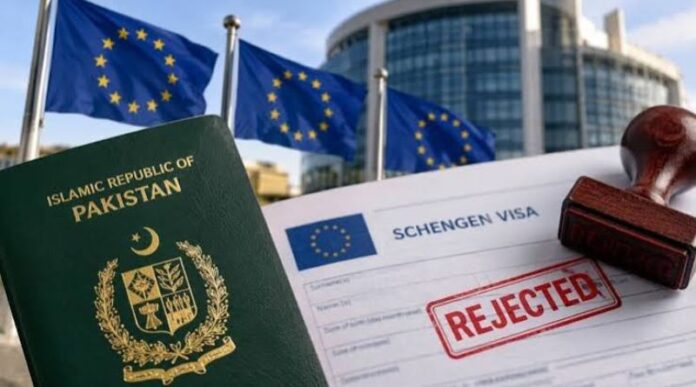

The European Union (EU) has expressed concern over the high rejection rate of Schengen visa applications submitted by Pakistani citizens. With nearly half of the applications being rejected, the situation has raised questions about the reasons behind these refusals and the difficulties Pakistanis face when planning trips to European countries.
For many Pakistanis, visiting Europe is important for different reasons. Some want to travel for tourism, while others need to attend business meetings, visit family members, take part in educational activities, or attend international events. However, a visa refusal can create financial problems and disrupt travel plans, especially when applicants have already paid for bookings and other arrangements.
The EU has described Pakistan’s nearly 50% Schengen visa rejection rate as too high. This concern highlights the need to understand why so many applications are being refused and what applicants can do to improve their chances of receiving a visa.
The issue is also important for people who regularly travel abroad for work, education, family visits, and other purposes. A better understanding of visa requirements could help applicants avoid common mistakes and prepare stronger applications.
What Is the Schengen Visa?
A Schengen visa allows eligible travellers to visit countries in the Schengen Area for a short period, usually for tourism, business, or family visits. The area includes many European countries that have removed routine border checks between their member states.
Instead of applying separately for a short-stay visa for every country on their planned European trip, travellers can generally use one valid Schengen visa to visit several countries, subject to the visa’s conditions.
For example, a Pakistani citizen planning to visit France, Germany, Italy, or Spain may need a Schengen visa, depending on the purpose and length of the visit. Pakistani passport holders generally need to obtain the required visa before travelling to these destinations.
A short-stay Schengen visa normally allows a person to stay for up to 90 days within any 180-day period. However, the visa does not guarantee entry in every situation. Border authorities may still check whether travellers meet the entry requirements.
People applying for a Schengen visa must provide the required documents and explain the purpose of their visit. They may also need to show that they have enough money to cover their expenses, suitable accommodation, travel medical insurance, and a clear plan to leave the Schengen Area before their authorised stay ends.
Because applications are assessed according to individual circumstances, meeting the basic requirements does not automatically guarantee approval.
EU Raises Concerns Over Pakistan’s Visa Rejection Rate
The high rejection rate among Pakistani applicants has become a concern because it means that many people who apply for permission to travel to Europe do not receive approval.
When the rejection rate approaches 50%, it suggests that a large number of applications are unsuccessful. The EU’s description of this figure as too high brings attention to the challenges facing Pakistani travellers and the need for a clearer understanding of the application process.
However, a high rejection rate does not mean that every Pakistani applicant faces the same risk. Visa decisions depend on the documents submitted, the purpose of travel, financial circumstances, and whether the applicant satisfies the relevant rules.
For instance, someone travelling for a short holiday may need to provide a different set of supporting documents from a person visiting a close family member or attending a business conference.
The decision also depends on whether the information in the application is complete, accurate, and consistent. Missing documents, unclear travel plans, or doubts about the applicant’s ability to support the trip can lead to further questions or refusal.
It is important to note that the rejection rate alone does not explain why individual applications are refused. To understand the full situation, applicants and policymakers need to consider the reasons recorded in visa decisions and the wider circumstances affecting travel between Pakistan and Europe.
Why Do Schengen Visa Applications Get Rejected?
There is no single reason that explains every visa refusal. Different applications may be rejected for different reasons, depending on the evidence provided and the applicant’s personal circumstances.
Some common reasons for Schengen visa refusals include the following.
1. Incomplete or Incorrect Documents
One of the most common problems is submitting an incomplete application. Applicants may forget important documents, provide outdated information, or fail to meet the requirements of the embassy or consulate handling their case.
Even a small mistake can create difficulties if it affects an important part of the application. Applicants should carefully check the official document checklist before submitting their forms.
2. Weak Financial Proof
Applicants may need to demonstrate that they can afford their trip without depending on unauthorised work or public funds.
Bank statements, salary slips, employment records, business documents, and evidence of financial support may help explain how the trip will be paid for. The exact documents required depend on the applicant’s circumstances and the destination country’s rules.
Unclear financial records or unexplained transactions may lead to questions about whether the applicant can cover travel expenses.
3. Unclear Purpose of Travel
Applicants should clearly explain why they want to visit Europe. Their travel dates, accommodation arrangements, itinerary, and supporting documents should match the stated purpose.
For example, someone applying for a tourist visa should provide a realistic travel plan. A person visiting family may need to submit an invitation or other evidence, where required.
If the purpose of the visit is unclear or the supporting documents do not match the application, the visa officer may have concerns.
4. Doubts About Returning to Pakistan
Visa authorities may assess whether an applicant is likely to leave the Schengen Area before the permitted stay ends.
Employment, business responsibilities, family circumstances, studies, property, and other relevant commitments may help explain an applicant’s situation in Pakistan. No single factor guarantees approval, but clear and genuine supporting evidence can help establish the applicant’s circumstances.
Applicants should provide truthful information and avoid relying on unsupported claims.
5. Inconsistent Information
Information provided in the visa form should match the supporting documents. Differences in travel dates, employment details, income, accommodation, or the purpose of travel may raise concerns.
Applicants should review their forms before submission and correct any mistakes. Providing false documents or misleading information can seriously damage an application and may have further consequences.
6. Concerns About Travel History
Previous international travel may form part of an applicant’s overall circumstances, but a limited travel history does not automatically mean a visa will be refused.
Visa authorities consider the complete application rather than relying on one factor alone. Applicants with little or no previous foreign travel should focus on providing clear, genuine, and well-supported information.
Apart from the high rejection rate, Pakistani citizens also face problems when trying to secure visa appointments. In some cases, applicants struggle to find an available appointment even after making travel plans and preparing their documents.
This can be frustrating for people who need to travel for business meetings, family events, education, or tourism. Delays may force applicants to change their travel dates or cancel their plans.
EU Commissioner for Internal Affairs and Migration Magnus Brunner acknowledged these difficulties during his first visit to Pakistan. He said the European Union needed to do a better job of making legal travel easier for genuine applicants.
Brunner also pointed out that improving the situation requires action from both sides. Pakistani applicants need to submit better-quality documents, while European authorities should work to improve access to legal travel and make procedures more efficient.
Visa decisions are mainly handled by individual EU member states and their relevant authorities. However, the European Commission can help improve coordination and develop policies that support a more effective visa process.
This means that solving the problem will require cooperation rather than action from only one side.
EU Wants to Make Legal Travel Easier for Pakistanis
The European Union has indicated that it wants genuine Pakistani travellers to have better access to legal travel opportunities.
Legal travel is important for tourism, education, business, employment, and family visits. It also allows people to explore opportunities abroad without taking dangerous risks.
However, easier access does not mean that every visa application will be approved. Applicants will still need to meet the relevant conditions and provide reliable documents.
The main goal is to reduce unnecessary difficulties for genuine travellers while maintaining the checks required under European visa rules.
Better coordination, clearer information, and more efficient appointment systems could help applicants understand the process. At the same time, improvements in the quality of documents submitted from Pakistan could help reduce problems during the assessment of applications.
Both sides need to address these challenges to make legal travel more practical and accessible.
Irregular Migration From Pakistan Has Declined
Another important issue discussed during Brunner’s visit was irregular migration from Pakistan to Europe.
According to Brunner, the number of Pakistanis reaching the European Union through irregular routes had fallen by more than 50%. Pakistani officials separately reported a decline of 64% over the previous 18 months.
These figures suggest that cooperation between Pakistan and European authorities has helped reduce irregular migration.
Irregular migration can involve dangerous journeys, the use of false documents, or the assistance of human smugglers. People attempting these routes may face serious risks, including financial exploitation, violence, detention, and death.
Many people consider travelling abroad because they want better employment opportunities, education, or improved living conditions. However, using illegal routes can expose them and their families to severe financial and personal harm.
Brunner stressed the importance of continuing efforts to control irregular migration. He also indicated that reducing these movements could create greater support within Europe for legal migration opportunities.
This is an important part of the wider discussion between Pakistan and the EU. Both sides need to address illegal migration while ensuring that people with genuine reasons to travel can use lawful channels.
EU Warns Young Pakistanis Against Human Smugglers
Young Pakistanis looking for opportunities in Europe should be careful when dealing with people who promise easy entry into European countries.
Human smugglers may demand large amounts of money and promise that they can arrange travel or employment. However, such promises can be misleading, and the journeys they arrange may involve serious dangers.
Some irregular routes towards Europe pass through countries in the Middle East and North Africa before reaching destinations such as Italy or Greece. These journeys can involve unsafe transport, difficult border crossings, and exploitation by criminal networks.
People may lose their savings without reaching their destination. In other cases, they may face detention, injury, or other serious problems.
The safer option is to explore legal routes for education, skilled employment, business, and other permitted purposes.
Young people should check the official requirements before paying an agent or making travel arrangements. They should also avoid anyone who guarantees a visa or offers to obtain approval through false documents.
A genuine visa decision is made by the relevant authorities, and no private agent can guarantee the outcome.
How Pakistanis Can Improve Their Schengen Visa Applications
Although no application can be guaranteed approval, Pakistani citizens can take several practical steps to reduce avoidable mistakes.
Prepare All Required Documents
Applicants should check the official website of the embassy, consulate, or authorised visa application centre responsible for their destination. They should prepare the required forms and supporting documents before attending their appointment.
Requirements can differ according to the purpose of travel and the country handling the application.
Provide Clear Financial Records
Applicants should be ready to explain how they will pay for their trip. Bank statements and other financial records should be genuine and consistent with their stated income and circumstances.
They should never create false records or borrow money temporarily just to give a misleading impression of their financial position.
Explain the Purpose of the Visit
Travel plans should be clear and realistic. Applicants should provide the supporting evidence required for tourism, business, family visits, or another permitted purpose.
The information in the application should match the itinerary and other documents.
Submit Genuine Information
All details must be accurate. Applicants should not use fake employment letters, false hotel bookings, or altered bank statements.
Providing misleading information can lead to refusal and may affect future applications.
Apply Through Official Channels
Applicants should use the relevant official embassy or authorised visa application centre. They should check the appointment process and avoid unofficial websites or agents promising guaranteed results.
It is also sensible to apply well before the intended travel date, within the permitted application period, because appointments and processing can take time.
Read the Refusal Letter Carefully
If an application is refused, applicants should read the decision letter to understand the reasons. Depending on the case and applicable national procedures, they may be able to appeal or submit a new application after addressing the identified problems.
Submitting the same application again without correcting the issues may not improve the result.
What Does This Mean for Pakistan-EU Relations?
The visa issue is part of a wider relationship between Pakistan and the European Union. Both sides have an interest in encouraging lawful travel, improving cooperation, and reducing irregular migration.
Pakistan benefits when its citizens can travel abroad for education, tourism, business, and suitable employment opportunities. European countries also benefit from legitimate exchanges involving students, skilled workers, visitors, and businesses.
At the same time, authorities must ensure that visa rules are followed and that applications are assessed properly.
Brunner’s remarks suggest that the EU recognises the difficulties Pakistani travellers face. His comments also make clear that improvements are needed in the documents submitted with applications.
If both sides make progress, the process could become easier to understand and more efficient for genuine applicants. However, changes in rejection rates will depend on several factors, including the quality of applications, appointment access, and the decisions of individual member states.
No immediate change in visa policy or automatic reduction in refusals should be assumed simply because the EU has raised the issue.
Frequently Asked Questions (FAQs)
1. Why has the EU called Pakistan’s Schengen visa rejection rate too high?
EU Commissioner Magnus Brunner described the nearly 50% refusal rate as too high. He said Pakistan needed to improve the quality of documents submitted with applications, while the EU also needed to make legal travel easier.
2. Can Pakistani citizens apply for a Schengen visa?
Yes. Pakistani passport holders can apply for a Schengen visa through the relevant embassy, consulate, or authorised visa application centre, depending on their destination and purpose of travel.
3. What are the common reasons for Schengen visa rejection?
Applications may be refused because of incomplete documents, unclear travel plans, insufficient or poorly explained financial resources, doubts about the purpose of travel, or concerns about whether the applicant will leave before the permitted stay ends.
The reason for refusal depends on the individual case.
4. Has irregular migration from Pakistan to Europe decreased?
Yes. Brunner said irregular arrivals of Pakistanis in the EU had fallen by more than 50%. Pakistani officials separately reported a 64% decline over the previous 18 months.
5. Will the EU reduce Schengen visa rejections for Pakistanis?
No specific reduction has been guaranteed. The EU has acknowledged the problem and called for improvements from both sides, but visa decisions will continue to depend on the applicable rules and individual applications.
6. How can Pakistanis improve their chances of getting a Schengen visa?
Applicants should submit complete and genuine documents, provide clear financial evidence, explain their travel purpose, follow official instructions, and ensure that all information is consistent.
7. Does a visa refusal mean a person can never apply again?
No. A refusal does not automatically prevent someone from applying again. However, applicants should first understand the reason for the refusal and address the relevant issues before submitting another application.
Conclusion
The European Union’s description of Pakistan’s nearly 50% Schengen visa rejection rate as too high has brought fresh attention to the difficulties faced by Pakistani travellers.
Magnus Brunner has acknowledged that the EU needs to improve access to legal travel, while Pakistani applicants need to provide better-quality supporting documents. Difficulties in obtaining appointments are another concern that requires attention.
The reported decline in irregular migration also shows the importance of cooperation between Pakistan and European authorities. Continued efforts to reduce dangerous journeys and improve legal travel opportunities could benefit both sides.
For Pakistani citizens, the most practical step is to prepare complete, honest, and well-organised applications through official channels. While these steps cannot guarantee approval, they can help applicants avoid common mistakes.
Ultimately, improving the visa process will require cooperation, clearer procedures, and a balanced approach that supports genuine travellers while respecting the rules governing entry into the Schengen Area.
Read Also: check


