
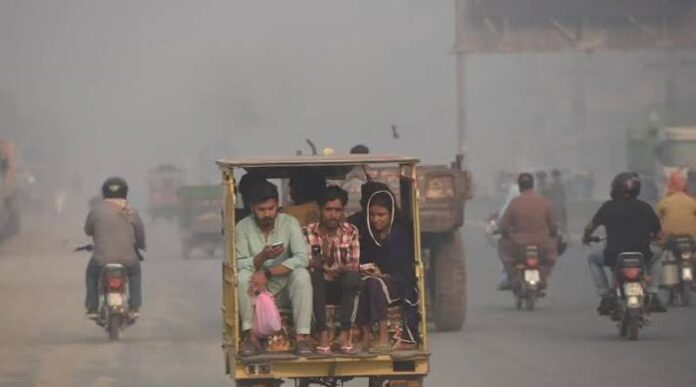

Lahore residents have been advised to wear face masks as air pollution continues to pose a serious risk to public health. The city’s poor air quality has raised concerns about breathing problems, eye irritation, and other health issues, especially among children, older people, and those who already suffer from respiratory diseases.
Air pollution has become a major problem in Lahore during the winter season and other periods when weather conditions allow polluted air to remain close to the ground. Smoke from vehicles, factory emissions, construction work, and the burning of waste can all add to the problem. When these pollutants mix with dust and other harmful particles, the air becomes unsafe to breathe.
Health experts regularly advise people to take extra care when pollution levels rise. Wearing a suitable face mask, avoiding unnecessary outdoor activities, and keeping indoor spaces as clean as possible are among the steps that can help reduce exposure to polluted air.
The warning is particularly important for people who spend long hours outside their homes, including traffic police officers, delivery riders, street vendors, construction workers, and other outdoor workers. These people may have limited opportunities to avoid polluted areas during their daily routines.
Lahore’s Air Pollution Raises Health Concerns
Lahore is one of Pakistan’s major cities and an important centre for business, education, transport, and industry. However, its growing population and increasing traffic have also created environmental challenges. Air pollution remains one of the most serious problems faced by residents.
During periods of poor air quality, the city can experience thick smog that reduces visibility and makes breathing uncomfortable. Smog is a mixture of smoke, gases, and tiny particles in the air. It can form when pollution combines with weather conditions that prevent dirty air from moving away.
The problem can become worse when winds are weak and temperatures create conditions that trap pollutants near the ground. As a result, harmful particles may remain in the air for longer periods, increasing the amount people breathe in during normal daily activities.
Residents may notice a burning feeling in their eyes, a sore throat, repeated coughing, or difficulty breathing when pollution levels are high. Some people may experience these symptoms after spending only a short time outdoors, while others may not notice an immediate effect.
However, a lack of visible symptoms does not mean the air is safe. Fine particles can enter deep into the lungs, and some of the smallest particles may pass into the bloodstream. Repeated exposure can increase the risk of serious health problems over time.
For this reason, public health advice becomes especially important during days when air quality reaches hazardous levels.
Why Wearing a Face Mask Matters
Wearing a suitable face mask can help reduce the amount of harmful particles a person breathes in. However, not every mask offers the same level of protection.
Health experts generally recommend a well-fitting N95 or KN95 respirator for protection against fine particles in polluted air. These masks are designed to filter out many small airborne particles when they fit properly around the nose and mouth.
A mask should cover both the nose and mouth without leaving large gaps around the sides. If air can easily pass through gaps, some polluted air may enter without being filtered.
People should also make sure that their masks are clean and in good condition. Disposable respirators should be replaced when they become dirty, damaged, wet, or difficult to breathe through. Reusable masks should be maintained according to the manufacturer’s instructions.
Cloth masks and loose-fitting surgical masks may provide some protection against larger particles, but they generally offer less reliable protection against the finest pollution particles than a properly fitted N95 or KN95 respirator.
Wearing a mask is particularly useful for people who must travel through busy roads, crowded markets, industrial areas, or places where smoke and dust are common. Nevertheless, masks cannot remove every health risk linked to air pollution.
Residents should combine mask use with other protective steps, especially when air quality is very poor.
Children and Older People Need Extra Care
Children are among the groups that need special protection during periods of heavy air pollution. Their lungs are still developing, and they may breathe more air relative to their body size than adults. Outdoor activities, including sports and school travel, can increase their exposure to polluted air.
Parents should check local air quality reports before allowing children to play outside for long periods. If pollution levels are very high, outdoor sports and other demanding activities should be reduced or moved indoors.
Schools and educational institutions can also help by monitoring air quality information and adjusting outdoor activities when necessary. Keeping classrooms clean and reducing the entry of outdoor pollution, where possible, may provide additional support.
Older people also face a higher risk because they may have existing health conditions that make them more sensitive to polluted air. People with asthma, heart disease, chronic lung disease, or other breathing problems should be particularly careful.
Air pollution can make these conditions harder to manage and may increase the risk of symptoms becoming more serious.
Pregnant women should also take reasonable precautions to reduce exposure, as air pollution has been linked to several risks during pregnancy.
Anyone who experiences severe breathing difficulty, chest pain, confusion, or other serious symptoms should seek urgent medical attention rather than relying on a face mask alone.
How Air Pollution Affects Daily Life
Poor air quality can affect many parts of daily life in Lahore. People may find it uncomfortable to walk, exercise, or travel outdoors. Those who commute by motorcycle or bicycle may face greater exposure because they spend long periods on busy roads.
Traffic congestion is another concern. Cars, buses, trucks, and motorcycles release exhaust fumes that add to the pollution already present in the air. Long traffic jams can expose commuters to these emissions for extended periods.
People travelling on foot should try to avoid routes with heavy traffic whenever possible. Choosing quieter streets may help reduce exposure, although pollution can spread across a wider area and may not be limited to busy roads.
Outdoor workers face an even greater challenge. Shopkeepers, street vendors, traffic wardens, construction workers, and delivery riders often cannot remain indoors during working hours. Employers should consider practical ways to protect these workers, including providing suitable respirators, offering breaks in cleaner indoor spaces, and reducing physically demanding outdoor work when pollution levels are very high.
Residents should also remember that air pollution is not always easy to see. Even when the sky looks clearer, harmful particles may remain in the air. Checking official air quality information is therefore more useful than relying only on visibility or smell.
Practical Ways to Stay Safe During Smog
Along with wearing a suitable mask, residents can follow several simple steps to reduce their exposure to polluted air.
Check air quality updates: Before leaving home, check the latest air quality information from reliable monitoring services or official government sources. This can help you decide whether to change your travel plans or reduce outdoor activities.
Limit outdoor exercise: Running, cycling, and other activities that require heavy breathing can increase the amount of polluted air entering the lungs. When pollution levels are high, exercise indoors in a space with cleaner air.
Keep windows closed when needed: During periods of severe outdoor pollution, keeping doors and windows closed can help reduce the entry of polluted air. However, homes should still have safe ventilation, particularly when cooking or using fuel-burning appliances.
Keep indoor air clean: If affordable and available, an air purifier with a high-efficiency particle filter can help reduce fine particles indoors. Make sure the device is suitable for the size of the room and that its filters are maintained properly.
Avoid smoking and burning waste: Smoking, burning rubbish, and using other smoky fuels indoors can make air quality worse. Avoid adding more smoke to an already polluted environment.
Travel carefully: If you need to go outside, plan your journey to avoid unnecessary time on congested roads. A well-fitting respirator can provide additional protection while travelling.
Follow medical advice: People with asthma or other breathing conditions should follow their prescribed treatment plans and keep their medicines available as advised by their doctors.
These steps cannot remove air pollution from the city, but they can help people lower their personal exposure.
What Causes Smog in Lahore?
Air pollution in Lahore comes from several sources, and no single factor explains the entire problem.
Vehicle emissions are an important source, particularly in areas with heavy traffic. Older vehicles, poorly maintained engines, and low-quality fuel can contribute to harmful emissions.
Industrial activity can also release smoke, gases, and particles into the atmosphere. Construction sites, road dust, and uncovered materials add further pollution, especially when dust is raised by vehicles and wind.
The burning of rubbish and other waste can create additional smoke. Agricultural residue burning in parts of the region may also contribute to seasonal pollution. The effect of this source can vary according to the location, weather, and time of year.
Weather conditions can make the situation more serious. During certain periods, weak winds and temperature patterns prevent pollutants from spreading or rising away from the ground. This allows pollution from different sources to build up over populated areas.
The result is a combination of local emissions, pollution carried from surrounding areas, and weather conditions that can lead to unhealthy air.
Government Action and Public Responsibility
Protecting residents from hazardous air requires action from government departments, businesses, and the public. Personal precautions are important, but they cannot replace long-term efforts to reduce pollution at its source.
Authorities can help by monitoring air quality, sharing timely public warnings, enforcing rules on industrial emissions, and taking action against vehicles that release excessive smoke. Better public transport can also reduce the number of private vehicles on the roads.
Regular checks at factories and construction sites can help identify pollution problems. Proper waste collection and disposal can reduce the need for open burning, while efforts to control road dust may improve conditions in busy neighbourhoods.
Planting trees and protecting green spaces can support a healthier urban environment, although these measures alone cannot solve severe air pollution. Reducing harmful emissions remains essential.
Public awareness is equally important. Residents can help by maintaining their vehicles, avoiding unnecessary burning, and following official health advice during periods of heavy smog.
Employers should also recognise their responsibility to protect workers who spend much of their time outdoors. Schools, hospitals, and other public institutions can support vulnerable people by sharing clear information and adjusting activities when pollution becomes dangerous.
When Should Residents Seek Medical Help?
Some symptoms of air pollution exposure may be mild, such as coughing, throat irritation, watery eyes, and a runny nose. These symptoms may improve after a person moves to an area with cleaner air.
However, people should not ignore symptoms that become severe or continue for a long time. Pollution may worsen asthma and other existing health conditions, sometimes requiring medical treatment.
Seek urgent medical care if you or someone nearby develops severe difficulty breathing, significant chest pain, fainting, or other alarming symptoms.
People who use prescribed inhalers or other medicines should follow their doctor’s instructions. They should not change their treatment or stop taking prescribed medicines simply because they are wearing a mask.
Parents should pay attention if children develop repeated coughing, wheezing, or difficulty breathing during periods of heavy pollution. Older adults and people with heart or lung conditions should also seek medical advice if their symptoms become worse than usual.
Public Awareness Is Essential
Lahore’s air pollution problem highlights the need for better public awareness and practical steps to protect health. Residents should take official warnings seriously, especially when air quality reaches hazardous levels.
Wearing a suitable face mask, reducing outdoor activity, checking pollution updates, and keeping indoor air as clean as possible can all help lower exposure. These precautions are especially important for children, older people, pregnant women, and those with existing health conditions.
At the same time, long-term improvements will depend on reducing emissions from transport, industry, waste burning, and other sources. Government agencies, businesses, and residents all have a role in supporting cleaner air.
Final Words
Lahore residents are being urged to take precautions as hazardous air quality raises concerns about public health. Wearing a well-fitting N95 or KN95 respirator when outdoors in polluted conditions can help filter harmful particles, but it should not be treated as complete protection.
People should avoid unnecessary outdoor activities when pollution levels are high, pay attention to official air quality updates, and seek medical assistance if serious symptoms develop.
The city’s air pollution challenge needs both immediate protective measures and long-term action. By following health advice and supporting efforts to reduce emissions, residents and authorities can work towards a safer and healthier environment for everyone.
Read Also: check