

Introduction
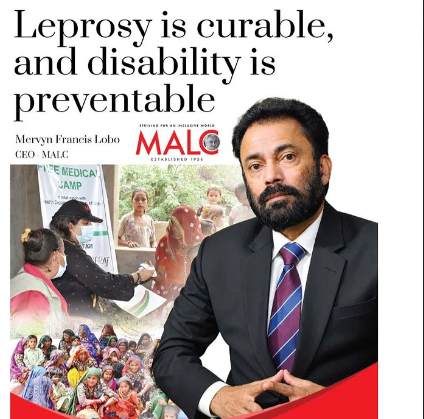
Mervyn Lobo, CEO of the Marie Adelaide Leprosy Centre (MALC), Karachi, has served the organisation for 36 years, including as CEO since 2012. With a background in finance and human resources, he holds an MBA and B.Com. He leads MALC’s work providing free healthcare for leprosy, tuberculosis, blindness, and vulnerable mothers and children, while advancing the legacy of founder Dr. Ruth Pfau through compassion and dedicated service. His honours include Germany’s Cross of Merit with Ribbon of the Order of Merit in 2024 and Sitara-i-Imtiaz in 2023. He also serves on several humanitarian and healthcare boards.
Q&A Section (Question & Answer)
Here is the Q&A session with Mervyn Lobo
Flare: How would you describe MALC’s seven-decade journey, mission, and key milestones?
Mervyn Lobo: MALC’s journey began in 1956 with volunteers in Karachi’s slums, treating people the society had abandoned. With minimal resources, they believed every person affected by leprosy deserved dignity.
Dr. Ruth Pfau’s arrival in 1960 transformed this effort. She saw leprosy not only as a disease but as a source of rejection and stigma. Her vision built a national system of treatment, rehabilitation, and community care. By 1963, MALC had its first permanent clinic in Saddar, later the headquarters of the National Leprosy Control Programme. In 1968, Dr. Pfau persuaded the government to formalise a public-private partnership with MALC, creating a nationwide network.
“We began with a wooden crate dispensary. Today, we serve humanity with dignity.”
Flare: What experiences shaped your commitment to public health and leadership at MALC?
Mervyn Lobo: My commitment is personal. Over three decades with MALC, I learned leadership is responsibility, not position. Dr. Ruth Pfau influenced me the most. Her compassion was disciplined and courageous, redefining service.
Experiences in remote communities also added a new chapter to my dedication. Patients cured medically often remained stigmatised or excluded due to poverty. These realities taught me that compassion must be paired with competence, and humanity with accountability. Transparency and good governance are inseparable from humanitarian work.
Flare: How has MALC’s role evolved from leprosy control to a wider portfolio of health, rehabilitation, and community services?
Mervyn Lobo: Initially focused on leprosy, MALC integrated tuberculosis and blindness control—the “Triple Merger.” By 2002, we expanded into Community Based Inclusive Development. Today, our portfolio includes rehabilitation, assistive devices, vocational training, mother and child healthcare, eye care, tuberculosis control, skin health, and support for children with neurodevelopmental disorders.
“We do not just cure, we help people reclaim their lives.”
Flare: Which current MALC programmes have the greatest reach and impact, particularly for underserved and remote communities?
Mervyn Lobo: Our reach is built on trust. MALC operates 157 centres across Pakistan, staffed by local paramedics who know the language and culture. Outreach teams travel into deserts, mountains, and isolated villages where healthcare is scarce.
Impact is measured not only in numbers but in human outcomes: a child returning to school after vision care, a person with disability gaining independence, or a patient overcoming stigma.
Flare: What are the biggest misconceptions about leprosy and disability, and how can they be addressed?
Mervyn Lobo: The greatest enemy today is fear, not bacteria. Many still associate leprosy with deformity and isolation, though the reality is different: most people have natural immunity, the disease is curable, and disability is preventable.
Language matters. Patients should never be called “lepers”—they are individuals with a curable condition. Media can help by portraying them as active members of society rather than objects of pity.
Flare: How does MALC measure the social and clinical impact of its programmes, and which recent outcomes best demonstrate this impact?
Mervyn Lobo: We track clinical indicators such as early case detection, child case proportions, and tuberculosis treatment completion. We also monitor eye screenings, cataract surgeries, and child nutrition.
Yet our most meaningful outcomes are social: a family restored through income generation, a young woman gaining independence via vocational training, or a patient becoming a peer counsellor.
“Success is measured in restored lives, not just treated cases.”
Flare: What operational, funding, and human-resource challenges affect nonprofit healthcare organisations in Pakistan, and how is MALC responding?
Mervyn Lobo: Challenges include rising inflation, short-term donor funding, and difficulty retaining staff in remote areas. Public health requires sustained commitments, not two-year projects.
MALC responds by recruiting local community members, integrating multiple screenings to reduce costs, and maintaining long-term partnerships with government and donors. Above all, we safeguard trust—our most vital capital.
Flare: How important are partnerships with government, donors, medical institutions, communities, and the private sector to MALC’s work?
Mervyn Lobo: Partnerships are foundational. Our public-private partnership with government, formalised in 1968, remains central. International donors like DAHW/GLRA and CBM provide stability, while local philanthropists and corporate partners sustain social inclusion.
General practitioners, dermatologists, village leaders, and individuals with lived experience all play critical roles. Progress comes when stakeholders focus on solving problems together.
Flare: What role are technology, data, and digital communication playing in outreach, early diagnosis, treatment, and donor engagement?
Mervyn Lobo: Technology brings modern health systems into remote regions. Tools like DHIS2 and QGIS help map disease hotspots, while digital communication connects rural workers with specialists. Diagnostics such as qPCR enable earlier detection.
For donors, technology ensures transparency. Yet technology cannot replace human connection—it must serve people, not overshadow them.
Flare: Looking ahead, what are MALC’s principal priorities for the next five years, and what message would you like to share with policymakers, supporters, and Flare readers?
Mervyn Lobo: Our priority is completing the last mile towards zero leprosy—intensifying case finding, contact tracing, and preventive treatment, with a focus on zero child cases. We will expand integrated skin health and deepen CBID programmes.
Above all, we want progress defined by dignity, not just statistics. For 70 years, MALC has stood beside those societies overlooked. From a wooden crate dispensary to a national network, our conviction remains unchanged: every life matters.


