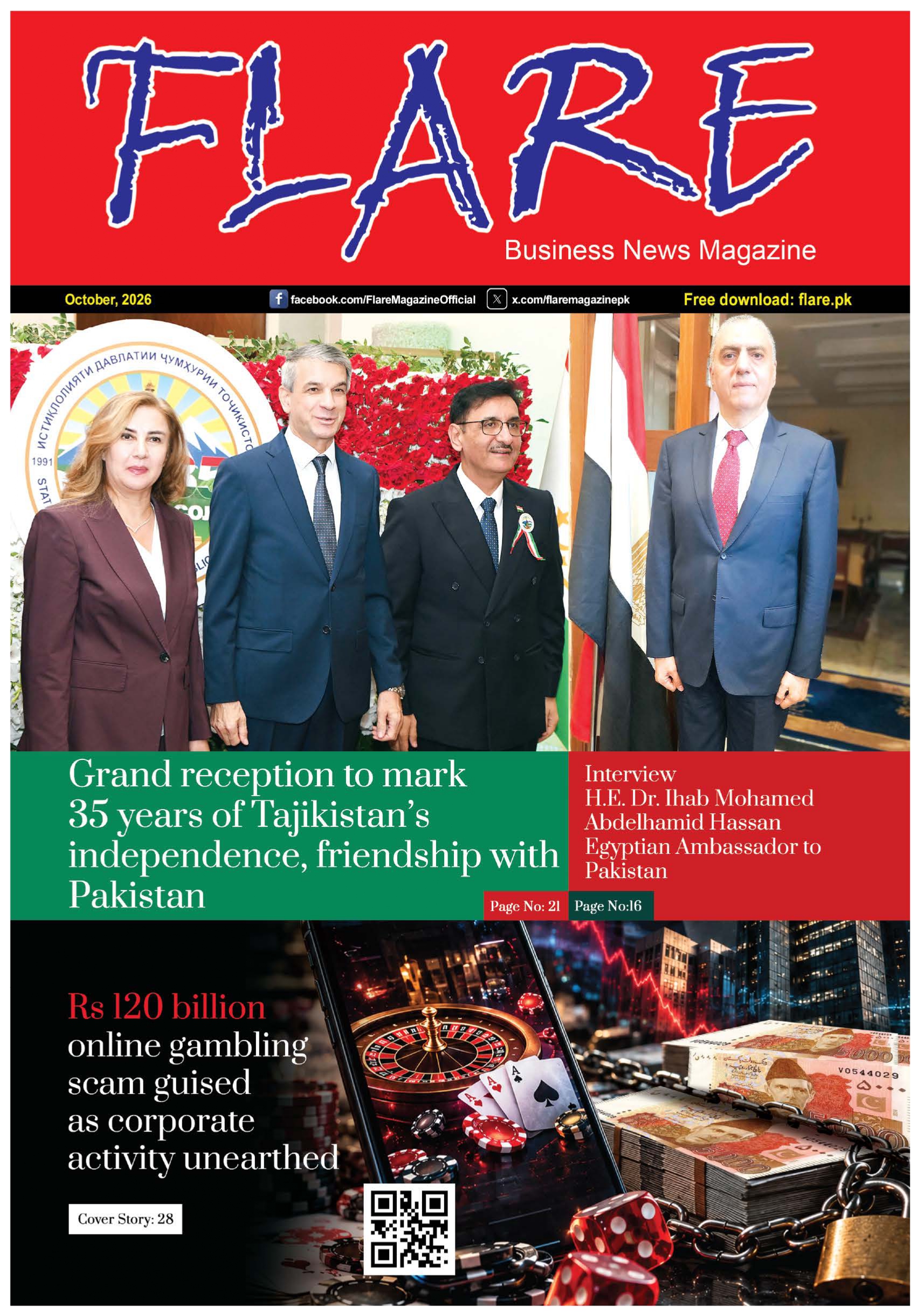

Pakistan has stepped up its crackdown on illegal online gambling amid rising concerns over financial fraud, cybercrime and identity theft. The alleged Rs120 billion network exposes potential gaps in digital financial safeguards and how the government will combat online gambling, fraud, illegal businesses and financial malpractice in future.
FIA has taken legal action against eight individuals, two of whom were arrested, in an alleged gambling and financial operation involving transactions exceeding Rs120 billion. Investigators traced funds through 11 companies suspected of facilitating illegal betting, raising concerns over the potential misuse of digital payment platforms.
PTA can block unlawful platforms, but operators may evade restrictions by shifting to alternative channels. Authorities have urged the public to safeguard banking details, avoid suspicious applications and never transfer money to unverified accounts.
Investigators also describe transfers, cash settlements and the alleged conversion or settlement of proceeds through unauthorised foreign-exchange channels, hawala/hundi networks and USDT cryptocurrency
An investigation by the Federal Investigation Agency (FIA) into an alleged Rs120 billion online gambling and financial network has uncovered a complex web of corporate accounts, digital payment channels, suspicious transactions and cryptocurrency settlements, raising serious questions about the misuse of Pakistan’s financial technology infrastructure.
At the centre of the investigation are 11 single-member companies whose bank accounts recorded Rs119.93 billion in aggregate credit turnover and Rs118.80 billion in debit turnover. These figures represent transaction volumes, not a proven financial loss.
FIR No. 32/2026, registered by the FIA Composite Circle Faisalabad, alleges that apparently legitimate businesses were used to receive payments linked to online gambling applications and channel funds through multiple financial institutions. Eight individuals are named in the FIR, including Muhammad Zeeshan and Muhammad Hamza Sarwar, who have been arrested. Investigators are also examining the roles of financial intermediaries, suspected facilitators and overseas contacts.
The investigation highlights the concentration of substantial financial activity in companies associated with a small number of individuals. Muhammad Zeeshan is linked to Martnmarts SMC Private Limited, Rifamart SMC Private Limited and Martspay.com, whose accounts recorded approximately Rs47.78 billion in credit turnover. Martnmarts alone accounted for Rs33.65 billion.
Three companies associated with Imran Ali—Teamsmart, Housemart and Coastal Connections—recorded approximately Rs37.93 billion, while New Heights Builders and Developers and Trendy Innovative Marketing, linked to Muhammad Amir, accounted for Rs19.76 billion. Together, these eight companies recorded more than Rs105 billion in credits. Martbox, Winnie Technologies and Unleash Utopia Mall brought the total for all 11 companies to nearly Rs120 billion.
The FIA alleges that these corporate structures gave gambling-related transactions the appearance of legitimate commercial activity. The FIR identifies U7777 Game, TD777 Game, 89F Game, EPIWIN, 1ee.com, 3rr.com, Z7.com, i8.fun, B9 Game and S9 Game as platforms connected to the suspected payment network.
According to investigators, these platforms offered real-money betting through bank transfers, mobile wallets and cryptocurrency. Similar website interfaces and referral incentives reportedly provided further leads in tracing their activities.
The financial examination found that five branchless collection accounts received approximately Rs8.586 billion through 10.49 million transactions. Investigators said the deposit amounts corresponded with payment denominations displayed on suspected gambling platforms, providing a potential link between the websites and local financial accounts.
The FIR describes a layered payment system in which funds were allegedly collected through branchless corporate accounts and transferred to accounts maintained with Mobilink Microfinance Bank Limited in Faisalabad, Sahiwal, and Rawalpindi, with many clubbed together in Sahiwal. Some accounts reportedly served as intermediary or “swap” accounts before money moved to disbursement accounts and numerous counterparties.
Substantial sums also reportedly passed through corporate accounts at Faysal Bank Limited and Dubai Islamic Bank Limited. The FIR separately records approximately Rs19.27 billion in credit turnover across five accounts at these two banks.
Investigators traced further transfers to counterparties in Peshawar, Buner, Shahkas and other locations. Recipients reportedly included scrap dealers, mobile phone and clothing traders, general suppliers and commission agents. The FIA considered these transactions suspicious because they appeared inconsistent with the companies’ declared business activities. Investigators suspect that repeated transfers between entities helped obscure the origin, purpose and destination of funds.
The inquiry record also contains statements attributed to Zeeshan concerning the alleged origins of the arrangement. According to the FIR, Viqar Rashid Khan introduced a proposal involving an alleged Chinese associate known as Michael, described as an international contact connected to online gambling platforms.
The proposed arrangement would connect local corporate payment accounts to gaming platforms, allowing them to receive deposits in return for commissions of one to two per cent. Viqar reportedly arranged an online meeting between Zeeshan and Michael, after which corporate accounts were allegedly established through businesses presented as legitimate commercial enterprises.
The FIR further alleges that Muhammad Hamza Sarwar created dummy websites and assisted in testing business websites during the account-opening process.
An initial profit-sharing arrangement reportedly allocated 25 per cent to Viqar and 37.5 per cent each to Zeeshan and Michael. The arrangement was subsequently said to have changed to an equal division between Zeeshan and Viqar. The FIR attributes estimated earnings of Rs400 million to Rs450 million to Zeeshan and Rs100 million to Rs150 million to Viqar over approximately one year. These alleged earnings are separate from the much larger transaction turnover recorded by the companies.
Investigators also describe transfers, cash settlements and the alleged conversion or settlement of proceeds through unauthorised foreign-exchange channels, hawala/hundi networks and USDT cryptocurrency. The alleged use of easypaisa and a local mobile payment application for corporate payment facilities has brought digital financial intermediaries under scrutiny.
According to the FIR, certain officials associated with payment services allegedly facilitated corporate account openings for businesses whose actual transactions did not correspond with their declared activities. Investigators are examining account-opening procedures, supporting documentation, transaction monitoring and the possible involvement of individual facilitators.
The inquiry raises broader questions about safeguards governing branchless corporate wallets and payment aggregation services. The FIR states that the roles of other persons, including bank officials, will be examined during further investigation. No crime should be inferred from the allegations alone.
The FIR identifies 29 currency transaction reports involving approximately Rs357.02 million, including around Rs321.97 million attributed to transactions involving Zeeshan. It invokes Sections 4, 5 and 23 of the Foreign Exchange Regulation Act, 1947, alongside Sections 420, 468 and 471 of the Pakistan Penal Code. Shahid Imran, Assistant Director FIA, is designated to investigate the case.
The alleged network raises serious questions about how companies presenting themselves as e-commerce, marketing and other commercial businesses could access financial infrastructure and process transactions on such an extraordinary scale.
For banks, payment providers and regulators, the case underscores the need for robust corporate verification, effective monitoring of unusual transaction patterns and checks for inconsistencies between declared business activities and actual account usage.
The central question is how nearly Rs120 billion in credits passed through 11 companies and how the alleged network maintained access to financial channels capable of processing such volumes. The findings could have significant implications for financial oversight and the safeguards protecting Pakistan’s expanding digital payment ecosystem.