
The World Bank’s findings underline the need for urgent reforms that address the underlying causes of poverty. Economic performance must be measured not only through GDP growth and foreign exchange reserves but also through rising household incomes, decent employment and access to essential goods and services
The report said Pakistan’s poverty rate at the $3-a-day threshold increased by 6.4 percentage points over the six years, while poverty measured at the $4.20-a-day threshold rose by 3.2 percentage points
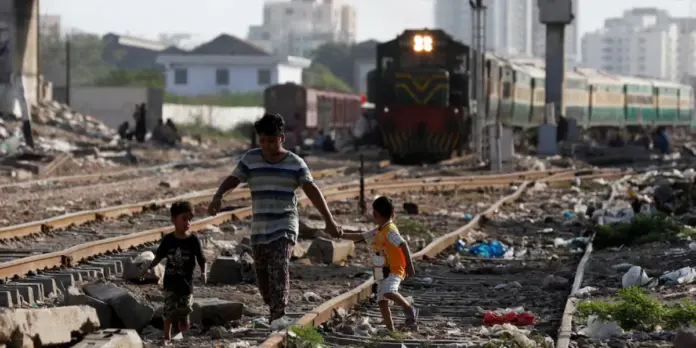
Pakistan accounts for 48% of people living in extreme poverty across the Middle East, North Africa, Afghanistan and Pakistan (MENAAP) region, with poverty rising sharply between 2018-19 and 2024-25, according to the World Bank’s October 2026 report, Middle East, North Africa, Afghanistan and Pakistan Economic Update: From Divide to Opportunity—AI, Jobs, and Growth.
The report said Pakistan’s poverty rate at the $3-a-day threshold increased by 6.4 percentage points over the six years, while poverty measured at the $4.20-a-day threshold rose by 3.2 percentage points.
The deterioration followed a series of economic shocks, including the Covid-19 pandemic, devastating floods in 2022, high inflation, currency depreciation and prolonged economic adjustment. These pressures weakened household purchasing power and limited employment opportunities.
Pakistan’s worsening poverty has contributed significantly to the region’s overall decline. MENAAP is now the only region where poverty remains above pre-pandemic levels and continues to rise.
Pakistan accounts for approximately 48% of the region’s population living below $3 a day, while Afghanistan, Syria and Yemen together account for another 47%. These four countries represent about 95% of MENAAP’s extreme poor.
In 2024, 14.3% of the region’s population lived on less than $3 a day, compared with 10.4% globally. At the $4.20-a-day threshold, the regional poverty rate stood at 26.9%, against the global average of 18.9%.
MENAAP accounts for 14% of the world’s extreme poor, second only to Sub-Saharan Africa. The World Bank foresees adverse poverty trends to persist through 2026, with poverty increasingly concentrated in fragile and conflict-affected economies. It also highlighted substantial disparities in poverty levels across Pakistan’s regions.
Pakistan’s poverty situation remains concerning despite a gradual recovery in economic growth. The World Bank estimated GDP growth at 3.7% in FY2025-26, up from 3.2% in FY2024-25, and projected growth of 3.8% in FY2026-27.
Real GDP per capita growth was estimated at 2.1% in 2026, compared with 1.6% in 2025, and is projected to reach 2.2% in 2027. However, rising inflation threatens to erode these modest gains. Inflation was estimated at 7.1% in 2026 and projected to increase to 8.2% in 2027, against 4.5% in 2025.
Regional conflict has added to these pressures. According to the report, inflation in Pakistan had risen to around 11% by mid-2026 as higher international energy, commodity and transport costs filtered into the domestic economy. Fuel prices had increased by more than 40% since the start of the Persian Gulf conflict, placing additional pressure on household budgets.
Food insecurity is another major concern. The World Bank identified Pakistan among countries where significant portions of the population face crisis-level or worse food insecurity.
Poorer households are particularly vulnerable because food accounts for 35% to 50% of total expenditure among lower-income groups in developing MENAAP economies. The Bank estimated that a 3% to 6% increase in food prices could reduce total consumption among the poorest households by approximately 1% to 5%, compared with 0.5% to 3.6% among the richest.
The report recommended targeted cash transfers and well-designed social assistance programmes as more effective ways to protect vulnerable households than broad fuel and food subsidies, which can place additional pressure on public finances. Pakistan has introduced targeted fuel and agricultural assistance in response to rising energy costs. However, implementation problems, including SMS errors affecting motorcycle owners’ access to fuel assistance, have highlighted the need to improve registration systems and ensure eligible beneficiaries receive support.
The World Bank’s findings underline the need for urgent reforms that address the underlying causes of poverty. Economic performance must be measured not only through GDP growth and foreign exchange reserves but also through rising household incomes, decent employment and access to essential goods and services.
High electricity, gas, petroleum and transport costs, alongside expensive food, continue to squeeze household budgets. They also raise industrial production costs, weaken competitiveness and discourage investment.
Pakistan must address substantial inefficiencies in public-sector enterprises and the power sector. Annual losses associated with underperforming public-sector entities are estimated at approximately Rs800 billion, while losses linked to electricity theft, line losses and weak recoveries are estimated at around Rs1 trillion.
Comprehensive reforms are needed to improve the performance of state-owned enterprises, reduce electricity losses, strengthen bill recovery and improve supply chains. Digital monitoring of essential commodities and distribution networks should also be expanded to discourage hoarding, improve market transparency and prevent unjustified price increases.
Targeted social protection programmes, including the Benazir Income Support Programme, remain important for supporting vulnerable households. Targeted fuel assistance can also provide relief to low-income citizens facing rising petroleum prices. However, social assistance alone cannot deliver lasting poverty reduction. Pakistan needs a broader economic strategy focused on industrialisation, human capital, infrastructure, productive employment, value addition and export-led growth.
Expanding manufacturing and processing industries would create jobs, increase domestic production, improve productivity and open opportunities for small and medium-sized enterprises. Reducing business costs, encouraging investment and strengthening export competitiveness are essential to building sustainable livelihoods and reducing dependence on short-term relief.
The World Bank also highlighted artificial intelligence as an opportunity to raise productivity and support economic growth. Pakistan should invest in digital skills, local-language data, reliable internet connectivity and businesses’ capacity to adopt emerging technologies. Technology must deliver practical economic benefits by lowering service delivery costs, expanding business opportunities, equipping young people with marketable skills and improving access to productive employment.
Pakistan’s poverty challenge requires coordinated action across economic, industrial, social and technological policies. Macroeconomic stability must be accompanied by sustained investment, industrial expansion and private-sector-led growth. Ultimately, economic progress must translate into higher household incomes, better employment opportunities and lasting improvements in living standards. Without these gains, stronger headline growth will do little to ease the hardships faced by millions of Pakistanis.