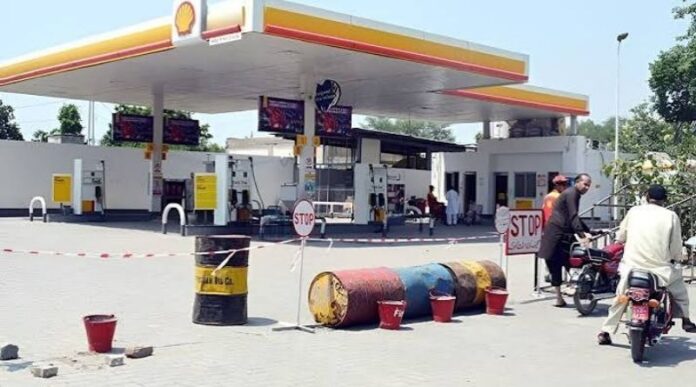

The government has shut down around 2,500 illegal petrol pumps across Pakistan as part of a major campaign against petroleum smuggling and the illegal sale and movement of fuel. The action is aimed at stopping the underground fuel business, improving government revenue, and bringing the country’s petroleum supply system under stronger control.
The development was shared during a weekly meeting on reforms in the Federal Board of Revenue (FBR), chaired by Prime Minister Shehbaz Sharif in Islamabad. Officials informed the meeting that modern technology was used to identify illegal petrol pumps, while action was also taken against the people running these outlets.
The government has made it clear that the campaign against fuel smuggling and illegal businesses will continue. At the same time, authorities are introducing digital systems to track the movement and sale of petroleum products more closely.
Major Crackdown Against Illegal Fuel Business
The closure of 2,500 illegal petrol pumps is being seen as a major step in Pakistan’s efforts to control petroleum smuggling. Illegal fuel businesses have been causing serious problems for the government, legal oil companies, and the country’s revenue system.
Petrol and diesel sold through illegal channels may enter the market without proper taxes, duties, licences, or official records. This can result in heavy losses for the national exchequer because the government does not receive the taxes and other charges that are normally collected on legally supplied petroleum products.
Legal petrol stations also face unfair competition when illegal outlets sell fuel outside the official system. This is why the government has been trying to identify such businesses and stop their operations.
According to officials, the latest operation was supported by modern technology. Authorities were able to locate illegal outlets and take action against them as part of a wider effort to control the movement of petroleum products.
The government has not only focused on shutting down illegal petrol pumps but has also taken legal action against their owners and operators.
Prime Minister Reviews FBR Reforms
The issue was discussed during a weekly meeting on FBR reforms chaired by Prime Minister Shehbaz Sharif. The meeting focused on different steps being taken to improve tax collection, strengthen law enforcement, and stop illegal economic activities.
Officials briefed the Prime Minister about the action taken against illegal petrol pumps and the use of technology to monitor the petroleum sector.
The government believes that stronger digital systems can help reduce smuggling and make it more difficult for illegal businesses to operate without being detected.
The Prime Minister was also updated about the progress of wider reforms in the FBR. Improving tax collection and reducing tax evasion remain important goals for the government.
Pakistan has been working to expand the use of technology in government departments. Digital systems are being introduced to reduce manual work, improve monitoring, and make important business activities easier to track.
The petroleum sector is one of the areas where digital monitoring can make a major difference.
Modern Technology Used to Identify Illegal Pumps
One of the most important parts of the government’s new plan is the use of technology to monitor petrol pumps and petroleum supplies.
Authorities informed the meeting that modern digital tools had helped in identifying illegal petrol stations across the country.
The government is now working to connect legally operating petrol pumps with digital monitoring systems. This will help authorities know where official fuel outlets are located and make it easier to identify businesses operating outside the legal system.
Technology can also help officials compare information from different sources. For example, authorities can monitor how much fuel is being transported, where it is going, and where it is eventually being sold.
If the movement of petroleum products does not match official records, authorities may be able to investigate the matter more quickly.
This type of monitoring is expected to make the fuel supply chain more organised and transparent.
GIS Tagging of Legal Petrol Pumps
A major part of the government’s plan is the use of Geographic Information System, or GIS, technology.
All legally operating petrol pumps are being linked through GIS tagging. This means their locations can be properly recorded and monitored through digital maps.
GIS tagging can help authorities create a complete record of legal fuel stations. Once such information is available in a central system, it may become easier to identify suspicious or unregistered petrol pumps.
The system can also help government departments understand where petrol stations are located and how the official fuel network is spread across different areas.
Illegal petrol pumps often operate outside the proper system. Some may not have the required licences, while others may be involved in selling smuggled fuel.
By creating better digital records of legal businesses, the government hopes to make it harder for illegal operators to hide.
The use of GIS technology is therefore an important part of the wider effort to improve control over petroleum products.
GPS Tracking of Petroleum Shipments
Another important step is the use of GPS tracking for petroleum shipments.
Fuel is transported across Pakistan through a large supply network. If the movement of fuel is not properly monitored, there is a risk that petroleum products may be diverted or moved through illegal channels.
GPS tracking can allow authorities to monitor the movement of fuel shipments from one location to another.
If a tanker or shipment moves away from its planned route, this can be detected through the tracking system. Such information can help authorities investigate possible illegal activity.
The government believes that better monitoring of petroleum transportation can reduce the chances of smuggled fuel entering the legal supply chain.
GPS systems can also make the movement of petroleum products more transparent. Instead of depending only on paper records, authorities can use digital information to monitor where fuel is being transported.
This can help improve control at different stages of the supply chain.
Oil Companies’ Systems Being Linked With Tracking Network
The government is also working to connect the Enterprise Resource Planning, or ERP, systems of oil marketing companies with the wider tracking system.
ERP systems are used by companies to manage important business information. In the petroleum sector, such systems can include records related to fuel supplies, transportation, sales, and other activities.
By connecting these systems with government monitoring tools, authorities may be able to get a clearer picture of how petroleum products move through the official supply chain.
The aim is to reduce gaps in information.
When different systems work separately, it can be more difficult to track fuel from the time it leaves a refinery or storage facility until it reaches a petrol pump.
A connected digital system can make it easier to follow this journey.
This may also help authorities identify unusual activity and take action before illegal fuel reaches the market.
New Tracking App for Law Enforcement Agencies
The government has also developed a central tracking application for law enforcement agencies.
The app will help relevant authorities monitor the movement of petroleum products and identify cases of illegal transportation.
Different government departments and law enforcement agencies are involved in controlling smuggling and illegal businesses. Better coordination between these departments can make operations more effective.
A central digital system may allow authorities to access important information more quickly.
Instead of depending on delayed reports, officials may be able to use real-time or updated information to monitor petroleum movement.
The tracking application is expected to support efforts against fuel smuggling and the illegal transportation of petroleum products.
It may also help authorities identify suspicious activity at an earlier stage.
The government is increasingly focusing on the use of technology to improve enforcement, and the petroleum sector is becoming an important part of this effort.
Stronger Control Over the Fuel Supply Chain
Apart from shutting down illegal petrol pumps, the government is continuing work on digital monitoring of petroleum product sales.
The main goal is to improve control over the complete fuel supply chain.
A supply chain includes every step involved in moving a product from its source to the final customer.
In the case of petrol and diesel, this includes production or import, storage, transportation, supply to oil companies, delivery to petrol pumps, and final sale to consumers.
If there is weak monitoring at any stage, illegal activities can take place.
Smuggled fuel may enter the market, official supplies may be diverted, or unregistered outlets may sell petroleum products without proper records.
The government wants to tighten controls at every important point.
Digital systems can help authorities compare transportation records with sales information. This can make it easier to find differences and investigate possible illegal activity.
Better monitoring may also support legal oil marketing companies by creating a more level business environment.
Action Against Smuggling to Continue
Prime Minister Shehbaz Sharif directed the relevant authorities to further speed up action against smuggling and illegal businesses.
He also stressed the need to complete FBR reforms as early as possible.
The government wants stronger institutions that can improve revenue collection and ensure that laws are properly enforced.
Smuggling remains a major challenge because it affects both the formal economy and government income.
When goods are brought into the country or sold through illegal channels, the government can lose money that should have been collected through taxes and duties.
The legal business sector can also suffer because companies following government rules may face competition from people who avoid taxes and other requirements.
The closure of illegal petrol pumps is therefore part of a wider campaign against the informal and illegal economy.
The government hopes that continued action and better technology will make the campaign more successful.
Importance of Digital Monitoring
The latest crackdown shows the growing importance of technology in Pakistan’s efforts to control illegal businesses.
Traditional methods of monitoring often depend heavily on physical inspections and manual records. These methods can be slow and may not always provide complete information.
Digital systems can improve the speed of monitoring.
GIS tagging can help identify the location of legal petrol pumps. GPS tracking can monitor the movement of fuel shipments. ERP integration can improve information sharing between companies and authorities. A central tracking application can support law enforcement agencies.
When these systems are used together, authorities can get a clearer view of the petroleum supply network.
This does not mean that physical inspections will no longer be needed. However, technology can help authorities decide where inspections and investigations are most necessary.
It can also make enforcement more organised and efficient.
What the Crackdown Means for Pakistan
The shutdown of 2,500 illegal petrol pumps sends a strong message that the government is taking fuel smuggling seriously.
The operation is also important because it combines physical action with digital monitoring.
Simply shutting down illegal businesses may not solve the problem permanently if new outlets continue to appear. For this reason, the government is trying to build systems that can identify and track illegal activity more quickly.
The long-term success of the campaign will depend on continued monitoring and strong coordination between government departments.
Authorities will also need to make sure that the new digital systems are properly used and regularly updated.
If the plan is implemented effectively, it could improve transparency in the petroleum sector and reduce opportunities for illegal fuel businesses.
It may also help the government collect more revenue and support legally operating petrol stations.
Conclusion
The closure of 2,500 illegal petrol pumps across Pakistan is a major development in the government’s campaign against petroleum smuggling and illegal fuel sales.
The action was discussed during a meeting on FBR reforms chaired by Prime Minister Shehbaz Sharif, where officials also presented new plans for digital monitoring of petroleum products.
The government is using modern technology, including GIS tagging of legal petrol pumps, GPS tracking of petroleum shipments, integration of oil companies’ digital systems, and a central tracking app for law enforcement agencies.
These measures are designed to improve control over the fuel supply chain and make it more difficult for illegal businesses to operate.
The Prime Minister has directed authorities to speed up action against smuggling and complete FBR reforms on time.
The government’s wider goal is to improve revenue collection, strengthen law enforcement, and bring more economic activity into the formal system.
The shutdown of illegal petrol pumps is an important step, but continued monitoring will be necessary to stop illegal fuel businesses from returning.
With stronger enforcement and effective use of technology, Pakistan hopes to build a more transparent and better-regulated petroleum sector while reducing the financial losses caused by smuggling and illegal trade.
Read Also: check