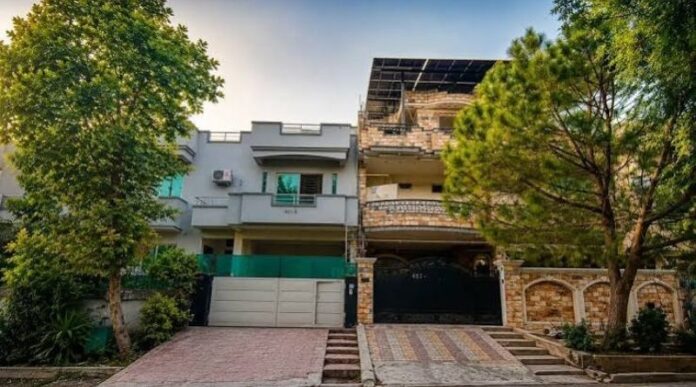

The Senate Standing Committee on Interior has directed the Capital Development Authority (CDA) to take strict action against illegal hostels operating in residential areas of Islamabad. The committee has raised serious concerns over the growing use of residential properties as hostels and called for such facilities to be removed where they are operating against the city’s rules.
The issue was discussed during a meeting of the Senate committee, where several matters related to Islamabad were reviewed. Along with illegal hostels, the meeting also covered the city’s water shortage, fire safety concerns, sewage entering Rawal Dam and other issues affecting residents.
The committee made it clear that residential areas should not be allowed to become commercial hostel zones without following the required rules and approvals. The CDA was asked to take action against properties being used as hostels in violation of regulations.
Senate Committee Wants Immediate Action
The chairman of the Senate Standing Committee on Interior called for immediate steps against illegal hostels operating in residential localities of Islamabad.
The committee expressed concern that some residential properties are being converted into hostels even though they may not have the required permissions. Such activity can change the nature of residential neighbourhoods and create problems for people living nearby.
Senator Dilawar Khan also raised the issue during the meeting. He pointed out that the CDA had previously assured the committee that action would be taken against illegal hostels.
The senator’s concern was mainly about the delay in taking practical steps. If the authority has already identified properties that are being used illegally, residents and lawmakers expect the matter to be handled without unnecessary delay.
The committee therefore again pushed the CDA to deal with the issue and make sure that residential areas are used according to the approved rules.
CDA Says Matter Is Before the Court
While responding to the committee, the CDA Chairman explained that the issue of illegal hostels is currently connected with proceedings before the Islamabad High Court.
He told the committee that the authority would f
Senate Panel Orders CDA to Shut Down Illegal Hostels in Islamabad
ollow the directions of the court and take action according to the final legal position.
The CDA Chairman also assured the committee that the authority would take full action, subject to the ongoing court proceedings.
This means that although the Senate committee wants action against illegal hostels, the CDA must also consider the legal process surrounding some of these properties.
The issue has been under discussion for some time. In 2025, the Islamabad High Court had already directed the CDA to take action against illegal guesthouses and hostels operating in residential areas. The court had also removed a stay that had earlier prevented the authority from taking enforcement action.
Why Illegal Hostels Are a Concern
The conversion of houses into hostels can create several problems for residential neighbourhoods.
A normal residential street is usually planned for families living in individual homes. When a house is turned into a hostel, a large number of people may start living in the same building. This can increase pressure on parking spaces, water supply, electricity and other services.
There can also be more movement of people and vehicles in streets that were designed for normal residential use. In some areas, this may create disturbance for nearby families.
Another concern is safety. Buildings used as hostels may have many residents but may not always have proper fire safety arrangements, emergency exits or other facilities required for larger groups of people.
This is why authorities need to check whether such properties meet the required rules before allowing them to operate.
Residential Areas Need Proper Planning
Islamabad was planned as a modern capital with separate areas for residential, commercial and other activities. The basic purpose of zoning rules is to make sure that different activities take place in suitable locations.
When residential houses are repeatedly converted into businesses without proper approval, it can put pressure on the original planning system.
The Senate committee’s decision reflects concerns that the problem should not be ignored. If one property is allowed to operate as an illegal hostel, other property owners may also start doing the same.
This can gradually change the character of an entire neighbourhood.
The CDA, therefore, has an important role in checking violations and making sure that the city’s rules are followed.
The authority itself lists demolition of illegal construction among the responsibilities of its engineering wing, showing that enforcement against unauthorised development is part of its official work.
Earlier Court Action Against Hostels
The latest Senate discussion is not the first time illegal hostels have become a major issue in Islamabad.
In October 2025, the Islamabad High Court dealt with petitions filed by owners of guesthouses and hostels. The court ordered the CDA to continue action against illegal establishments operating in residential areas.
The court also dismissed several petitions and removed the stay order that had previously stopped CDA enforcement.
During those proceedings, the CDA’s lawyer raised concerns about allegedly fake notifications that had been used in connection with the stay order. The court ultimately allowed the CDA to continue its action against illegal guesthouses and hostels.
The recent Senate committee discussion shows that the matter remains important even after the court proceedings.
Water Shortage Also Discussed
The Senate committee meeting was not limited to illegal hostels. Islamabad’s serious water shortage was also discussed.
According to the CDA Chairman, the capital needs around 250 million gallons of water every day. However, the city is currently facing a shortage of about 125 million gallons per day.
This is a major gap between demand and supply.
The CDA Chairman told the committee that the authority is working on different projects to improve the city’s water supply. Around 5 million gallons of water per day are currently being received from Rawal Dam.
Several dam projects are also under development with the involvement of different government organisations.
The completion of Shahdara Dam is expected to provide another 10 million gallons of water per day. The authority is also working on a new water supply line from Simly Dam.
According to the CDA, around 100 million gallons of water per day is currently being supplied through the Simly Dam system.
The authority has also requested the Punjab government to increase Islamabad’s share of water from Khanpur Dam.
Fire Safety Raises More Questions
Fire safety was another important matter discussed during the Senate meeting.
Senator Abid Sher Ali raised concerns about the availability of water for firefighting at the Pakistan Institute of Medical Sciences (PIMS).
He pointed out that there had been a shortage of water during firefighting operations. This raised questions about whether important public buildings have enough water and other facilities available to deal with emergencies.
The committee chairman asked when PIMS was last inspected for electrical and fire safety and when its latest safety certificate was issued.
The CDA Chairman told the committee that the last audit of PIMS had been conducted in September 2025.
The committee directed that the audit report should be presented before it for further review.
The issue is important because hospitals and other large public buildings have many people inside them every day. Any weakness in fire safety can put patients, visitors and staff at serious risk.
Sewage Entering Rawal Dam
The committee also discussed another major environmental concern involving Rawal Dam.
The CDA Chairman confirmed that sewage is entering the reservoir from several locations. He said sewage was coming into Rawal Dam from three or four points, including the Bani Gala area.
The situation is worrying because Rawal Dam is an important water source for Islamabad.
The entry of untreated sewage into a water reservoir can affect water quality and create health and environmental problems. It can also make water treatment more difficult and costly.
The committee therefore discussed the issue as part of the wider problems facing the capital.
The CDA Chairman also mentioned the E-11 nullah, describing it as one of the largest drains in the area. He said three or four buildings had been constructed in front of the drain.
Such construction can create serious problems for the flow of rainwater and sewage, especially during heavy rainfall.
Need for Stronger Enforcement
The discussion about illegal hostels also highlights a wider issue: rules are only useful when they are properly enforced.
Islamabad has zoning and building rules designed to control how land and buildings are used. However, when violations continue for long periods, residents may lose confidence in the system.
The Senate committee’s repeated instructions suggest that lawmakers want the CDA to improve enforcement and provide clear information about the action being taken.
The CDA will now have to balance enforcement with the legal proceedings connected to some hostel cases.
At the same time, owners of residential properties also need to understand that changing the use of a property without proper approval can create legal and civic problems.
What Could Happen Next?
The next step is expected to depend on the CDA’s enforcement process and directions from the Islamabad High Court.
The CDA Chairman has assured the committee that the authority will take action in line with court directions.
If illegal hostels are found to be operating without the required approvals, the CDA could take enforcement action against them. The exact action, however, will depend on the status of individual properties and applicable rules.
The Senate committee is also expected to continue monitoring the matter.
A detailed report on action against illegal hostels and guesthouses has previously been sought by the Senate committee, showing that the issue is being treated as an ongoing matter rather than a one-time discussion.
Residents Expect Relief
For people living in Islamabad’s residential sectors, the issue is closely linked to their daily lives.
Residents generally expect their streets to remain safe, peaceful and properly managed. Sudden changes in the use of houses can affect parking, traffic, water use, waste management and the overall environment of an area.
At the same time, students, workers and other people who depend on affordable hostel accommodation also need suitable places to live. Islamabad has many universities, offices and institutions, so there is naturally a demand for hostels.
The challenge for the authorities is to make sure that this demand is met through properly approved and safe facilities instead of allowing residential houses to be converted without following the rules.
This would help both residents and people looking for accommodation.
A Bigger Challenge for Islamabad
The illegal hostel issue is part of a larger challenge facing Islamabad. The capital is growing, and more people are coming to the city for education, jobs, business and other reasons.
As the population grows, the demand for housing and accommodation also increases.
If planning and enforcement do not keep pace with this growth, problems can develop in residential sectors. The same neighbourhoods can face pressure from traffic, parking, water shortages, waste and changes in land use.
That is why proper planning and enforcement are important for the long-term development of the capital.
The Senate committee’s latest direction puts the focus back on the CDA and its responsibility to enforce the city’s rules.
Conclusion
The Senate Standing Committee on Interior has directed the CDA to take action against illegal hostels operating in Islamabad’s residential areas. The committee has also expressed concern over other major issues, including water shortages, fire safety and sewage entering Rawal Dam.
The CDA has assured lawmakers that it will take action according to the directions of the Islamabad High Court. The matter is important because residential areas need to remain properly planned, safe and suitable for families.
At the same time, Islamabad needs enough legal and safe hostel facilities to meet the needs of students and workers.
The best solution is likely to be stronger enforcement combined with proper planning. Hostels that meet the required rules should be allowed to operate, while properties that are being used illegally should face action.
With the Senate committee continuing to monitor the situation, the CDA will now face greater pressure to show clear progress. For Islamabad residents, the hope is that stronger action will help protect residential neighbourhoods while also encouraging safer and properly approved accommodation facilities across the capital.
Read Also: check