
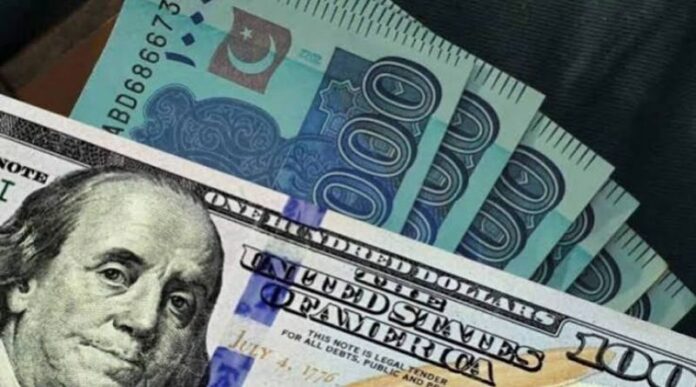

The Pakistani rupee is continuing to show strength against the US dollar, with the currency now moving closer to the Rs276 level. The latest improvement has attracted attention in Pakistan’s financial market, especially because the rupee has managed to stay on a positive trend for an extended period.
According to the latest market report, the Pakistani rupee closed higher against the US dollar for the 229th consecutive session. This long run of gains shows that the local currency has been able to maintain steady performance despite the many challenges faced by Pakistan’s economy.
The dollar was trading around the Rs277 level in the latest market data. A move toward Rs276 would mean another small but important improvement for the rupee. Current market forecasts also suggest that the dollar-to-rupee rate could remain close to the current range in the near term.
Rupee Continues Its Long Positive Run
One of the most notable parts of the latest development is the rupee’s continued positive performance. The local currency has now closed higher against the US dollar for 229 straight trading sessions.
For ordinary people, this may look like a small change in the exchange rate. However, even a difference of one or two rupees can be important for businesses, importers, overseas payments and people who regularly deal in foreign currency.
The rupee’s recent performance also gives some confidence to the market. A stable currency makes it easier for businesses to plan their payments and costs. It can also reduce some of the pressure created by imported goods and foreign payments.
The latest move is therefore being watched closely by traders, businesses and investors.
Dollar Rate Remains Around Rs277
The US dollar is currently trading close to Rs277 against the Pakistani rupee. Market data showed the USD/PKR rate at around 277.29 on August 31, with the dollar showing a small decline during the session. Trading Economics also reported that the pair had lost around 0.19 percent over the previous four weeks.
Another exchange-rate source showed a similar level, with the US dollar around Rs277.31 against the Pakistani rupee. These figures indicate that the market is currently staying within a fairly narrow range.
The difference between the interbank rate, open market rate and rates offered by different money exchange companies can still matter. People sending or receiving dollars may see slightly different rates depending on where they exchange their money.
Still, the broader picture is clear: the rupee has remained relatively stable around the Rs277 mark.
What Does Rs276 Mean for Pakistan?
A move to Rs276 against the dollar would not be a major change by itself. The difference is only about one rupee. However, the direction of the movement is important.
When the rupee becomes stronger, fewer rupees are needed to buy one US dollar. This can reduce the cost of imported products and services. Pakistan imports a large number of products, including fuel, machinery, electronics, chemicals, raw materials and other items.
A stronger rupee can therefore help businesses that depend on imported goods.
For example, if an importer has to pay a large dollar-based bill, even a small change in the exchange rate can affect the final cost in rupees. A lower dollar rate means the importer may need fewer rupees to make the same payment.
This does not mean that prices automatically fall whenever the rupee gains value. Many other factors affect prices, including international commodity prices, taxes, transport costs, local demand and business expenses.
However, currency stability can remove one source of pressure from the market.
Good News for Importers
Importers are among the groups that can benefit from a stronger rupee. Pakistani businesses often need US dollars to pay foreign suppliers.
When the dollar becomes cheaper in rupee terms, the cost of these payments can come down.
This is particularly important for companies that import machinery, industrial equipment and raw materials. Lower import costs can help businesses control their expenses and, in some cases, support lower prices for customers.
The impact can also reach smaller businesses. Many local companies use imported parts, packaging materials or other products in their operations. If their costs become more stable, they can plan their budgets more easily.
However, the final benefit depends on the size and duration of the rupee’s improvement.
Possible Impact on Fuel Prices
The exchange rate is also important for Pakistan’s fuel market. International oil is traded mainly in US dollars, which means Pakistan needs dollars to pay for many of its energy imports.
A weaker rupee can make these imports more expensive in local currency. On the other hand, a stronger rupee can reduce some of the exchange-rate pressure.
But fuel prices do not depend only on the dollar rate. International crude oil prices, government taxes, petroleum levies, transport costs and other factors also play a role.
Therefore, a move from Rs277 to Rs276 alone would not automatically mean a major reduction in petrol or diesel prices.
Still, if the rupee remains stable or strengthens over a longer period, it could provide some support to the overall cost of imports.
Benefits for Overseas Payments
A stronger rupee can also help people and businesses that make payments in foreign currencies.
Students studying abroad, companies paying foreign service providers and people making international purchases all need foreign currency. When the dollar becomes slightly cheaper, the rupee cost of those payments can decrease.
For example, a payment of $1,000 at Rs277 would cost about Rs277,000 before any bank or exchange charges. At Rs276, the same payment would cost about Rs276,000.
The difference is Rs1,000 on a $1,000 payment.
For a small payment, the difference may not matter much. But for large business transactions, the impact can become significant.
Remittances Remain Important
The exchange rate is also closely linked with overseas Pakistanis and the money they send home.
Remittances are an important source of foreign currency for Pakistan. Millions of Pakistanis working abroad send money to their families every year.
A stronger rupee can mean that families receive slightly fewer rupees when the same amount of dollars is converted into local currency. For example, someone sending $1,000 would receive fewer rupees at Rs276 than at Rs277.
This is one reason why currency movements have different effects on different groups.
Importers may welcome a stronger rupee because their dollar payments become cheaper. However, families receiving foreign currency may prefer a higher dollar rate because their remittances convert into more rupees.
Exporters Face a Different Situation
Pakistani exporters can also feel the impact of changes in the exchange rate.
Exporters receive payments from foreign buyers, often in dollars or other foreign currencies. When those dollars are converted into rupees, a stronger rupee means they receive fewer rupees for the same amount of foreign currency.
This can create some pressure on exporters, particularly if their costs inside Pakistan remain high.
However, a stable exchange rate can also help exporters because it makes financial planning easier. Sudden changes in the currency can create uncertainty for businesses involved in international trade.
For Pakistan, the ideal situation is not necessarily a rapidly rising or falling currency. A stable exchange rate can be more useful for long-term business planning.
Why the Rupee Has Remained Stable
Several factors can influence the rupee’s performance. These include foreign exchange reserves, imports, exports, remittances, international oil prices, government policies, interest rates and demand for dollars.
When the supply of dollars improves, pressure on the rupee can decrease. Strong remittance inflows and better foreign currency management can support the local currency.
At the same time, lower demand for dollars can also help.
Pakistan has been working to improve its external financial position and manage pressure on its foreign exchange market. These efforts can help keep the currency more stable compared with periods of heavy market pressure.
The recent long run of positive sessions suggests that market conditions have been more supportive for the rupee.
Stability Is More Important Than One-Day Gains
Although the move toward Rs276 is positive for the rupee, experts and businesses will likely be more interested in whether this trend can continue.
One day’s movement does not tell the full story.
Currencies move every day because of changes in global markets and local economic conditions. A currency can strengthen for several sessions and then lose some of those gains later.
This is why sustained stability is important.
If the rupee remains close to the Rs276-Rs277 range for an extended period, businesses may gain more confidence. Importers can plan their dollar payments more easily, while companies involved in international trade can prepare their budgets with greater certainty.
Current Forecasts Also Point to a Stable Range
Current market forecasts do not suggest a dramatic short-term change in the dollar-rupee rate. Trading Economics’ latest projection puts the USD/PKR rate around Rs277.225 by the end of the current quarter and around Rs273.408 over a one-year period.
These forecasts should not be treated as guaranteed future rates. Currency markets can change quickly when there are major economic, political or international developments.
Still, they show that the current market view is not focused on a sudden major fall in the rupee.
Instead, the currency appears to be moving within a relatively controlled range.
What Could Change the Situation?
Several developments could affect the rupee in the coming weeks and months.
A rise in global oil prices could increase Pakistan’s import bill and create more demand for dollars. This could put pressure on the rupee.
Higher demand for imports could have a similar effect.
On the other hand, stronger exports, higher remittances, improved foreign investment and better foreign exchange reserves could support the local currency.
Changes in global interest rates can also affect currency markets. If the US dollar becomes stronger globally, currencies in emerging markets can come under pressure.
Political and economic developments inside Pakistan can also influence investor confidence.
This means the rupee’s current strength should be viewed as part of a larger economic picture rather than as an isolated event.
What It Means for Ordinary Pakistanis
For ordinary citizens, the most important question is whether a stronger rupee will make daily life cheaper.
The answer is not immediate.
A stronger currency can reduce the cost of imported goods, but shops and companies do not always reduce prices as soon as exchange rates improve. Businesses may still be dealing with older stock purchased at higher rates.
Taxes, electricity costs, transport expenses, wages and international prices also affect the final price of products.
However, if the rupee remains stable for a long period, businesses can gradually benefit from more predictable costs. This may eventually support better price stability.
Consumers can therefore benefit more from long-term currency stability than from a small one-day gain.
A Positive Sign for the Economy
The rupee’s continued strength against the dollar is an encouraging development for Pakistan’s economy. Reaching the Rs276 level would represent another step in the currency’s recent positive movement.
The fact that the rupee has closed higher against the dollar for 229 consecutive sessions makes the latest development especially notable.
However, there is still a need for caution. Currency markets can change quickly, and several domestic and international factors can influence the rupee.
For now, the market is watching whether the local currency can move closer to Rs276 and, more importantly, whether it can remain stable around that level.
If the rupee continues to perform well, importers and businesses that depend on foreign payments could get some relief. A stable currency could also make financial planning easier and reduce some pressure from imported goods.
At the same time, exporters and families receiving overseas remittances may see different effects from a stronger rupee.
Overall, the latest movement is a positive sign, but the bigger goal for Pakistan should be a stable currency supported by stronger exports, healthy foreign exchange reserves, higher investment and better economic growth.
The move toward Rs276 may be only a small change on paper, but after years of major currency pressure, continued stability can be an important development for Pakistan’s economy.
Read Also: check