
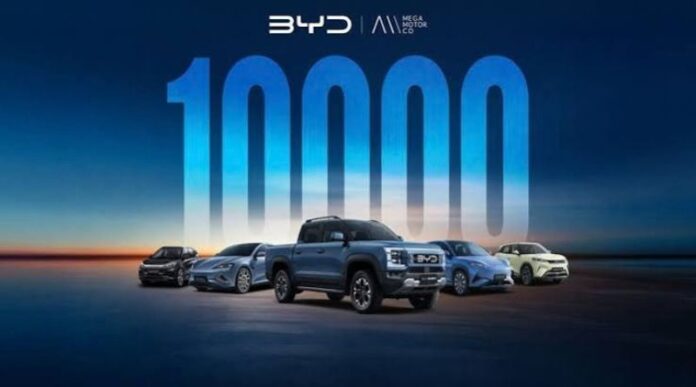

BYD-MMC has reached an important milestone in Pakistan by putting 10,000 vehicles on the country’s roads. The achievement shows that interest in electric and new-energy vehicles is growing among Pakistani consumers and that the company has made a strong start in the local auto market.
The milestone is also important for Pakistan’s electric vehicle industry, which is still developing. As more people look for vehicles that offer modern features, lower running costs, and better fuel efficiency, electric and hybrid cars are slowly becoming more visible on Pakistani roads.
BYD-MMC’s growing number of vehicles on the road reflects the changing choices of local car buyers. It also highlights the company’s efforts to build its presence in Pakistan and offer international vehicle technology to local customers.
BYD-MMC Completes Major 10,000-Vehicle Milestone
The arrival of the 10,000th BYD-MMC vehicle on Pakistani roads is a major achievement for the company. Reaching this number means that thousands of Pakistani customers have already selected vehicles offered through the BYD-MMC partnership.
For a market where electric vehicles are still relatively new, reaching 10,000 vehicles is a notable development. It suggests that consumers are becoming more comfortable with new vehicle technologies and are willing to consider alternatives to traditional petrol-powered cars.
The milestone also gives the company a larger presence in different parts of the country. Every vehicle sold adds to the growing number of electric and new-energy vehicles that people can see and experience on Pakistani roads.
This can help increase awareness about electric vehicles among other buyers who may still be unsure about switching from conventional cars.
Growing Interest in Electric Vehicles in Pakistan
Pakistan’s automobile market has traditionally been dominated by petrol and diesel vehicles. However, this situation is gradually changing.
High fuel costs have made vehicle running expenses an important concern for many Pakistani families. As petrol prices remain a major part of monthly household budgets, buyers are increasingly looking at vehicles that can reduce their daily fuel spending.
Electric vehicles have attracted attention because they do not use petrol in the same way as conventional cars. Depending on the model, driving habits, electricity rates, and charging arrangements, an electric vehicle can offer lower day-to-day running costs.
This has made EVs interesting for both private buyers and people who drive regularly in cities.
The arrival of more electric models has also given customers more choices. Instead of seeing electric vehicles as a limited or experimental option, many buyers are now considering them alongside traditional cars.
BYD’s Role in the Local Auto Market
BYD is a major name in the global new-energy vehicle industry. Its presence in Pakistan has brought more attention to electric and hybrid vehicle technology in the local market.
Through its partnership with Mega Motor Company, commonly known as MMC, the company has been working to establish its brand in Pakistan and introduce its vehicle range to local customers.
The 10,000-vehicle milestone indicates that the brand has moved beyond being a new name in the market. Thousands of vehicles now represent the company on Pakistani roads.
For customers, this growing road presence can also provide greater confidence. When a new vehicle brand has more cars operating in the country, potential buyers can more easily see the vehicles in real-world conditions and learn about the ownership experience from existing users.
Why the Milestone Matters for Pakistani Consumers
The 10,000-vehicle figure is more than just a sales number. It can also be seen as a sign of changing customer interest.
When new technology enters a market, customers often wait to see how it performs before making a purchase. They may have questions about battery life, charging, maintenance, spare parts, resale value, and long-term ownership.
As more vehicles are delivered, more customers gain direct experience with the technology.
This can help create a larger community of electric vehicle users in Pakistan. Existing owners can share their experiences with charging, driving range, maintenance, and daily use. Such information can be useful for people who are considering buying an EV for the first time.
Charging Infrastructure Remains Important
Despite the growing number of electric vehicles, charging infrastructure remains an important issue for Pakistan’s EV market.
For an electric vehicle to become a practical option for more people, customers need easy access to charging facilities. Home charging can work well for people who have suitable parking and electrical arrangements, but public charging stations are also important.
Drivers who travel between cities need reliable charging options along major roads and at important locations.
The growth of BYD-MMC vehicles could increase demand for more charging facilities. As the number of electric vehicles rises, businesses and service providers may have greater reasons to invest in charging stations.
A larger charging network would make EV ownership easier and could encourage more people to consider switching from petrol-powered vehicles.
New Technology Attracts Local Buyers
Modern electric and hybrid vehicles are not only about fuel savings. They also come with many technology features that attract customers.
New-generation vehicles often offer modern dashboards, connected features, safety systems, digital controls, advanced driver assistance features, and improved cabin designs.
These features have changed what customers expect from a vehicle.
Pakistani consumers, especially younger buyers, are increasingly interested in technology. Smartphones, digital payments, smart devices, and connected services have become part of everyday life. This interest is also influencing vehicle buying decisions.
As a result, technology-focused cars are gaining attention in the local market.
BYD’s international experience in electric vehicle technology gives it an opportunity to compete in this changing environment.
Electric Vehicles and Fuel Costs
Fuel prices remain one of the biggest concerns for Pakistani vehicle owners. Petrol and diesel costs directly affect the monthly expenses of people who use their cars regularly.
Electric vehicles offer a different approach to vehicle running costs because they use electricity instead of conventional fuel.
The actual cost of charging depends on electricity rates, the vehicle’s battery size, driving conditions, and how often the car is used. However, the possibility of reducing dependence on petrol is one of the reasons EVs have attracted attention in Pakistan.
For people who drive mostly within cities, an electric vehicle may be particularly interesting because daily travel can often be planned around home or workplace charging.
However, buyers still need to consider the full cost of ownership, including purchase price, insurance, charging arrangements, maintenance, and resale value.
More Competition Could Benefit the Market
The arrival of more international EV brands could increase competition in Pakistan’s automobile industry.
Competition can encourage companies to improve their products, services, pricing, warranties, customer support, and after-sales facilities.
For consumers, a wider selection of vehicles means they can compare different models according to their budget and needs.
As the EV market develops, buyers may see more choices across different price ranges. Companies will also need to understand local driving conditions and customer expectations.
The 10,000-vehicle milestone achieved by BYD-MMC could therefore be part of a larger change in Pakistan’s auto industry.
Importance of After-Sales Service
For any new vehicle brand, after-sales support is extremely important. Customers want to know that they will be able to get maintenance, repairs, software support, and replacement parts when needed.
This becomes even more important for electric vehicles because their technology is different from conventional petrol cars.
Battery systems, electric motors, charging equipment, and electronic systems require trained technicians and proper service facilities.
As BYD-MMC’s vehicle numbers increase, maintaining a strong after-sales network will be important. Customers are more likely to feel comfortable with EV ownership when they know that professional support is available.
A growing customer base can also encourage the company to expand its service network and improve its support across major cities.
What the 10,000 Figure Says About Pakistan’s EV Market
The 10,000-vehicle milestone provides a useful look at how the Pakistani automobile market is changing.
It does not mean that electric vehicles have replaced petrol cars. Conventional vehicles still make up a large part of the market. However, the growing number of EVs shows that customer interest in alternative vehicle technology is increasing.
Pakistan has several challenges that can affect EV growth, including electricity supply, charging infrastructure, vehicle prices, taxes, import policies, and financing options.
At the same time, the country has a large population and major urban centres where electric vehicles could have strong potential.
Cities with heavy daily traffic and large numbers of private vehicles may offer an important market for EV companies.
The Road Ahead for BYD-MMC
With 10,000 vehicles now on Pakistani roads, the next challenge for BYD-MMC will be maintaining this momentum.
The company will need to continue focusing on product quality, customer service, vehicle availability, charging support, and competitive pricing.
Customers will also be watching how existing vehicles perform over the long term. Their experiences can have a major impact on future buying decisions.
If current owners have positive experiences, more people may become interested in electric vehicles. On the other hand, issues related to charging, maintenance, battery performance, or spare parts could affect customer confidence.
This makes the ownership experience just as important as the initial vehicle sale.
Pakistan’s Auto Industry Is Entering a New Phase
Pakistan’s automobile industry is going through a period of change. New brands, new technologies, and changing customer expectations are creating a more competitive market.
Electric and hybrid vehicles are becoming a bigger part of discussions about the future of transportation.
The BYD-MMC milestone comes at a time when Pakistani consumers are paying more attention to fuel costs, vehicle technology, safety, comfort, and running expenses.
As more electric vehicles enter the country, customers will have more opportunities to compare them with conventional cars.
The growth of EVs could also create new business opportunities in areas such as charging stations, battery services, vehicle software, maintenance, and related technology.
A Significant Step for Electric Mobility
Putting 10,000 BYD-MMC vehicles on Pakistani roads is an important step for the company and for the country’s developing electric vehicle market.
The milestone shows that there is already a customer base for new-energy vehicles in Pakistan. It also highlights the growing interest in modern vehicle technology and alternatives to traditional petrol-powered cars.
However, the future growth of electric vehicles will depend on several factors. Better charging infrastructure, suitable government policies, competitive prices, financing options, reliable after-sales service, and customer confidence will all play an important role.
For now, the 10,000-vehicle milestone gives BYD-MMC a stronger position in Pakistan’s changing automobile market. As more people see these vehicles on the roads and learn about their ownership experience, electric mobility is likely to become a more familiar part of everyday transportation in the country.
The achievement is therefore not only a milestone for BYD-MMC. It is also another sign that Pakistan’s automobile market is gradually opening up to electric and new-energy vehicle technology.
Read Also: check


