
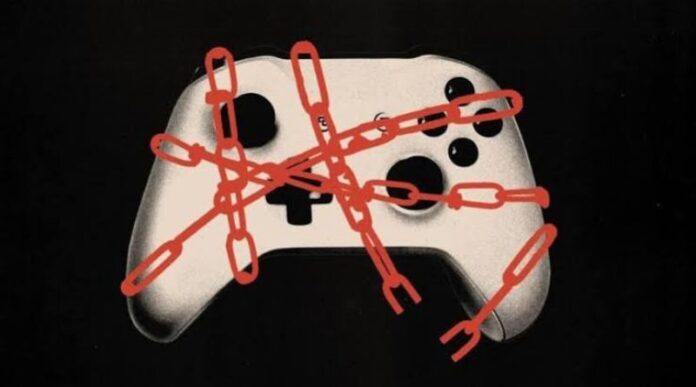

Artificial intelligence (AI) is changing the gaming industry in many ways. It is helping developers write code, create game characters, improve graphics, and complete technical tasks more quickly. However, the same technology is also creating new problems for people who work to protect and preserve video games. One recent example is the growing concern over AI-powered game decompilation, which has become easier and faster with modern AI tools.
A community that has spent years working on game decompilation has reportedly decided to shut down because of the changes brought by AI. The development has raised important questions about game ownership, copyright, software preservation, and the future of communities that study how games work.
For many years, game decompilation required strong programming skills, patience, and a deep understanding of how software operates. People often spent months or even years studying a game’s code and trying to rebuild its original structure. Today, AI tools can help automate parts of this work, reducing the time and effort needed to understand complex software.
While this progress may appear useful to developers and gaming fans, it also creates serious concerns. When technical barriers become lower, more people can copy, study, or reproduce software without fully understanding the legal and ethical limits involved.
What Is Game Decompilation?
Game decompilation is the process of studying compiled game software and trying to turn it back into a form that is easier for people to understand. When developers create a video game, they normally write code using programming languages. That code is then processed into a form that computers or gaming devices can run.
The final software does not usually contain the original source code in its complete, readable form. This makes it difficult for outsiders to understand exactly how the game was built.
Decompilation attempts to recover some of that structure. It can help researchers understand how a game works, identify its internal systems, and examine the logic behind its features.
Game decompilation is not always the same as recovering the original source code. Some information may be missing, and the recovered code may look very different from what the developers originally wrote. Even so, the process can provide enough information to rebuild parts of a game or create a version that behaves in a similar way.
Gaming communities have used these methods for several reasons. Some people want to preserve old games that are no longer supported. Others want to fix technical problems, improve compatibility with modern computers, or learn how classic titles were designed.
However, decompilation can also be used in ways that raise copyright and ownership concerns, particularly when people reproduce protected software or share copies without permission.
Why Game Decompilation Takes So Much Time
Traditional game decompilation is a difficult technical task. A person cannot simply open a game file and expect to find all the original code neatly arranged in folders.
Instead, researchers often need to study machine instructions, identify functions, understand data structures, and work out how different parts of the software communicate with each other.
They may also need to compare the game’s behaviour with the code they have recovered. If something does not work as expected, they must investigate the problem and make corrections.
This work requires knowledge of programming, computer architecture, memory management, and debugging tools. Even experienced developers can face major challenges when dealing with large games.
Another difficulty is that different games use different engines, programming methods, and file formats. A technique that works for one title may not work for another.
For this reason, game decompilation communities have traditionally depended on people who are willing to spend long hours studying technical details. Their progress often comes from teamwork, shared research, and the gradual development of specialised tools.
AI is now changing this process by helping people complete some of these tasks much more quickly.
How AI Has Changed the Decompilation Process
AI has made many programming tasks easier, and game decompilation is now another area affected by this change. Newer AI models can follow complex instructions, examine large amounts of code, use technical documents, and help developers recreate software structures.
According to reports, newer models such as GPT-5.4 and Claude Opus 4.6 had already shown progress in this field earlier in 2026. The developer community behind decomp.dev said these tools had become much more effective at working with existing decompilation projects.
AI can help identify functions, suggest code, explain confusing instructions, and make corrections. It can also use information from existing documentation and compare different parts of a project to understand how they fit together.
This does not mean every game can be perfectly decompiled with one click. Human guidance, testing, code reviews, and technical knowledge can still be important. However, AI has reduced the amount of manual work needed for some projects.
As a result, tasks that once required a team of volunteers working for years may now be completed much faster. This is a major change for a community that was built around slow, careful progress.
Why decomp.dev Is Shutting Down
The main platform affected by this development is decomp.dev, a website created to track progress on video game decompilation projects.
The website gave developers and gaming enthusiasts a central place to follow projects, share progress, and see how much work remained before a game could be fully reconstructed. It also helped people discover projects and understand the amount of effort involved.
For many participants, the website was more than a list of projects. It represented the combined work of people who shared their knowledge and spent their free time solving difficult programming problems.
However, the growing use of AI has changed the nature of these projects. According to the site’s administrator, known online as Encounter, it has become increasingly difficult to tell which projects are mainly driven by human effort and which rely heavily on AI-generated work.
The administrator announced that the public project index and leaderboard would be shut down because they were no longer serving their original purpose.
The decision does not necessarily mean that every game decompilation project will end. Instead, it means the central website will no longer operate as the public tracking point it once was.
The administrator’s main concern is that the community has lost part of what made it valuable: shared learning, meaningful contributions, and recognition for people who put in years of work.
AI-Generated Projects Are Creating New Problems
One of the biggest concerns is the growing number of projects that use AI to complete work started by other developers.
In some cases, people create copies, known as forks, of existing projects and then use AI tools to finish large parts of the work. They may publish their versions without making useful contributions to the original project or following the original team’s rules.
This can create frustration for people who have spent years carefully rebuilding a game’s code.
Different teams also have different views on AI. Some welcome AI assistance, while others prefer traditional methods or do not want AI-generated code included in their projects. Some may accept AI for specific tasks but still expect every contribution to be reviewed properly.
Problems arise when outside developers ignore these preferences and use another team’s work as a shortcut to produce their own results.
The original contributors may receive little recognition, while the new project receives attention for reaching completion quickly. This can make it harder for volunteers to see the value of continuing their work.
The problem is not simply that AI can write code. It is also about how people use the work, tools, and knowledge that others have shared.
The Race to Release PC Game Ports
Another concern is the growing rush to bring older console games to PC.
A game port is a version of a game adapted to run on a different platform. For example, a game originally designed for an older console might be modified to work on a modern computer.
AI-assisted decompilation can make this process easier by helping developers understand the original game and recreate parts of its code. This opens new possibilities for players who want to enjoy older titles on modern devices.
However, some developers are now racing to release ports as quickly as possible, sometimes using decompilation work produced by other people.
A project may appear complete because it launches and runs basic gameplay, but that does not automatically mean it is reliable or fully developed. It may still have bugs, missing features, performance problems, or other issues that need attention.
Careful decompilation is not only about making a game run. It can also involve understanding how the original software works, documenting its behaviour, testing the code, and making sure the reconstructed version matches the original as closely as possible.
When speed becomes the main goal, these important steps can receive less attention.
This has created tension between people who value careful technical work and those who mainly want to release a working game port.
Why Human Effort Still Matters
AI can speed up technical work, but experienced developers still bring important skills to a project.
They understand why a particular solution is needed, how different parts of a game interact, and what problems may appear when code is changed. They can also judge whether AI-generated code is correct, safe, and easy to maintain.
Human contributors often discover details that go beyond the code itself. They may uncover hidden game features, study how an old engine works, document unusual programming choices, or explain why a particular system behaves in a certain way.
These discoveries can be valuable even when they do not immediately lead to a finished PC port.
For some enthusiasts, the challenge is the main attraction. They enjoy solving difficult problems, learning new skills, and working with people who share the same interest.
When AI takes over much of the difficult work, the experience can change. Projects may reach their targets faster, but participants may lose some of the opportunities to learn and develop their own skills.
This is one reason the decomp.dev shutdown has attracted attention beyond its own community. It shows how a technology that makes work easier can also weaken the social side of an activity.
What This Means for Game Preservation
Game preservation is one of the most important reasons people study older software.
Many classic games were created for hardware that is no longer widely available. Over time, consoles become harder to repair, original accessories disappear, and official support may end.
Decompilation can help researchers understand old games and make them easier to study or adapt for modern systems. It can also support research into how games were developed and how their internal systems worked.
AI could make some preservation tasks faster and help smaller teams work on projects that would otherwise be too difficult.
However, preserving a game involves more than producing code that runs. Researchers may need to document how the game works, maintain accurate records, test different versions, and make sure their work follows relevant copyright rules.
The closure of decomp.dev does not mean that game preservation has stopped. Individual projects and other communities may continue their work. The bigger question is how they will organise themselves in a world where AI can produce results much faster than before.
Some teams may introduce clear rules about AI use, while others may focus more on documentation, testing, and the quality of contributions.
Copyright and Ethical Questions
The growing use of AI in game decompilation also raises questions about copyright.
A person who studies software does not automatically gain permission to distribute copyrighted game code or share protected game files. The rules can vary depending on the country, the type of work, and the actions involved.
Similarly, creating a port or a reconstructed version does not automatically make every part of the process legal. Developers should understand the rights attached to the original game and avoid sharing material they are not allowed to distribute.
AI tools make it easier for more people to enter this field, but they do not remove these responsibilities.
Communities also need to consider the rights and preferences of their contributors. Respecting project rules, giving credit, reviewing changes, and sharing useful improvements can help maintain trust between developers.
Without these practices, the technology may increase the number of projects while reducing cooperation and confidence among the people working on them.
What Happens Next?
The closure of decomp.dev highlights a difficult choice for communities built around specialist technical skills. AI can help people complete complex tasks faster, but it can also make old ways of measuring progress less meaningful.
For years, the time and effort needed to reconstruct a game helped distinguish serious projects from quick experiments. Now, AI-assisted work can move much faster, making it harder to judge a project’s progress by completion figures alone.
Communities may need new ways to recognise meaningful contributions. They could place greater importance on code quality, clear documentation, testing, responsible use of existing work, and cooperation between contributors.
The technology itself is unlikely to disappear. As AI models continue to improve, more people may try decompilation, software research, and game porting. This could bring fresh ideas and help preserve games that might otherwise become difficult to access.
The challenge will be making sure that this progress does not come at the cost of the communities that helped build the field.
Conclusion
AI has made game decompilation faster and more accessible, but its growing use has created serious challenges for the people involved. The decision to shut down decomp.dev’s public index and leaderboard reflects concerns about copied projects, rushed PC ports, and the difficulty of separating human-led work from AI-assisted results.
The development does not mean AI is always harmful or that game decompilation has come to an end. Instead, it shows that powerful tools can change the culture of a community as much as they change the technical work.
The future of game preservation will depend on finding a balance between speed, quality, respect for original contributors, and responsible use of AI. Making software easier to recreate is useful, but maintaining the knowledge and cooperation behind that work remains important.
Frequently Asked Questions (FAQs)
1. Why is decomp.dev shutting down?
The website’s administrator said AI-assisted projects had disrupted the community, making it difficult to track meaningful progress and distinguish human-led projects from work produced mainly with AI.
2. What is game decompilation?
Game decompilation is the process of examining compiled game software and reconstructing code that is easier to understand. It can support research, preservation, and some types of game porting.
3. How does AI help with game decompilation?
AI can help developers understand code, identify functions, write replacement code, use technical documentation, and solve programming problems. Human guidance and testing may still be needed.
4. Does the closure mean all game decompilation projects are ending?
No. The decision concerns decomp.dev’s public index and leaderboard. Individual projects and other communities may continue their work independently.
5. Why are developers concerned about AI-generated game ports?
Some developers believe people are using AI to finish copies of existing projects without making meaningful contributions. Others are concerned that rushing to release ports can reduce code quality and weaken cooperation.
6. Is game decompilation legal?
Its legal status depends on the circumstances and applicable laws. Studying software does not automatically grant permission to distribute copyrighted code or game files. Developers should understand the relevant rules before sharing their work.
Read Also: check


