
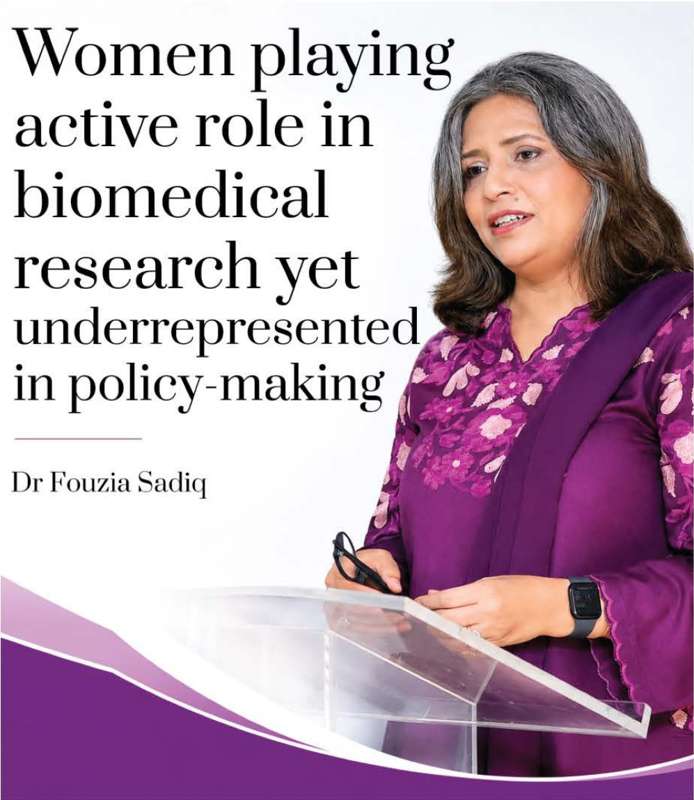

Dr. Fouzia Sadiq has an extensive and varied background in academia, research, and industry. Her work is motivated by a deep dedication to enhancing scientific knowledge and bettering healthcare results.
Here is a Q&A session featuring Dr. Fouzia Sadiq conducted by Flare.
Flare: What inspired you to specialise in molecular physiology, and how has your academic journey shaped your research?
Dr Fouzia Sadiq: My interest began in college when I learned that genetically engineered bacteria could produce human insulin. This sparked my curiosity about the molecular mechanisms of life.
I studied biological sciences at the University of the Punjab, Lahore, followed by an MRes in Biomolecular Sciences at the University of York, UK, and a PhD at the University of Aberdeen. My doctoral research examined skeletal muscle regulation and muscle wasting associated with diabetes, ageing, cancer, sepsis and prolonged bed rest, including the role of dietary amino acids in preserving muscle function.
During nearly 15 years at Imperial College London, I expanded into translational research and antiviral drug discovery. My focus remains on translating scientific discoveries into practical healthcare solutions, including treatments, diagnostics and medical devices.
Flare: Which areas of research have been most significant to you, and why?
Dr Fouzia Sadiq: My research has explored the molecular mechanisms underlying human health and disease, particularly skeletal muscle regulation, muscle wasting and metabolic disorders.
During my first postdoctoral position, I investigated proteins regulating brown adipose tissue and their potential to address obesity and related conditions. Later, at Imperial College London, I worked on translational research, including antiviral drug discovery.
More recently, my interests have expanded into molecular biology, physiology, neuroscience and psychology, particularly the biological mechanisms influencing mental health, addiction and behaviour. Across these areas, my goal is to translate scientific knowledge into interventions that improve health and quality of life.
Flare: How can molecular physiology help address Pakistan’s major health challenges?
Dr Fouzia Sadiq: Molecular physiology can help Pakistan tackle non-communicable diseases, including diabetes, cardiovascular disease and obesity, by supporting earlier diagnosis, targeted treatment and better patient outcomes.
I serve as National Lead Investigator for the Familial Hypercholesterolaemia Studies Collaboration (FHSC), involving the European Atherosclerosis Society and Imperial College London. Familial hypercholesterolaemia (FH) is an inherited condition that causes very high cholesterol and increases the risk of premature heart attacks. Working with collaborators in Slovenia and other international partners, we are facilitating genetic screening of patients and their immediate families. Early diagnosis enables timely monitoring, preventive measures and treatment before serious complications develop.
More broadly, identifying disease-causing genetic variants can explain susceptibility to illness and reveal targets for new therapies, strengthening prevention and treatment in Pakistan.
Flare: What are the biggest gaps in Pakistan’s biomedical and life-sciences research?
Dr Fouzia Sadiq: A major gap is the limited affordability of molecular diagnostics and genetic screening. Next-generation sequencing can cost several hundred thousand rupees per patient, putting it beyond the reach of many families despite its potential to support early diagnosis and preventive treatment. Pakistan also has advanced research facilities, but inadequate funding for reagents, consumables and specialised kits often leaves equipment underused. Limited, inconsistent research funding further restricts long-term projects, scientific training and collaboration.
Expanding affordable genetic testing, improving laboratory access and providing sustained research funding would strengthen healthcare and Pakistan’s contribution to scientific discovery. Genetic research can also identify disease mechanisms, therapeutic targets and opportunities for personalised treatment.
Flare: What challenges do Pakistani scientists, particularly women, face in research funding, infrastructure and career development?
Dr Fouzia Sadiq: Limited research funding remains a major obstacle. Pakistan could benefit from a coordinated framework similar to the UK’s UK Research and Innovation (UKRI) model to improve transparency, align priorities and reduce administrative duplication. Although some institutions have advanced equipment, access and funding for essential consumables remain inadequate. Shared facilities and better operational support could help researchers make fuller use of existing infrastructure.
Women are increasingly active in biomedical research, but remain underrepresented in senior academic, administrative and policy-making roles. Despite these challenges, Pakistan has considerable scientific talent. Greater investment, accessible facilities and stronger career-development opportunities, particularly for women and early-career researchers, could significantly strengthen the country’s research capacity.
Flare: How important are international research collaborations, and which partnerships would benefit Pakistani scientists most?
Dr Fouzia Sadiq: International collaboration provides access to expertise, technology and resources while strengthening Pakistan’s role in global science. Without participation in international networks, the health challenges of low- and middle-income countries risk being overlooked.
My involvement in the FHSC, an initiative of the European Atherosclerosis Society involving researchers and clinicians from 74 countries, demonstrates the value of such partnerships. They enable comparisons across populations and highlight disparities in diagnosis, genetic testing and treatment.
Future collaborations should extend beyond data collection to include joint research, researcher exchanges, shared facilities, funding, technology transfer and capacity building. Pakistani scientists must also have meaningful roles in setting research priorities. Partnerships based on mutual respect and shared goals can advance science and reduce health inequalities.
Flare: What reforms are needed in Pakistan’s science and higher-education policies?
Dr Fouzia Sadiq: Pakistan needs sustained, predictable research funding aligned with national priorities. A coordinated framework modelled on the UK’s UKRI, shared research facilities and performance measures beyond publications could improve efficiency and societal impact. Learning from countries such as South Korea, Singapore, China and Saudi Arabia, Pakistan should strengthen research infrastructure, develop scientific talent and expand international collaborations.
Flare: What advice would you give young scientists and researchers beginning their careers in Pakistan?
Dr Fouzia Sadiq: My advice is simple: stay curious, work hard and remain focused. Scientific careers require persistence, discipline and a genuine passion for discovery. Seek good mentors, remain patient and learn from setbacks. Failed experiments, rejected papers and unsuccessful funding applications are part of research; resilience is as important as intelligence.
Build collaborations, attend conferences and learn across disciplines, as many discoveries emerge where different fields intersect. Above all, remember that science should deepen our understanding of the world and serve humanity. Keep learning, pursue meaningful work and remain grounded. Pakistan needs the talent and ideas of its young scientists more than ever.
Source: Flare Magazine, November 2026