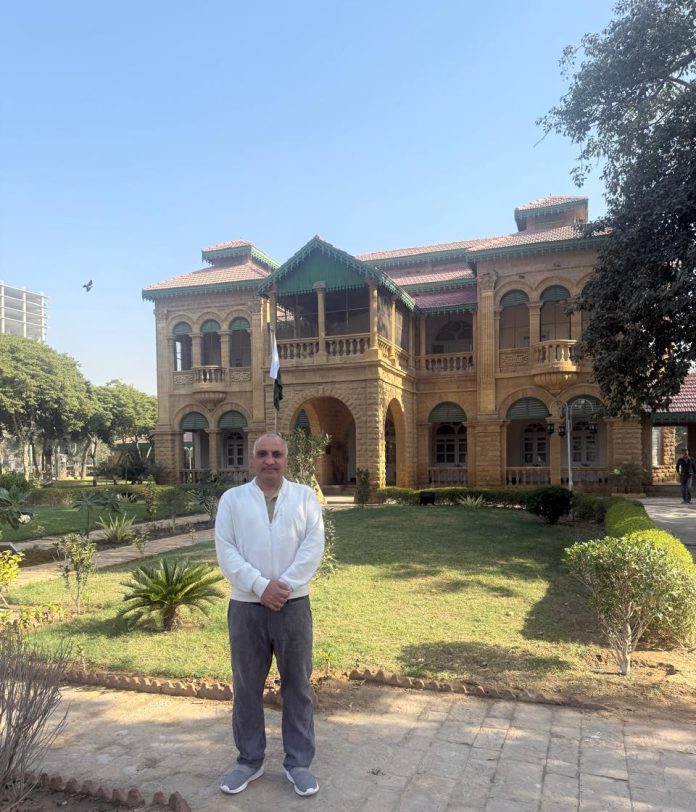

Last week, I had the opportunity to visit Quaid-e-Azam House Museum, historically known as Flagstaff House, located on M.A. Jinnah Road, Karachi. This is not merely a heritage building. It is the personal residence of Quaid-e-Azam Muhammad Ali Jinnah, the Founder of Pakistan, where he spent the final and most decisive years of his life. His sister, Mohtarma Fatima Jinnah, also lived here for a significant period, continuing her national role with dignity and resolve.

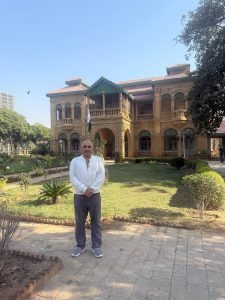
Walking through this residence feels like stepping into the formative chapters of Pakistan’s creation. These chapters were written not in luxury, but through discipline, sacrifice, and unwavering vision.
Architecture and Surroundings
Built during the British colonial era, the limestone structure reflects classical colonial architecture. Wide verandas, high ceilings, arched corridors, and a balanced symmetrical design define the building. Today, the house stands within a highly secured zone, surrounded by major hotels, sensitive installations, and visible security arrangements.
Despite its strategic location and immense national importance, the site remains surprisingly disconnected from active tourism and public engagement.
Inside the Museum: History Preserved in Silence
Quaid-e-Azam’s Personal Belongings
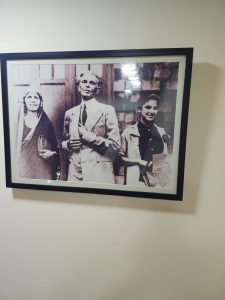
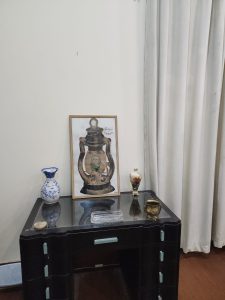
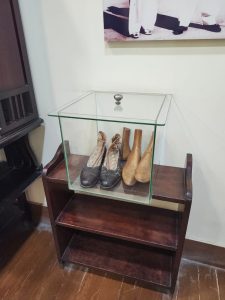
Inside the museum, several personal items of Quaid-e-Azam are preserved, including his shoes, photographs, and daily-use belongings. These artifacts strongly reflect the simplicity and discipline of a leader who founded a nation yet lived without extravagance.
Drawing Room and Living Areas
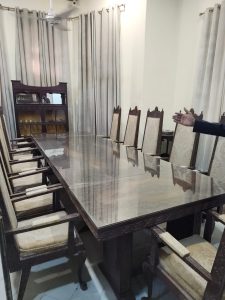
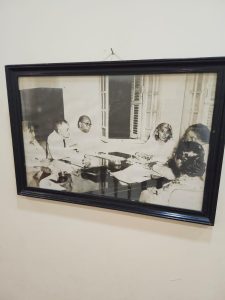
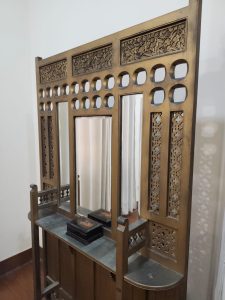
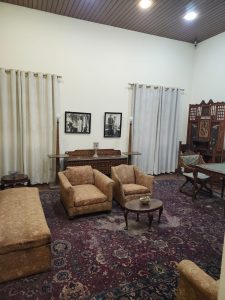
The drawing room and adjoining spaces offer a glimpse into the environment where important meetings and discussions may have taken place. The calm, restrained atmosphere of these rooms mirrors Quaid-e-Azam’s personality: measured, focused, and principled.
Mohtarma Fatima Jinnah’s Presence
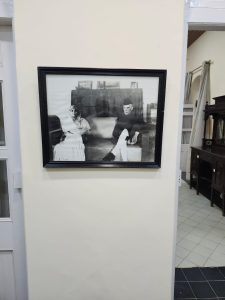
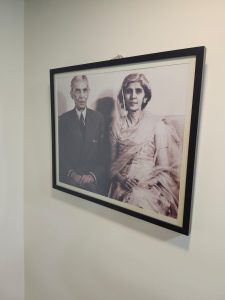
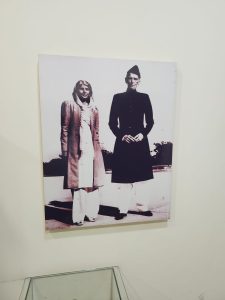
Photographs of Quaid-e-Azam with Mohtarma Fatima Jinnah remind visitors that the creation of Pakistan was supported by quiet strength, moral clarity, and steadfast family support.
Study and Reflection
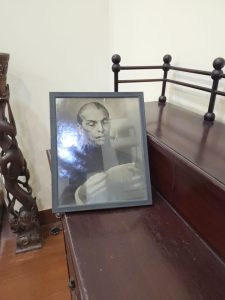
A photograph of Quaid-e-Azam reading during his later years captures a leader who remained intellectually engaged despite illness. It serves as a powerful lesson in commitment to purpose and national responsibility.
Historic Vehicles
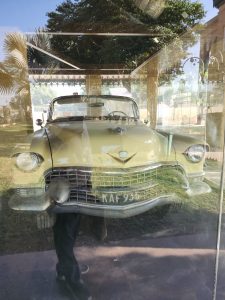
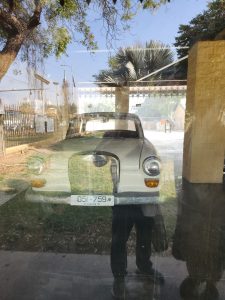
Within the museum grounds, Quaid-e-Azam’s classic cars are preserved under protective enclosures. These vehicles stand as silent witnesses to the early journeys of Pakistan’s leadership and the formative days of the new state.
A Troubling Absence
One of the most striking aspects of the visit was the absence of visitors.
Despite being surrounded by major hotels and heavy security, there were no visible local or foreign tourists. Even more concerning was the complete lack of basic tourism support, including:
- Tourist information desks
- Informational brochures in nearby hotels
- Clear signage identifying the building as the residence of the Founder of Pakistan
A foreign tourist could stay across the road and leave Karachi without ever realizing they were just steps away from one of Pakistan’s most important national landmarks.
An Important Observation: Video Restrictions Without Clarity
During the visit, when asked whether photography or video recording was allowed, the museum guide stated that photographs were permitted, but video recording was not. No written policy, signage, or official explanation was provided.
In an era shaped by digital storytelling and visual documentation, such restrictions are difficult to justify. Across the world, historic sites actively encourage visitors to record and share their experiences to promote heritage and national identity.
Ironically, while all forms of content circulate freely on social media, documenting the residence of the Founder of Pakistan appears discouraged. This reflects an outdated bureaucratic mindset that prioritizes control over communication.
Conclusion: A National Monument That Deserves More
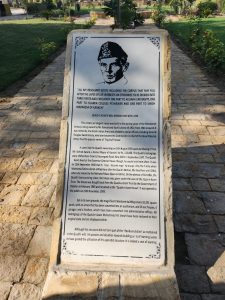
Quaid-e-Azam House is not just a historic structure. It is a symbol of Pakistan’s birth, ideology, and leadership. It represents the values upon which this country was founded.
Yet today, this extraordinary landmark stands under-promoted, under-communicated, and largely invisible to the world. This is not merely an administrative gap. It is a failure of national storytelling.
Recommendations
1. Tourism Integration
Nearby hotels should be required to clearly display information stating:
“This is the residence of Quaid-e-Azam Muhammad Ali Jinnah, Founder of Pakistan.”
2. Professional Tour Guides
The museum should employ educated, trained, uniformed civilian tour guides with strong communication skills and sound historical knowledge.
3. Digital and Media Access
Photography and video recording should be clearly allowed and encouraged under a transparent, written policy.
4. National and International Promotion
Pakistan’s airports, airlines, and civil aviation authorities should actively promote Quaid-e-Azam House as a must-visit national heritage site.
5. Educational and Free Access
The site should be positioned as an accessible heritage destination for students, researchers, and international visitors.
Final Words
If Pakistan truly wishes to honor its Founder, it must go beyond preserving walls and furniture. It must tell the story clearly, confidently, and globally.
Quaid-e-Azam House should not remain a silent building guarded only by security. It should stand as a living symbol of Pakistan’s creation, proudly shared with the world.
Written and Reported By
Zubair Ahmed Kasuri
Editor-in-Chief, Flare Magazine Pakistan
Zubair Ahmed Kasuri is a senior Pakistani journalist and media entrepreneur with over two decades of experience in print, digital, and broadcast journalism. He is the Editor-in-Chief of Flare Magazine Pakistan, a long-running publication focusing on business, technology, telecom, and national affairs.
He is also the founder of a major FM radio network in Pakistan, contributing significantly to regional broadcasting, community awareness, and public discourse. Known for his investigative reporting and policy-focused journalism, he has consistently highlighted issues related to governance, national institutions, and Pakistan’s historical identity for both local and international audiences.