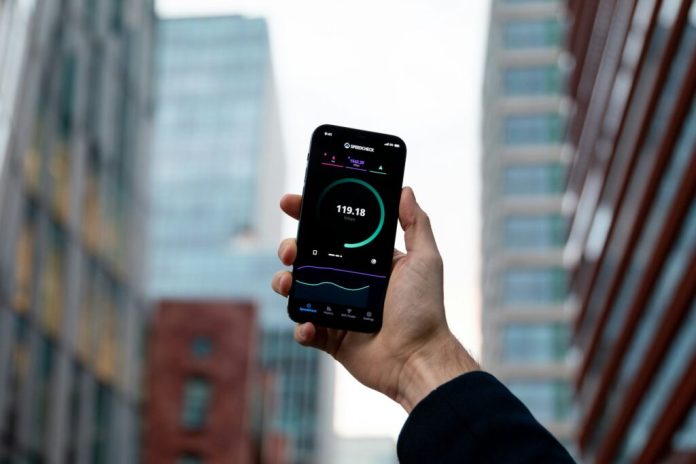

Mobile internet has become a basic need in daily life. From online work and education to banking, shopping, and entertainment, everything now depends on stable and fast internet. Many people often complain that their mobile internet speed is fast in one area but becomes very slow when they move to another location. This issue is common across Pakistan and many other countries. Understanding why mobile internet speed varies by location helps users make better decisions and also allows businesses to plan their digital strategies wisely.
This Telecom Update explains in detail how location affects mobile internet speed, what technical and environmental factors are involved, and how users can improve their internet experience based on their area.
Understanding Mobile Internet Basics
Mobile internet works through cellular networks. Telecom companies install mobile towers that send and receive signals to mobile phones using radio waves. These towers are connected to core networks and internet backbones. When you use mobile data, your phone connects to the nearest tower, and data travels through that network.
The quality of this connection depends heavily on your physical location. Even a small change in distance or surroundings can affect speed, latency, and overall performance.
Urban Areas and Internet Speed
Cities usually have better mobile internet speed compared to rural regions. This is because urban areas have a higher number of mobile towers and better network infrastructure. Telecom companies invest more in cities due to higher population density and commercial demand.
In cities like Karachi, Lahore, and Islamabad, users often experience faster 4G and now even 5G speeds. However, speed variations still occur within cities. For example, internet may work perfectly in one block but slow down in another nearby area.
One major reason is network congestion. When too many users connect to the same tower at the same time, the available bandwidth is shared. This often happens in busy commercial areas, markets, and residential societies during peak hours.
Another reason is building density. Tall buildings, basements, and thick walls can block or weaken signals, reducing speed indoors even when outdoor coverage is strong.
Rural and Remote Locations
In rural areas, mobile internet speed is usually slower. Telecom operators install fewer towers due to lower population density and higher installation costs. In some villages, only basic 3G coverage is available, while 4G signals may be weak or unstable.
Distance from the nearest tower plays a major role here. The farther a user is from a tower, the weaker the signal becomes. Weak signals lead to lower data rates and frequent disconnections.
Power outages and lack of proper fiber backhaul in rural areas also affect network stability. Without strong back-end connectivity, even a good signal cannot provide high internet speed.
Impact of Terrain and Geography
Geographical features significantly influence mobile internet performance. Mountains, hills, forests, and valleys can block or reflect radio signals. In hilly areas like northern Pakistan, mobile internet speed often fluctuates due to terrain challenges.
Flat areas generally provide better signal propagation. That is why plains and urban centers usually experience more stable mobile internet.
Weather conditions also play a role. Heavy rain, storms, and fog can cause signal interference, especially for higher frequency networks like 4G and 5G.
Indoor vs Outdoor Usage
Many users notice that mobile internet works better outdoors than indoors. This happens because walls, roofs, and construction materials absorb or block signals. Cement, steel, and glass significantly reduce signal strength.
In homes, offices, and shopping malls, the signal has to pass through multiple barriers, which lowers speed. This is why internet speed may drop when you enter a building, even if the outdoor signal is strong.
Telecom companies sometimes install indoor solutions in large buildings, but this is not common in residential areas.
Network Technology and Coverage
The type of network technology available in your area also affects speed. 2G, 3G, 4G, and 5G all offer different performance levels.
2G is mainly used for calls and SMS and provides very slow data speeds. 3G allows basic browsing and social media but struggles with video streaming. 4G offers much faster speeds suitable for HD videos and online work. 5G promises extremely high speed and low latency but is still limited to select locations.
Many areas in Pakistan still rely on mixed coverage. Your phone may switch between 4G and 3G depending on signal strength, causing speed fluctuations.
Tower Load and Peak Hours
Time of day is another important factor linked to location. In residential areas, internet usage increases in the evening when people return home. This causes congestion and slower speeds.
Commercial areas may experience peak usage during office hours. Educational zones often see high usage during online classes and exam periods.
Even if you are in a well covered location, heavy usage during peak hours can reduce your mobile internet speed significantly.
Role of Telecom Operators
Different telecom operators have different coverage strengths in different regions. One network may perform well in a city center but poorly in suburbs or highways.
Network planning, investment, and maintenance vary between operators. Some focus more on urban expansion, while others target nationwide coverage.
Staying updated with Telecom Update news helps users understand which operator is improving coverage in their area. Reliable telecom insights can be found on platforms like https://flare.pk/category/telecom/ where industry developments and network updates are regularly shared.
Device and Signal Compatibility
Your mobile phone also affects internet speed. Older devices may not support advanced network bands or carrier aggregation features. This limits maximum speed even in good coverage areas.
Modern smartphones are designed to handle multiple frequency bands and switch networks efficiently. Using an outdated phone in a high speed area may still result in slow internet.
SIM card condition also matters. An old or damaged SIM can cause connectivity issues. Sometimes upgrading to a new SIM improves signal stability.
Location Based Network Optimization
Telecom companies optimize their networks based on user density and demand. High traffic areas receive more bandwidth and newer technologies.
However, rapid urban expansion often creates coverage gaps. New housing societies may take time to receive proper network upgrades.
Industrial zones, highways, and tourist areas also require special planning. During holidays or events, temporary congestion can occur due to sudden user inflow.
Mobile Internet While Traveling
Internet speed changes quickly when traveling. On highways, users connect to towers briefly as they move from one cell to another. This causes frequent handovers, which can reduce speed and cause interruptions.
In trains and buses, metal structures block signals, further lowering performance. Rural roads and remote routes may have limited coverage altogether.
Understanding this behavior helps users manage expectations while traveling.
How Users Can Improve Internet Speed by Location
Although users cannot control network infrastructure, they can take some steps to improve performance based on location.
Choosing the right operator for your area is important. Asking neighbors or checking coverage maps helps identify the best network.
Using the phone near windows or open spaces improves indoor signals. Switching to airplane mode briefly can help reconnect to a better tower.
Keeping software updated ensures better network optimization. Background apps should be limited during important tasks to reduce data load.
Importance of Telecom Awareness
Being aware of telecom developments allows users to make informed decisions. Network upgrades, spectrum auctions, and new tower installations directly impact internet speed in different locations.
Websites like https://flare.pk/ provide valuable insights into telecom trends, operator performance, and regulatory changes. Such platforms play an important role in educating users and businesses.
This Telecom Update awareness also helps businesses plan online services, marketing campaigns, and digital operations according to regional connectivity conditions.
Future of Location Based Mobile Internet
With the rollout of 5G and advanced network technologies, location based speed differences are expected to reduce. Small cells, fiber backhaul, and smart antennas will improve coverage consistency.
However, complete uniformity is difficult due to geography and population differences. Urban areas will continue to receive upgrades earlier than remote regions.
Government policies and private investment will play a key role in bridging the digital divide.
Conclusion
Mobile internet speed varies by location due to multiple technical, environmental, and infrastructural factors. Urban density, rural distance, terrain, building structures, network load, and operator strategies all influence performance.
Understanding these factors helps users manage expectations and choose better solutions. Staying informed through reliable Telecom Update sources ensures awareness of network improvements and coverage changes.
As mobile connectivity continues to evolve, location will remain a critical factor, but smarter networks and better planning will gradually improve the experience for users across Pakistan.