

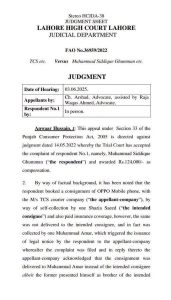
A simple social media connection turned into a painful scam for a Pakistani citizen, but in the end, the law stood firmly in favor of the victim. The Lahore High Court has upheld a Consumer Court ruling that ordered TCS Courier Company to compensate Muhammad Siddique Ghumman with a total of Rs. 124,000 for mishandling a “self-collection” courier parcel.
This case has become an important example for consumers across Pakistan, highlighting how courier companies can be held legally responsible when they violate delivery procedures.
The Story Begins With a Fake Facebook Friendship
Muhammad Siddique Ghumman accepted a friend request from a woman using the name “Shazia Saeed” on Facebook. Over time, she built trust and convinced him to send her a brand-new OPPO mobile phone as a gift.
She gave him very specific instructions. Instead of delivering the phone to her home, she asked him to send it through TCS using the “Self-Collection” service. She told him she would personally visit the TCS office to collect the parcel.
Ghumman followed her request. He purchased a new OPPO phone, booked it through TCS’s self-collection service, paid extra insurance charges, and clearly instructed TCS that the parcel must only be handed over to “Shazia Saeed.”
The Disappearance That Raised Suspicion
A few days later, Shazia messaged him saying that she had received the phone. Right after that message, her social media profile went silent. He was blocked and could no longer contact her.
Shocked by the sudden disappearance, Ghumman contacted TCS to find out who had actually collected the parcel.
TCS Admits the Parcel Was Given to the Wrong Person
TCS investigated and revealed that the phone was not collected by Shazia Saeed. Instead, a man named Aamir had come to the office, claimed to be her brother, and collected the package. This was done despite clear “self-collection only” instructions.
Later, when Ghumman sent a legal notice, TCS traced this man. Aamir admitted that he was the same person who created the fake Facebook profile of Shazia Saeed and used it to trap Ghumman. He eventually returned the phone to TCS.
Ghumman Refuses the Phone and Demands Compensation
When TCS offered to return the phone to Ghumman, he refused. He argued that the company had violated its own self-collection policy and caused him financial loss and mental stress. He demanded the insurance compensation of Rs. 24,000 along with additional damages.
TCS defended itself by claiming it was Ghumman’s fault for trusting a fake online identity. However, the consumer court did not accept this argument.
Consumer Court and Lahore High Court Both Rule Against TCS
The Consumer Court held TCS responsible for failing to follow the self-collection rules. The court ruled that the company’s negligence caused both financial harm and emotional distress to the customer.
The court ordered TCS to:
Pay Rs. 24,000 as insurance compensation
Pay Rs. 100,000 as additional damages
This brought the total compensation to Rs. 124,000.
TCS challenged this decision in the Lahore High Court. However, the appeal was dismissed. Justice Anwaar Hussain upheld the earlier ruling, observing that TCS had a legal duty to hand over the parcel only to the authorized person and failed to do so.
A Strong Message for Courier Companies and Consumers
This case sends a clear message to courier companies in Pakistan that they cannot take self-collection and identity verification lightly. If a customer gives clear instructions, the courier service must strictly follow them.
For consumers, the case also serves as a warning about online scams. While social media friendships can be genuine, blindly trusting unknown people can lead to serious financial and emotional loss.
Final Outcome
Muhammad Siddique Ghumman did not get the person he thought he was sending a gift to, because “Shazia Saeed” never existed. But he did achieve justice.
The courts ordered TCS to pay him more than Rs. 124,000 in total compensation, turning a painful scam into an important legal victory for consumer rights in Pakistan.