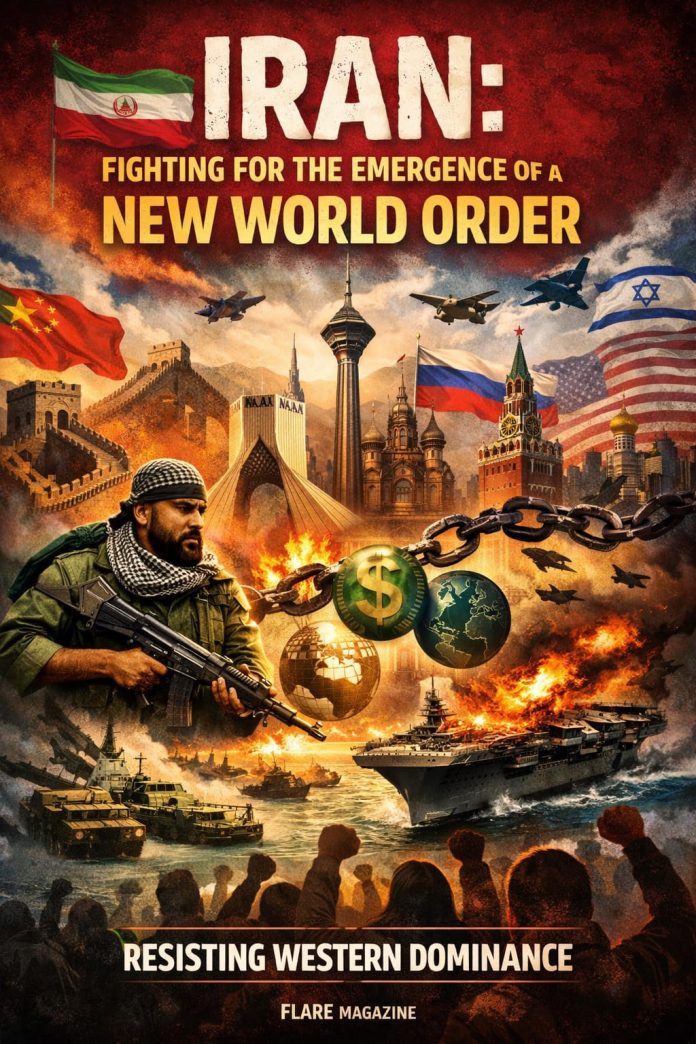

The global balance of power is undergoing a significant transformation as emerging nations challenge the long-standing dominance of Western countries. Among these developments, the rise of China stands out as one of the most influential shifts of the modern era, reshaping international politics, economics, and strategic alliances. At the same time, countries like Iran are positioning themselves as key players in a rapidly evolving multipolar world.
During the 1970s, Pakistan played a historic diplomatic role by helping open communication between China and the United States, paving the way for normalized relations between the two powers. For decades afterward, China functioned primarily as the manufacturing hub of the world. Its vast labor force, large-scale industrial capacity, and export-driven economy made it a critical supplier to Western markets. China’s entry into the World Trade Organization at the start of the new millennium further integrated it into the global economic system.
Many Western analysts initially assumed that China would follow a path similar to Japan by becoming a cooperative economic partner rather than a strategic competitor. However, under the leadership of President Xi Jinping, China has pursued a far more assertive global role. The country’s development strategy combines strong state planning with market-based reforms, supported by heavy investments in education, healthcare, infrastructure, and rapid urbanization. High-speed rail networks, modern ports, and advanced cities have become symbols of China’s economic transformation.
Technology and innovation now play a central role in China’s rise. Breakthroughs in artificial intelligence, telecommunications, and advanced manufacturing are increasingly challenging Western technological leadership. As a result, global competition is shifting from traditional military strength toward economic influence, digital power, and technological superiority.
In the Middle East, Iran occupies a unique strategic position. It is often viewed as a counterbalance to the US-Israel alliance, particularly given the region’s vast oil and gas reserves, which remain essential to global energy security. Iran’s geographic location also gives it influence over critical maritime routes, especially the Strait of Hormuz, through which a significant portion of the world’s oil supply passes. Any instability in this area can disrupt global trade and energy markets, highlighting Iran’s geopolitical importance.
The Middle East as a whole may experience new alliances and shifting partnerships as countries adapt to changing global realities. Regional powers are increasingly reassessing their foreign policies, seeking strategic autonomy while balancing relations with both Western nations and emerging powers like China and Russia.
Pakistan, positioned at the crossroads of South Asia, Central Asia, and the Middle East, has attempted to navigate this complex environment through cautious diplomacy. By maintaining balanced relations with major global powers, Pakistan aims to protect its economic interests while avoiding entanglement in great-power rivalries.
Overall, the international system appears to be moving toward a multipolar order in which influence is shared among several powerful states rather than dominated by a single superpower. Emerging economies, regional alliances, technological competition, and control of energy resources will likely shape the future global landscape. In this context, Iran’s role, alongside China’s rise and shifting Middle Eastern dynamics, reflects a broader struggle over what the next world order will look like.
Study & Analysis by: Muhammad Hanif Gul
Public Policy Analyst, Teacher & Civil Servant
Published by: Flare Magazine | Flare.pk