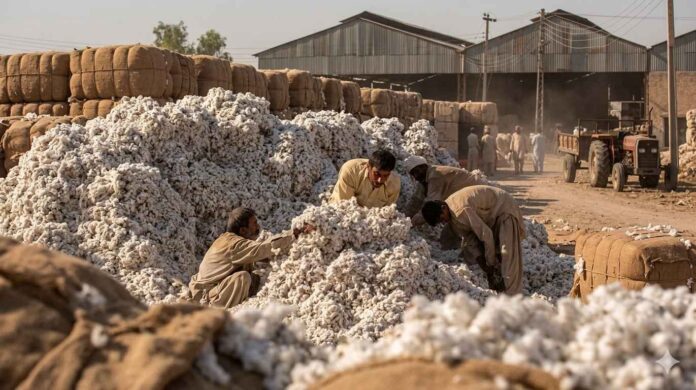

Pakistan’s cotton market has entered a historic phase as the country’s cotton ginning season officially began in the second week of May for the first time ever. The unusually early start has triggered a sharp rise in cotton and lint prices, creating strong momentum across agricultural and textile markets.
The early launch of the ginning season has surprised traders, farmers, and textile manufacturers alike, as cotton arrivals traditionally begin much later. This year’s accelerated timeline is already reshaping market activity, encouraging bullish sentiment, and improving expectations for the country’s textile industry.
Cotton arrivals from several regions of Punjab and Sindh have started reaching ginning factories, while early sowing practices adopted by farmers appear to be producing results sooner than expected. Market participants believe the development could significantly improve raw material availability for textile mills while also increasing farmer profitability due to higher prices.
The strong rise in cotton rates during the initial phase of the season highlights the growing demand for quality lint and reflects optimism surrounding the crop outlook for the current year.
Pakistan Witnesses Earliest Cotton Ginning Season in History
The beginning of the cotton ginning season in the second week of May marks a historic moment for Pakistan’s agriculture and textile sectors. Traditionally, the ginning season starts in June when larger quantities of cotton begin arriving from major cultivation areas.
Even previous years that saw relatively early cotton arrivals were considered exceptional. However, this year’s development has surpassed all historical timelines, making it the earliest start to the cotton ginning season ever recorded in the country.
The accelerated start has largely been driven by early sowing practices adopted by farmers in several cotton-growing areas. Many growers planted cotton crops during February on a much wider scale compared to previous years. Favorable weather conditions and increased focus on timely cultivation helped crops mature earlier than usual.
As a result, cotton picking activities began sooner in several regions, particularly in parts of Sindh, leading to earlier deliveries of phutti to ginning factories.
Industry experts believe the shift toward earlier sowing may gradually become more common if growers continue receiving strong market returns and improved crop yields.
Cotton Arrivals Begin in Punjab and Sindh
Fresh cotton arrivals have already started entering markets in parts of Punjab and Sindh, signaling the official start of commercial activity for the new season.
Several ginning factories in major cotton-producing regions have commenced operations after receiving initial supplies of phutti from early harvesting areas. The first wave of arrivals has mainly come from coastal regions where climatic conditions supported earlier crop development.
Cotton procurement activity has increased rapidly as ginners compete to secure available supplies during the opening phase of the season. Traders report strong interest from buyers due to expectations of higher future demand from textile mills.
In Punjab, areas where early sowing was carried out on a larger scale are now beginning to produce harvestable cotton. Ginners have started purchasing phutti aggressively in anticipation of growing demand and tighter market competition.
The reopening of ginning factories ahead of schedule has generated optimism among stakeholders across the cotton supply chain, including farmers, transporters, laborers, traders, and textile manufacturers.
Sharp Increase in Phutti Prices
One of the most notable developments since the start of the season has been the rapid increase in phutti prices.
Initial advance deals for phutti were reported within a strong range at the beginning of procurement activities. However, prices quickly moved higher as market competition intensified and demand strengthened.
Within days, phutti prices surged significantly, reflecting bullish sentiment in the market. Traders and industry observers noted that increasing buying pressure from ginners and expectations of continued price gains contributed to the rapid upward movement.
Farmers have welcomed the rise in prices, viewing it as a positive sign for profitability after facing challenges such as rising input costs, water shortages, and climate-related uncertainties in recent years.
Higher phutti prices could encourage more farmers to allocate additional land to cotton cultivation in future seasons, particularly if strong market conditions continue throughout the year.
Agricultural economists believe better price realization for growers is essential for reviving Pakistan’s cotton sector, which has experienced fluctuations in production over the past decade.
Lint Prices Also Record Significant Gains
Alongside the increase in phutti prices, lint prices have also witnessed a strong upward trend during the opening phase of the ginning season.
Lint rates climbed sharply within a short period as fresh cotton processing began and demand from textile mills strengthened. Market participants reported multiple deals taking place at increasingly higher price levels, indicating strong confidence in future market direction.
The rapid increase in lint prices reflects expectations of improved textile activity, stronger yarn demand, and better export opportunities for Pakistan’s textile sector.
Industry experts believe the early availability of lint supplies could help stabilize operations for spinning mills that often struggle with raw material shortages during the beginning of the production cycle.
Some market sources suggested that premium-quality lint transactions reached exceptionally high levels, reinforcing expectations of a sustained bullish market trend in the coming weeks.
Textile manufacturers are closely monitoring cotton arrivals and pricing trends as they prepare for increased production activity linked to export demand and seasonal business cycles.
Textile Industry Expected to Benefit
The early arrival of cotton and lint supplies is expected to provide significant relief to Pakistan’s textile industry, which remains heavily dependent on local raw materials.
Textile mills frequently face challenges at the start of each season due to limited lint availability and delays in fresh crop arrivals. These shortages often force mills to rely on imported cotton or operate below capacity, increasing operational costs and affecting profitability.
This year’s early ginning season may help ease those concerns by ensuring earlier access to fresh lint supplies. Improved raw material availability can support uninterrupted production, reduce supply chain pressures, and strengthen overall industry efficiency.
Pakistan’s textile sector plays a critical role in the national economy by contributing significantly to exports, employment, and industrial output. Any improvement in cotton supply conditions directly benefits the broader manufacturing sector.
Industry stakeholders believe the current market momentum could support stronger textile exports if cotton production remains stable and supply flows continue improving throughout the season.
Early Sowing Practices Deliver Results
The historic early start to the ginning season has highlighted the growing importance of timely sowing practices in cotton cultivation.
Farmers who planted cotton earlier than usual appear to have benefited from favorable crop development and earlier harvesting opportunities. Agricultural experts have long encouraged timely sowing to maximize crop productivity and reduce exposure to adverse weather conditions later in the season.
This year’s experience may encourage wider adoption of early sowing techniques among farmers across major cotton-producing regions.
Earlier crop maturity can offer several advantages, including improved pest management, better water utilization, and enhanced yield potential. It may also help farmers avoid certain climate-related risks associated with delayed cultivation.
Government agricultural departments and research institutions have repeatedly emphasized the need for modern farming practices, improved seed varieties, and better crop management to revive Pakistan’s cotton sector.
The success of early sowing this season could strengthen confidence in adopting more advanced cultivation methods in future years.
Cotton Sector Holds Key Importance for Pakistan’s Economy
Cotton remains one of Pakistan’s most important cash crops and serves as the backbone of the country’s textile industry.
The sector supports millions of livelihoods, including farmers, laborers, traders, transporters, ginners, and factory workers. Cotton-related industries also contribute substantially to exports and industrial production.
However, Pakistan’s cotton sector has faced multiple challenges over the years, including declining production, pest attacks, climate change, rising cultivation costs, and inconsistent policy support.
In recent years, the country has increasingly relied on imported cotton to meet domestic demand due to fluctuations in local production. This trend has placed additional pressure on foreign exchange reserves and increased costs for textile manufacturers.
The strong start to the current ginning season is therefore being viewed as a positive development for both agriculture and industry. Improved local cotton availability can help reduce import dependence and strengthen domestic supply chains.
Experts believe sustained support for cotton growers and modernization of agricultural practices will be essential for restoring long-term growth in the sector.
Bullish Market Sentiment Continues to Grow
Market sentiment in the cotton sector remains strongly bullish as traders anticipate further increases in arrivals and continued price strength.
The rapid rise in both phutti and lint prices has encouraged speculative buying activity, while expectations of strong textile demand continue supporting the market.
Industry participants are closely watching crop conditions, weather patterns, and future arrival volumes to assess the direction of prices in the coming weeks.
Some traders believe prices could remain elevated if demand from textile mills stays strong and supply growth remains gradual during the early phase of the season.
Others caution that market volatility may increase as larger crop volumes begin entering the market later in the season. However, current sentiment remains largely optimistic due to the unprecedented early start and strong initial demand.
The coming weeks will play an important role in determining whether the current bullish trend can be sustained throughout the broader cotton marketing season.
Weather Conditions and Crop Outlook Remain Important
Although the early start to the season has generated optimism, weather conditions during the coming months will remain critical for the overall success of the cotton crop.
Cotton cultivation is highly sensitive to temperature changes, rainfall patterns, pest attacks, and water availability. Any adverse climatic developments could affect production levels and market stability.
Agricultural experts continue urging farmers to adopt proper crop management practices, including pest control measures, balanced fertilizer use, and efficient irrigation techniques.
Authorities are also expected to monitor crop conditions closely to ensure stable production and prevent disruptions to the supply chain.
If favorable weather conditions continue and crop development remains healthy, Pakistan could witness improved cotton output this year compared to previous seasons.
Higher production combined with strong market prices could provide much-needed support to the rural economy while strengthening the country’s textile export sector.
Future Outlook for Pakistan’s Cotton Industry
The historic early launch of the cotton ginning season represents a significant development for Pakistan’s agriculture and textile industries.
The sharp increase in cotton and lint prices has boosted market confidence and improved expectations for farmers, ginners, and textile manufacturers alike. Earlier arrivals are helping strengthen supply chains while providing textile mills with improved access to raw materials.
At the same time, the season has demonstrated the potential benefits of timely sowing practices and better crop management strategies.
Industry stakeholders believe Pakistan has an opportunity to revive its cotton sector if favorable policies, improved seed technology, and modern agricultural practices continue gaining momentum.
The coming months will determine whether the current positive trend can translate into sustained growth for the country’s cotton economy. Much will depend on crop conditions, weather stability, market demand, and overall production performance.
For now, the early start to the ginning season has injected fresh optimism into Pakistan’s cotton market and created expectations of stronger activity across the agricultural and textile sectors in the months ahead.
Read More
Pakistan Set to Receive Additional 100MW Power Supply From Iran