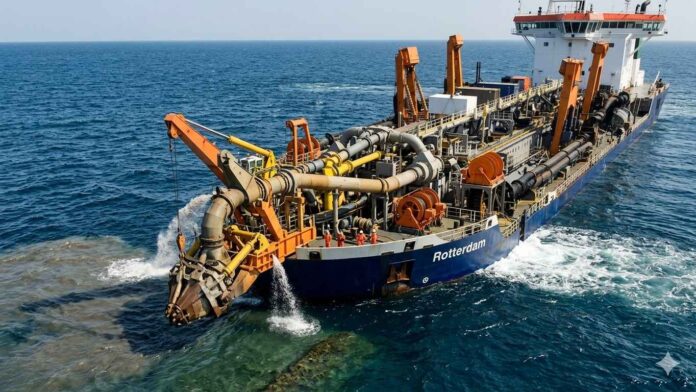

Pakistan’s maritime sector has entered a transformative phase with the successful completion of dredging works at Karachi Gateway Terminal Limited (KGTL). The achievement represents one of the most significant upgrades to Pakistan’s port infrastructure in recent years and is expected to deliver substantial benefits to exporters, importers, shipping companies, logistics providers, and the broader economy.
As global trade increasingly relies on larger vessels, deeper ports, and efficient logistics networks, countries must continuously modernize their maritime infrastructure to remain competitive. The completion of the dredging project at Karachi Port’s East Wharf is a strategic investment that strengthens Pakistan’s position in regional and international shipping routes while enhancing the country’s ability to handle rising trade volumes.
The project significantly increases navigational depth, expands vessel accommodation capacity, improves cargo handling efficiency, and supports future infrastructure development. These improvements are expected to reduce transportation costs, improve turnaround times, attract larger shipping lines, and contribute to Pakistan’s long-term economic growth.
A Landmark Development for Pakistan’s Maritime Industry
The completion of dredging activities marks a major milestone in Pakistan’s efforts to modernize its maritime infrastructure. Ports serve as the backbone of international trade, and improvements in port capacity directly influence a country’s competitiveness in global markets.
For decades, Karachi Port has served as Pakistan’s primary gateway for international trade. A substantial percentage of the country’s imports and exports pass through its terminals, making operational efficiency at the port critical for economic performance.
The newly completed dredging project enhances the port’s ability to accommodate larger vessels that previously faced operational limitations due to draft restrictions. By increasing water depth across key navigation channels and terminal berths, the project creates opportunities for greater cargo volumes and more efficient shipping operations.
The development is particularly important at a time when Pakistan is seeking to boost exports, attract foreign investment, strengthen supply chains, and reduce logistics costs.
Enhanced Navigational Depth Creates New Opportunities
One of the most important achievements of the project is the increase in navigational depth within the main channel and terminal areas.
The upgraded channel now provides significantly deeper access for incoming and outgoing vessels, allowing larger ships to enter and maneuver more safely and efficiently. The addition of an expanded turning circle further improves vessel navigation and operational flexibility.
At East Wharf, deeper berths now provide enhanced accommodation for modern cargo vessels. These improvements enable terminal operators to handle ships carrying larger cargo loads, reducing the number of voyages required to transport goods and improving overall shipping economics.
The deeper draft capability also aligns Karachi Port with international shipping trends, where larger vessels increasingly dominate global trade routes due to their cost efficiency and cargo-carrying capacity.
Bigger Ships Mean Lower Freight Costs
One of the most immediate economic benefits of the dredging project is the ability to accommodate larger vessels.
Modern shipping economics favor larger ships because they can transport significantly greater volumes of cargo in a single voyage. This reduces transportation costs on a per-unit basis and improves efficiency across the supply chain.
For exporters, lower freight costs can enhance competitiveness in international markets. Reduced transportation expenses make locally produced goods more attractive to overseas buyers and improve profit margins for businesses.
For importers, larger vessels can help reduce shipping costs associated with raw materials, machinery, industrial inputs, and consumer goods. These savings can ultimately benefit industries throughout Pakistan by lowering production costs and improving supply chain reliability.
The ability to attract larger vessels is therefore expected to generate substantial economic advantages across multiple sectors.
Strengthening Pakistan’s Export Competitiveness
Export growth remains a critical component of Pakistan’s economic strategy, and efficient maritime infrastructure plays a central role in supporting export performance.
The dredging project enhances Pakistan’s export capabilities by enabling faster cargo movement, larger shipment sizes, and improved logistics efficiency.
Export-oriented industries frequently face challenges related to transportation costs and shipping reliability. Delays, capacity constraints, and inefficient port operations can negatively affect international competitiveness.
The upgraded terminal infrastructure addresses many of these concerns by improving berth availability, vessel handling capability, and cargo throughput.
As a result, exporters may benefit from lower transportation expenses, improved shipping schedules, and greater access to international markets.
These advantages are particularly important for industries competing in highly competitive global environments where logistics costs can significantly influence purchasing decisions.
Major Capacity Expansion for Container Operations
The dredging project significantly enhances the operational capabilities of the container terminal.
The upgraded facility can now accommodate much larger container vessels than before, increasing flexibility for shipping lines and improving overall terminal productivity.
In addition to deeper berths, ongoing expansion projects are expected to further increase annual container handling capacity. Future upgrades will allow the terminal to process substantially higher cargo volumes while maintaining operational efficiency.
The expansion supports growing trade demand and ensures that Pakistan’s maritime infrastructure can accommodate future increases in import and export activity.
Higher capacity also reduces congestion risks and improves service quality for shipping companies utilizing the terminal.
Transforming Pakistan’s Bulk Cargo Sector
The benefits of the dredging project extend beyond containerized cargo.
The deeper draft significantly improves the terminal’s ability to handle larger bulk carriers, creating major opportunities for industries involved in bulk exports and imports.
Bulk cargo operations are particularly sensitive to vessel size because transportation costs can vary significantly depending on cargo volumes.
The ability to accommodate larger bulk vessels allows exporters to move greater quantities of goods in fewer shipments, reducing freight costs and improving operational efficiency.
Industries involved in commodities, minerals, agricultural products, and industrial materials stand to benefit substantially from these improvements.
The increased capacity also supports Pakistan’s efforts to strengthen its position in regional and international commodity markets.
Supporting Foreign Exchange Conservation
An important economic benefit associated with improved shipping efficiency is the potential reduction in foreign exchange outflows.
Lower freight costs reduce the amount spent on transportation services, helping conserve valuable foreign exchange reserves.
Improved export competitiveness can also contribute to higher export earnings, further strengthening Pakistan’s external account position.
At a time when foreign exchange management remains a key economic priority, infrastructure investments that improve trade efficiency offer significant long-term value.
Enhanced maritime capabilities therefore contribute not only to logistics performance but also to broader macroeconomic stability.
Positioning Karachi Port as a Regional Maritime Hub
Competition among regional ports continues to intensify as countries invest heavily in maritime infrastructure and logistics capabilities.
Shipping companies increasingly favor ports capable of accommodating larger vessels, providing efficient cargo handling services, and minimizing turnaround times.
The completion of the dredging project strengthens Karachi Port’s competitive position by aligning its capabilities with international standards and shipping industry requirements.
Enhanced infrastructure improves the port’s attractiveness to shipping lines and logistics operators seeking reliable access to regional markets.
As trade volumes continue to grow, these improvements may help establish Karachi Port as a more prominent maritime gateway within the broader region.
Long-Term Economic Impact of Maritime Infrastructure Investment
The significance of the dredging project extends well beyond immediate operational benefits.
Modern port infrastructure serves as a catalyst for economic growth by facilitating trade, attracting investment, supporting industrial development, and creating employment opportunities.
Efficient logistics systems reduce business costs, improve productivity, and enhance national competitiveness.
The project also demonstrates the importance of continued investment in infrastructure modernization as Pakistan seeks to expand its role in global commerce.
By creating deeper channels, accommodating larger vessels, expanding cargo handling capacity, and improving operational efficiency, the KGTL dredging project lays the foundation for sustained growth in Pakistan’s maritime sector.
A New Era for Pakistan’s Trade Gateway
The successful completion of the KGTL dredging project marks the beginning of a new chapter in Pakistan’s maritime development journey.
The project enhances the country’s ability to participate in global trade, strengthens logistics efficiency, improves export competitiveness, and supports long-term economic objectives.
With deeper channels, larger vessel capacity, expanded terminal infrastructure, and ongoing modernization efforts, Karachi Port is increasingly positioned to serve the evolving needs of international commerce.
For exporters, importers, shipping companies, and investors, the development represents a major opportunity. For Pakistan’s economy, it provides a stronger foundation for trade growth, foreign investment attraction, and sustainable economic expansion in the years ahead.
The completion of the dredging project is therefore not merely an infrastructure achievement—it is a strategic investment in Pakistan’s future as a competitive maritime and trading nation.
Read More