
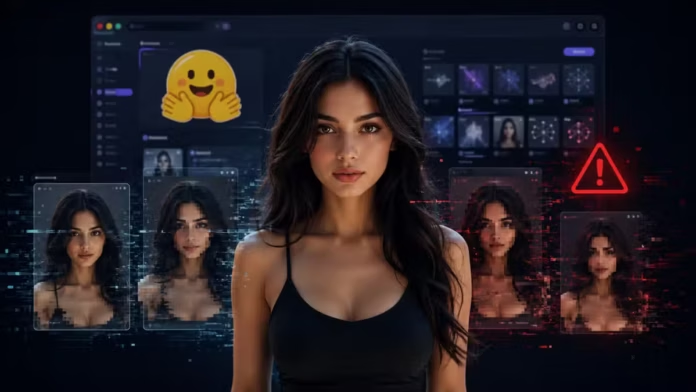

A new study by European nonprofit AI Forensics has found that some AI image tools available on Hugging Face can create fake intimate images without a person’s consent.
The researchers studied Hugging Face Spaces, a platform where developers can upload and test AI models and applications. They found that several popular image-editing tools could remove clothing from normal photos and create sexualized deepfake images with very few safety restrictions.
The team tested nine of the most popular image-editing AI models on the platform. They used an AI-generated photo of a woman and asked the tools to keep the same face and pose while removing clothing from the upper body.
The results showed that seven out of the nine AI models followed the request. The researchers said they used simple prompts and did not try to bypass any safety systems.
To better understand how people use these tools, AI Forensics also created its own image-editing test tool. The tool did not generate any images but collected user prompts for one week.
During the test, the researchers received 1,081 requests. Around 73 percent of the prompts were related to sexual content.
Among those requests, 83 percent asked the AI to remove clothing or make the uploaded person appear sexualized. Around 95 percent of the targeted images were of women, while 6.7 percent of the requests appeared to involve minors.
The researchers said the test tool was not marked as an adult or NSFW service, showing that many users still tried to create inappropriate images.
According to AI Forensics, only about 3 percent of the AI Spaces they reviewed had systems that checked or blocked harmful image outputs.
Although Hugging Face has rules that ban child sexual abuse material and non-consensual sexual deepfakes, the researchers said the platform currently has very few built-in protections to stop developers from uploading such tools or prevent users from misusing them.
The researchers recommended that Hugging Face introduce stronger platform-wide safety measures, including filtering harmful prompts and scanning AI-generated images before they are shown to users.
The study comes as governments in Europe and the UK are taking stricter action against AI tools that can digitally remove clothing from photos or create fake intimate images without permission.