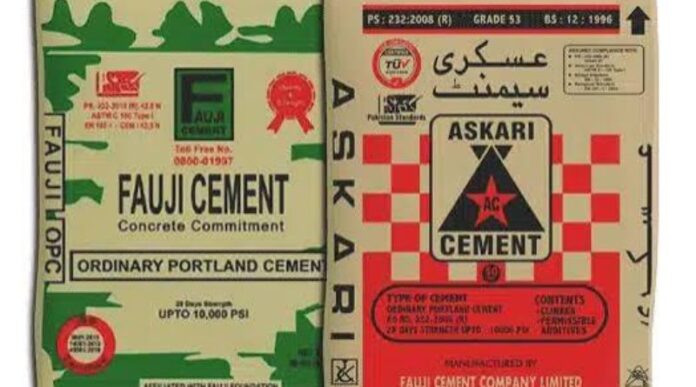

Fauji Cement Company Limited (FCCL) has closed the financial year 2025-26 on a very strong note, reporting the highest profit in its history. The company’s latest financial results show that better sales, higher domestic cement dispatches, lower finance costs, and a reduced tax rate helped improve its overall performance.
For FY26, Fauji Cement recorded a profit after tax of around Rs. 16.2 billion, making it the company’s best-ever annual profit. The result also shows strong long-term growth, with the company achieving an estimated 10-year compound annual growth rate of about 22 percent, according to Arif Habib Limited.
The company also ended the year with a strong fourth quarter. During 4QFY26, Fauji Cement earned Rs. 5.40 billion, equal to earnings per share of about Rs. 2.20. Quarterly earnings increased by 38 percent compared with the same period last year and were 56 percent higher than the previous quarter.
These numbers show that the company continued to perform well even as Pakistan’s cement sector faced pressure from changing demand, costs, interest rates, and taxes.
Record Profit Marks Another Strong Year for Fauji Cement
Fauji Cement has been growing its profits over the past few years, and FY26 added another major milestone to that progress. The company had already reported a record profit of Rs. 13.3 billion in FY25. The latest result has now pushed annual profit to about Rs. 16.2 billion.
This means the company increased its yearly profit by roughly 21 percent compared with FY25. The improvement is important because it came after the company had already achieved a record result in the previous financial year.
The latest figures also highlight the company’s ability to control costs and benefit from stronger sales. Fauji Cement has been working on improving production efficiency, managing energy expenses, reducing debt-related costs, and strengthening its overall business operations.
The company’s strong fourth-quarter result played an important role in helping it achieve the new annual record.
Strong Fourth Quarter Supports Full-Year Results
The final quarter of FY26 proved to be particularly positive for Fauji Cement. The company reported earnings of Rs. 5.40 billion during the three-month period.
On a year-on-year basis, quarterly earnings rose by 38 percent. When compared with the third quarter of FY26, earnings jumped by 56 percent. The result was also above market expectations.
One of the main reasons behind the better-than-expected quarterly profit was a lower effective tax rate. Fauji Cement’s effective tax rate stood at 22.8 percent in 4QFY26, compared with 42.4 percent in the previous quarter and 38 percent in the same quarter last year.
The lower tax burden gave the company more room to report a higher final profit.
However, the strong result was not only because of tax savings. The company also benefited from higher sales and stronger domestic cement dispatches.
Revenue Also Shows Healthy Growth
Fauji Cement’s revenue improved during the fourth quarter as well. Net revenue reached approximately Rs. 23.90 billion in 4QFY26.
This was 10 percent higher than the same quarter of the previous year. Revenue also increased by around 7 percent compared with the third quarter of FY26.
The rise was mainly linked to stronger domestic cement dispatches. The company’s domestic dispatches increased by around 15 percent year-on-year to approximately 1.35 million tonnes during the quarter.
For the full financial year, Fauji Cement recorded net sales of about Rs. 93.69 billion, representing a 5 percent increase over the previous year.
The figures suggest that demand in the company’s main domestic markets improved enough to support higher sales during the year.
Domestic Cement Demand Remains Important
For a cement manufacturer such as Fauji Cement, cement dispatches are one of the most important factors behind sales and profitability.
The company’s higher domestic dispatches during the fourth quarter helped lift its revenue. A 15 percent yearly increase in domestic dispatches is a positive sign for the company because it shows that more cement was being sold in the local market.
Cement demand in Pakistan is closely linked with construction activity, housing projects, infrastructure development, roads, commercial buildings, and other development work. When construction activity improves, cement companies can benefit from higher sales volumes.
Fauji Cement’s latest figures indicate that domestic demand provided useful support during the final quarter of FY26.
Finance Costs Fall Sharply
Another positive development for Fauji Cement was the decline in finance costs.
During 4QFY26, finance costs fell by 18 percent year-on-year and 9 percent compared with the previous quarter. The company’s quarterly finance cost came down to around Rs. 931 million.
The reduction was mainly linked to lower interest rates and lower debt levels.
This is important for companies that have borrowed money to support their business and expansion plans. When interest rates decline, the cost of borrowing can also fall, allowing a company to keep more of its operating profit.
For the full financial year, Fauji Cement’s finance costs declined by about 28 percent, reaching around Rs. 4.1 billion.
Lower finance expenses can have a direct positive impact on the final profit. In Fauji Cement’s case, the decline in these costs helped support its record annual earnings.
Profitability Continues to Improve
Fauji Cement also maintained a healthy gross margin during the fourth quarter. Its gross margin stood at 37.6 percent in 4QFY26.
This compared with 35.7 percent in the third quarter and 39.1 percent in the fourth quarter of FY25.
Although the margin was lower than the same quarter last year, it improved compared with the previous quarter.
Margins are important for cement companies because production involves major expenses such as fuel, electricity, transportation, raw materials, and other operating costs. Any improvement in the way these costs are managed can help protect profitability.
Fauji Cement has been focusing on better production efficiency and cost management. Its earlier annual reports also highlighted efforts to improve energy use, expand renewable energy, and reduce production costs.
Company Has Focused on Cost Control
Cost control has become increasingly important for businesses in Pakistan. Higher energy prices, transport expenses, interest rates, and other operating costs can put pressure on company profits.
Fauji Cement has taken several steps over recent years to manage these pressures. The company has invested in energy efficiency and renewable power projects while also working to reduce its dependence on expensive external energy sources.
The company’s previous annual report showed that it had developed its own power-generation capacity and invested in solar energy. It also acquired a polypropylene bags manufacturing plant to help reduce packaging costs.
These types of investments can help the company control costs over the longer term.
Dividend Announced for Shareholders
Alongside its FY26 results, Fauji Cement’s board announced a final cash dividend of Rs. 1.50 per share for 4QFY26.
Dividends are important for investors because they provide shareholders with a direct return from the company’s profits.
The dividend announcement also reflects the company’s strong financial position after reporting record annual earnings. For shareholders of Fauji Cement, the combination of higher profit and a cash dividend makes the latest financial results particularly significant.
The company’s earnings per share for the fourth quarter stood at approximately Rs. 2.20, showing a strong improvement from the previous periods.
Potential Fauji Cement and Attock Cement Deal
There was another important development alongside the financial results.
Fauji Cement’s board has authorized its management to study a possible merger of Attock Cement Pakistan Limited into Fauji Cement. Management will review the proposal and present its recommendations to the board.
At this stage, the move should be viewed as an exploration rather than a completed merger. Further steps would depend on the findings of the review and the decisions taken by the relevant boards and authorities.
If such a transaction moves forward, it could become an important development for Pakistan’s cement industry. A larger combined business could potentially create opportunities for better use of production facilities, distribution networks, and other resources.
However, the final outcome will depend on the detailed review and approval process.
What the FY26 Results Mean for the Company
The latest results give Fauji Cement a strong position as it enters the new financial year.
The company has shown growth in revenue, higher domestic dispatches, lower finance costs, and record annual profit. These factors together provide a positive picture of its financial performance.
At the same time, the company will still need to deal with several challenges. Cement demand can change quickly depending on construction activity and economic conditions. Energy prices, taxes, interest rates, transportation costs, and competition can also affect future profits.
Therefore, maintaining the current level of performance will require continued attention to costs, production efficiency, sales volumes, and market demand.
A Look at Fauji Cement’s Recent Growth
The FY26 result is part of a wider growth story for Fauji Cement.
The company reported profit of around Rs. 8.2 billion in FY24 before increasing it to approximately Rs. 13.3 billion in FY25. The latest result of about Rs. 16.2 billion in FY26 represents another major step forward.
Its FY25 annual report had already highlighted record revenue and profit, along with investments in renewable energy, power generation, and vertical integration.
This shows that Fauji Cement has not relied on only one factor for growth. Instead, the company has been working on several areas, including sales, production, energy management, cost reduction, and business expansion.
Strong Result for Pakistan’s Cement Sector
Fauji Cement’s performance is also important for Pakistan’s broader cement industry.
The cement sector plays a major role in construction and infrastructure development. Its performance is often linked with the wider economy because stronger construction activity can increase demand for cement.
Fauji Cement’s higher domestic dispatches during the final quarter provide a positive sign for the company and may point toward better demand conditions in some parts of the local market.
However, the overall industry still faces challenges, and individual companies can perform differently depending on their locations, production costs, pricing, and financial structure.
Conclusion
Fauji Cement has ended FY26 with its strongest financial performance ever. The company posted a record Rs. 16.2 billion profit after tax, supported by solid fourth-quarter earnings, higher domestic cement dispatches, improved revenue, lower finance costs, and a much lower effective tax rate.
Its fourth-quarter profit of Rs. 5.40 billion was particularly strong, rising 38 percent year-on-year and 56 percent quarter-on-quarter. Revenue also increased to around Rs. 23.90 billion, while domestic dispatches climbed 15 percent to about 1.35 million tonnes.
The company also announced a final cash dividend of Rs. 1.50 per share and authorized management to explore a possible merger of Attock Cement Pakistan Limited into Fauji Cement.
Overall, FY26 has been a landmark year for Fauji Cement. The record profit shows that the company has been able to improve its financial performance despite the challenges faced by Pakistan’s business and construction sectors.
Going forward, the company’s ability to maintain sales growth, control costs, manage debt, and improve production efficiency will be important. If market conditions remain supportive and the company continues its focus on efficiency and expansion, Fauji Cement could remain one of the stronger players in Pakistan’s cement industry.
Read Also: check