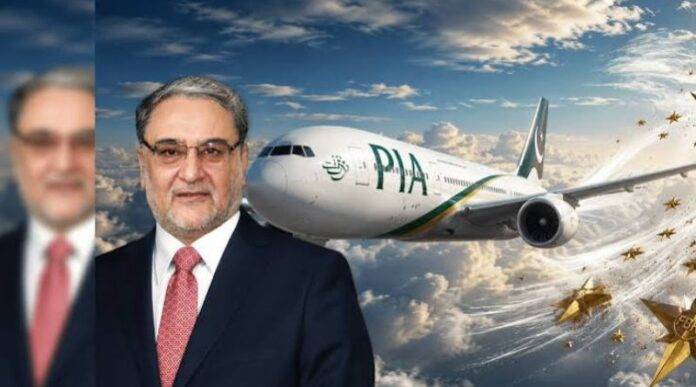

Pakistan International Airlines (PIA) has always been a major name in the country’s aviation sector. For many years, it was seen as a symbol of national pride. However, over time, the airline faced serious financial problems, weak management, heavy losses, and growing debt. Because of these issues, the government had to spend large amounts of public money to keep the airline running.
Now, as PIA moves through a major reform and privatisation process, many people are asking an important question: Is PIA getting special treatment that other companies and businesses would never receive?
This question is not without reason. PIA has received government support for years. It has benefited from debt restructuring, financial help, regulatory relief, and other steps aimed at keeping the airline alive and making it more attractive to private investors. While some experts believe these steps were necessary to save an important national company, others feel that PIA was given advantages that ordinary businesses could only dream of receiving.
The debate is not simply about whether PIA should have been saved. It is also about fairness. If one company receives special help because it is large or important, what does that mean for other businesses that are also facing financial pressure?
A Long History of Financial Support
PIA did not reach its current situation overnight. The airline had been facing financial difficulties for many years. Its problems included high costs, weak business decisions, management issues, old financial burdens, and increasing competition from private airlines.
Instead of being allowed to fail like an ordinary private business, PIA continued receiving support from the government. Since the airline was owned by the state, the government had a direct interest in keeping it operational. However, the money used to support the airline ultimately came from public resources.
This created an unusual situation. A private company that repeatedly fails to pay its debts can face serious action from banks and other institutions. Its assets may be taken, its loans may be classified as bad debts, and it may eventually close down.
PIA, however, was treated differently because of its importance as the national flag carrier.
The airline continued operating despite major financial problems. Over the years, taxpayers carried much of the burden. Critics argue that this created a system where PIA could avoid the full consequences of poor financial performance.
Supporters of the airline, on the other hand, say that PIA was too important to simply shut down. It connected Pakistan with international destinations, provided jobs to thousands of people, and remained a national symbol.
Still, the main concern remained the same: how much support is too much?
Regulatory Relief Raised New Questions
One of the biggest reasons people believe PIA received special treatment is the regulatory relief connected with its banking exposure.
According to official competition and aviation assessments, banks were given additional regulatory flexibility while PIA’s loans and restructuring arrangements were being handled. Such steps helped prevent immediate pressure that could have made the airline’s financial situation even more difficult.
For a normal private company, delayed loan payments can quickly create serious problems. Banks have rules regarding loans that are not being paid on time. These rules are designed to protect the banking system and ensure that financial institutions properly report risky loans.
However, in PIA’s case, special arrangements were made because the government was working to restructure the airline and transfer its financial burden as part of the privatisation process.
This may have been necessary from a practical point of view, but it also created concerns about equal treatment.
If a small or medium-sized Pakistani company had similar financial problems, would it receive the same level of patience and flexibility?
Most people would probably say no.
This is where the idea of special treatment becomes stronger. Large state-owned companies often receive support that private businesses cannot access. The government may argue that these companies are strategically important, but critics say that this creates an unfair business environment.
Taxpayers Paid a Heavy Price
Another major issue is the amount of public money and support linked with PIA’s restructuring.
Before the airline could be sold, much of its financial baggage had to be separated from the main operating company. This made the airline cleaner and more attractive to potential investors.
But the question is simple: who carried the old burden?
A large part of it was moved away from the business being sold, meaning the state remained responsible for dealing with previous debts and liabilities. In simple words, the new business structure could move forward with a lighter burden, while taxpayers were left connected to the financial problems created over many years.
This is one of the biggest concerns surrounding PIA’s special treatment.
If a private company builds up huge losses, its owners and investors normally carry the consequences. The government does not usually step in to remove hundreds of billions of rupees in liabilities just to make the company attractive for sale.
PIA’s situation was different because it was a state-owned enterprise.
Supporters say there was no easy alternative. If the government had not cleaned up the airline’s financial position, no serious investor may have wanted to buy it. In that case, PIA could have continued making losses and requiring more public money.
Critics respond that taxpayers were still forced to pay for the mistakes of the past.
Therefore, even if privatisation was the right decision, many Pakistanis are still asking whether the process was fair to the public.
Was Privatisation the Only Option?
After years of failed attempts, PIA’s privatisation finally moved forward. The government presented the process as an important reform for Pakistan’s economy and the wider state-owned enterprise sector.
The basic idea was simple: the government should not continue running a business that had become a major financial burden. A private owner would hopefully improve management, reduce waste, increase efficiency, and run the airline on commercial grounds.
In theory, this makes sense.
A private company usually has a stronger reason to control costs and improve service because its survival depends on performance. If the business does not make money, the owners suffer.
However, privatisation does not automatically solve every problem.
The real question is whether the airline will now compete fairly with other companies or whether it will continue receiving benefits because of its special position.
This is where strong rules and proper oversight are necessary.
If PIA becomes privately managed but continues receiving advantages that other airlines do not receive, then the market may still not be fair. A genuine private business should succeed because it offers better service and runs its operations efficiently, not because it receives special government support.
Other Airlines Also Face Major Challenges
Pakistan’s aviation sector is already highly competitive. Private airlines also face high fuel costs, taxes, expensive aircraft leases, currency problems, and regulatory requirements.
Unlike PIA, many of these companies do not have decades of government backing behind them.
This is why special treatment can become a serious competition issue.
If one airline receives easier financing, government support, special relief, or other advantages, competing companies may be placed at a disadvantage. Over time, this can damage competition and reduce the pressure on companies to improve their services.
A healthy aviation market needs equal rules for everyone.
PIA should be able to compete, but so should other airlines. The government’s role should be to create a fair environment instead of protecting one company.
The future success of Pakistan’s aviation sector depends on better competition, improved passenger services, and responsible regulation.
No airline should survive simply because of political influence or government connections.
The Government’s Point of View
The government can also make a strong argument for the steps taken to support PIA.
The airline was not an ordinary business. It was Pakistan’s national flag carrier and had international routes, employees, aircraft, and a long history.
Allowing the airline to suddenly collapse could have created serious problems. Thousands of jobs could have been affected, passengers could have faced disruptions, and Pakistan’s international aviation presence could have suffered.
The government was also trying to complete a difficult restructuring and privatisation process. To attract investors, the company needed to be placed in a position where it had a realistic chance of survival.
From this point of view, the special support was not a reward. It was an attempt to fix a problem that had become too large to ignore.
There is some truth in this argument.
However, even necessary support should have limits.
The public deserves to know exactly how much money was spent, what financial relief was provided, and whether the final deal will truly reduce future costs for taxpayers.
Transparency is important because PIA’s past problems were built over many years.
Special Treatment Can Create a Dangerous Example
The biggest concern is not only about PIA. It is also about the message this situation sends to other state-owned companies.
If a public company knows that the government will continue providing financial support, there may be less pressure to improve management.
This can create what economists often describe as a “soft budget” situation. In simple words, a company may take greater risks or ignore financial discipline because it expects someone else to cover the losses later.
Pakistan has several state-owned enterprises that have faced financial problems.
If PIA receives major relief, people may ask why the same rules should not apply to every other loss-making public company.
But that would create an even bigger burden on taxpayers.
Pakistan cannot afford a system where failing companies continue receiving unlimited support. Public money should be used carefully, especially at a time when ordinary citizens are already dealing with inflation, taxes, and economic pressure.
State-owned companies need stronger accountability.
Management must be held responsible for poor decisions. Boards should not simply enjoy benefits while losses continue growing. Governments should also act earlier instead of waiting until a company reaches a crisis.
The Real Test Starts Now
The true test for PIA will begin after the ownership and management transition is completed.
If the airline becomes more efficient, improves its service, expands its network, and competes fairly, then the difficult restructuring process may eventually prove successful.
However, if PIA continues depending on special advantages, the old problems may simply return in a new form.
A successful PIA should not need constant protection.
It should be able to earn passenger trust through better service, reliable schedules, competitive prices, and professional management.
The new owners and management will also need to deal with public expectations. People want to know whether the airline can truly change.
Employees will want job security. Passengers will want better service. Competing airlines will want a fair market. Taxpayers will want assurance that they will not again be asked to carry the cost of future losses.
These are all reasonable expectations.
Fair Competition Must Be the Goal
The PIA story is a reminder that government support can sometimes be necessary, but it should not become permanent.
A country cannot build a strong economy if some companies follow one set of rules while everyone else follows another.
Special treatment may help solve a short-term crisis, but long-term success requires fair competition and strong accountability.
If PIA was given special relief only to complete a one-time restructuring and remove years of financial damage, there may be a practical reason for it. But if the airline continues receiving unfair advantages in the future, serious questions will remain.
Pakistan needs successful companies, whether they are private or formerly state-owned. But success should come from better management and stronger business performance.
PIA’s future should not depend on government bailouts or special financial arrangements. The airline now has an opportunity to prove that it can survive on its own strength.
Conclusion
The feeling that PIA has received special treatment is understandable. The airline has benefited from years of government support, financial restructuring, and regulatory relief that many ordinary businesses would never receive.
At the same time, PIA was not a normal company. Its size, national importance, large workforce, and financial crisis made its situation difficult.
The government had to choose between continuing to support a loss-making airline or taking major steps to prepare it for private ownership.
The real issue is what happens next.
If the special support was limited to cleaning up the past and creating a fair chance for a fresh start, then it may be defended as a necessary step. But from now on, PIA should operate under fair and equal business rules.
No more unlimited bailouts. No more protection from the consequences of poor management.
PIA has already received a major opportunity to rebuild itself. Now, it must prove that it deserves its place in Pakistan’s aviation sector through better performance, strong management, and fair competition.
That is the only way to ensure that the airline’s new chapter does not become another example of special treatment at the expense of the Pakistani public.
Read Also: check