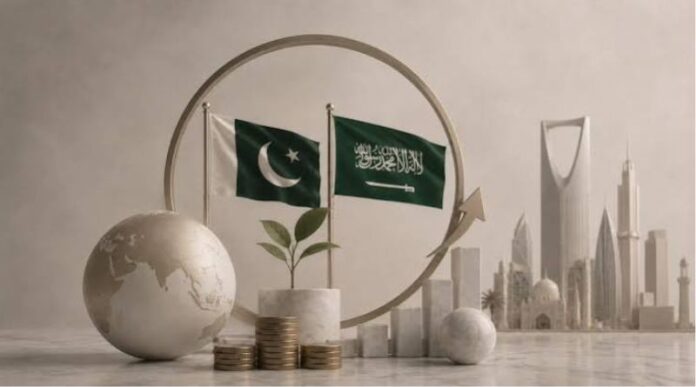

Pakistan has started important talks with Saudi Arabia about converting the Kingdom’s existing $5 billion deposit into long-term investment. The move could help Pakistan reduce pressure on its foreign finances and bring more productive investment into the country.
The discussions are part of Pakistan’s wider effort to strengthen its economy and move away from depending too much on short-term financial support. Instead of simply keeping money in the country as a deposit, the government wants to explore ways through which Saudi funds can be used for long-term investment projects that may support economic growth, create jobs and improve Pakistan’s financial position.
According to reports, Pakistan’s economic team is holding high-level discussions with Saudi officials. The talks are focused on reducing pressure on the country’s balance of payments and building stronger economic ties between Islamabad and Riyadh.
The two countries are also discussing other areas of financial cooperation, including the possible return of a deferred oil payment facility. Pakistan hopes that such arrangements, along with increased Saudi investment, could provide more support to the economy in the coming years.
Moving From Deposits to Long-Term Investment
Saudi Arabia has been one of Pakistan’s most important economic partners for many years. Financial deposits from the Kingdom have helped Pakistan strengthen its foreign exchange reserves during difficult economic periods.
However, Pakistan is now looking for a different approach. The government wants to encourage Saudi Arabia to increase direct investment in important sectors of the economy instead of depending only on money placed as deposits with the State Bank of Pakistan.
A deposit can provide temporary support to foreign exchange reserves, but long-term investment can offer wider economic benefits. Investment in businesses, industries, energy projects, mining, agriculture and other sectors can help create jobs and increase economic activity.
Pakistan’s aim appears to be to transform financial support into productive investment that can provide benefits for a longer period. This could also help both countries build a deeper economic relationship based on trade, business and joint projects.
The $5 billion deposit is already an important part of Pakistan’s external financial support. Converting it into a long-term investment arrangement could reduce some of the pressure linked with regular repayments and short-term financial needs.
The exact structure of any possible deal has not yet been officially announced. Discussions are still underway, and no final agreement has been confirmed by the governments of Pakistan or Saudi Arabia.
Focus on Pakistan’s External Financial Pressures
One of the main reasons behind these talks is Pakistan’s continuing effort to improve its external financial position.
Pakistan needs foreign currency to pay for imports, repay external debt and meet other international financial obligations. When foreign exchange reserves come under pressure, the country can face difficulties in managing these payments.
The balance of payments has been a major challenge for Pakistan for many years. The country often spends more foreign currency on imports and debt payments than it earns through exports and other sources.
This creates pressure on foreign exchange reserves and increases the need for external financing.
Pakistan’s economic team is therefore working to find ways to reduce dependence on short-term borrowing and create a stronger financial base for the future.
Long-term foreign investment is considered more helpful because it can support economic activity while reducing the need for frequent borrowing.
If Saudi Arabia increases investment in Pakistan, the country could receive financial support without adding the same type of repayment pressure that normally comes with loans and short-term deposits.
The government is also trying to attract investment from other countries and international companies. However, Saudi Arabia remains especially important because of the strong political, religious and economic relationship between the two countries.
Saudi Arabia’s Economic Framework for Pakistan
Reports suggest that Saudi officials have also shared a broader economic framework with Pakistan’s economic team.
The framework reportedly focuses on structural reforms, sustainable growth and long-term economic stability.
Pakistan has often announced plans to improve the economy, but the real challenge has been the implementation of long-term reforms. Issues such as low exports, weak tax collection, energy problems, government spending and slow industrial growth have continued to affect the country.
Saudi Arabia’s proposed framework is said to include a roadmap that could extend until 2035.
The long-term plan is expected to focus on helping Pakistan deal with its balance of payments problems and improve its ability to earn foreign exchange.
One of the major goals being discussed is to increase Pakistan’s exports to around $100 billion over the long term.
Pakistan’s exports are extremely important for the country’s economic stability. Higher exports mean more foreign currency, which can help pay for imports and reduce pressure on reserves.
However, reaching such a large export target will require major improvements in industries, infrastructure, energy supplies, technology, skills and business policies.
Pakistani companies will also need better access to international markets.
If the country wants to significantly increase exports, it will have to produce more goods that can compete internationally in terms of quality and price.
The reported Saudi framework highlights the importance of long-term planning rather than temporary solutions.
Deferred Oil Payment Facility Also Under Discussion
Pakistan and Saudi Arabia are also expected to discuss the possible revival of the deferred oil payment facility.
Under such an arrangement, Pakistan could receive oil from Saudi Arabia and make payments at a later time instead of paying the full amount immediately.
For a country that spends a large amount of foreign currency on importing petroleum products, such a facility could provide important relief.
Oil is one of Pakistan’s major import expenses. Higher international oil prices can increase the country’s import bill and put additional pressure on foreign exchange reserves.
A deferred payment arrangement could therefore help Pakistan manage its immediate foreign currency needs more easily.
Reports suggest that the two countries are looking at ways to improve or restore this type of cooperation.
Although discussions about the oil facility are separate from the proposal to convert the $5 billion deposit into investment, both matters are part of broader economic cooperation between Pakistan and Saudi Arabia.
The government wants to reduce immediate financial pressure while also building stronger long-term economic ties.
This means Pakistan is not only looking for temporary support but is also trying to create a more stable economic partnership with Saudi Arabia.
New Opportunities for Saudi Investors
Pakistan is also exploring new opportunities for Saudi investors in different sectors of the economy.
Saudi Arabia has been increasing its international investment activities as part of its own economic transformation plans.
Pakistan hopes to attract a share of this investment by offering projects and business opportunities to Saudi companies and investors.
Several sectors in Pakistan have the potential to attract foreign investment.
Mining is considered one of the most important areas because Pakistan has valuable mineral resources.
The country also has opportunities in agriculture, energy, information technology, infrastructure and tourism.
Large investment projects can help improve these sectors and support wider economic development.
Agriculture remains an important part of Pakistan’s economy and employs a large number of people. Investment in modern farming, water management, food processing and agricultural technology could improve production and exports.
The energy sector also needs significant investment. Pakistan has faced high energy costs and other problems that have affected industries and ordinary consumers.
Investment in renewable energy, power projects and related infrastructure could help improve the situation.
The information technology sector is another area with strong potential. Pakistan has a large young population and a growing number of IT professionals.
Foreign investment in technology companies, software development and digital services could help create more jobs and increase exports.
Mining is also receiving increasing attention because of major projects and valuable mineral resources in the country.
Saudi investors may find opportunities in these sectors if Pakistan provides a stable business environment and clear policies.
Stronger Pakistan-Saudi Economic Relations
Pakistan and Saudi Arabia have traditionally enjoyed close relations.
For decades, the Kingdom has provided Pakistan with economic assistance, financial support and help during difficult periods.
In recent years, both countries have tried to increase cooperation beyond traditional financial assistance.
The focus is now moving more towards investment, trade and long-term business partnerships.
This change is important for Pakistan because direct investment can support the economy in a more lasting way.
A financial deposit can help increase reserves, but an investment project can create businesses, jobs and economic activity.
For Saudi Arabia, Pakistan offers a large market, a strategic location and opportunities in several important sectors.
Pakistan’s location also gives it importance in regional trade and connectivity.
The success of any future investment plan will depend on how quickly projects are finalized and implemented.
Pakistan has previously announced several foreign investment plans that faced delays due to administrative problems, policy changes and other challenges.
Investors usually want clear rules, political stability and confidence that their projects will move forward without unnecessary delays.
The government will therefore need to provide a friendly business environment if it wants to attract large amounts of Saudi investment.
Long-Term Stability Remains the Main Goal
The proposed conversion of the $5 billion Saudi deposit into investment reflects Pakistan’s larger economic goal of moving towards long-term stability.
The country wants to reduce its dependence on emergency financial support and increase productive investment.
This will not be easy.
Pakistan still faces several economic challenges, including debt repayments, limited exports, high energy costs and pressure on government finances.
However, long-term foreign investment can become an important part of the solution if it is directed towards productive sectors.
The government is also trying to improve investor confidence and strengthen cooperation with friendly countries.
Saudi Arabia is expected to remain one of the most important partners in this effort.
The reported talks show that Pakistan is interested in changing the nature of its financial relationship with Saudi Arabia.
Instead of depending mainly on deposits and temporary support, Islamabad wants to develop a broader partnership based on investment and long-term economic growth.
The proposed 2035 roadmap also shows that the discussions are looking beyond immediate financial problems.
Pakistan’s future economic strength will depend heavily on its ability to increase exports, attract foreign investment and carry out important reforms.
If these goals are achieved, the country could become less dependent on repeated external financial support.
What Happens Next?
For now, the discussions between Pakistan and Saudi Arabia are still ongoing.
No formal agreement has been announced regarding the conversion of the $5 billion deposit into long-term investment.
The final decision will depend on negotiations between officials from both countries and the structure of any proposed arrangement.
Pakistan will be hoping that the talks lead to more Saudi investment in important sectors of the economy.
A successful agreement could reduce pressure on Pakistan’s external finances while opening the door to new business opportunities.
The possible return of a deferred oil payment facility could also provide additional short-term relief.
The broader aim is clear: Pakistan wants to build a stronger and more stable economic partnership with Saudi Arabia.
Rather than relying only on temporary deposits, the country is looking for investment that can support growth for many years.
Saudi Arabia’s existing $5 billion deposit has already played an important role in supporting Pakistan’s financial stability. The latest talks could now give both countries an opportunity to take their economic relationship in a new direction.
If the discussions result in long-term investment projects, Pakistan could benefit through job creation, business growth, increased exports and stronger foreign exchange reserves.
However, the real success will depend on the implementation of any future agreements.
For Pakistan, the challenge will be to turn financial support and investment promises into real projects that deliver lasting benefits to the economy and the people.
The talks with Saudi Arabia are therefore important not only because of the $5 billion amount involved, but also because they represent Pakistan’s effort to move from short-term financial support towards a more sustainable model of economic growth and international investment.
Read Also: check